

ECOWAS needs $2.61 billion to establish antiterrorism force: President

President of the ECOWAS Commission, Dr Omar Touray, has said that the regional needs approximately $2.61 billion to operationalise its proposed 5,000-strong ECOWAS Standby Force.
Mr Touray disclosed this during a joint meeting of ECOWAS Ministers of Finance and Defence held on Friday in Abuja.
The meeting aimed to finalise the modalities for mobilising funds to activate the regional anti-terrorism force.
The president noted that terrorism in any form remained a significant threat to regional integration, prompting ECOWAS leaders to prioritise the creation of a military response force.
“The emergence of terrorist group activities within and around West Africa has become a matter of serious concern to governments and citizens of the region,” Mr Touray said.
He warned that such activities threatened international trade and investment, disrupted regional commerce, and restricted the free movement of people, goods, and services across West African borders.
Citing the Global Terrorism Index (GTI) 2025 report, Mr Touray lamented that Africa has now become the global epicentre of terrorism, displacing the Middle East as the most affected region.
He explained that the Sahel region has seen a surge in terrorist operations, driven by political instability, weak governance, and prolonged conflicts.
He stated, “In response, ECOWAS has taken a multi-dimensional approach to counterterrorism, including the development of a comprehensive strategy, establishment of a Standby Force, and regional collaboration on intelligence, training, and humanitarian interventions.’’
Mr Touray recalled that at a previous meeting held on June 27, 2024, in Abuja, the ministers deliberated extensively on activating the standby force to combat both terrorism and unconstitutional changes of government in the region.
He described the creation of the 5,000-man force as a top priority, with the goal of restoring peace and stability wherever there was a threat in the ECOWAS sub-region.
Also speaking, Nigeria’s Minister of Defence, Mohammed Abubakar, emphasised that the region was facing growing threats including terrorism, violent extremism, transnational crime, and unconstitutional power grabs.
He said the Abuja meeting marked a critical step toward operationalising a regional counter-terrorism force that reflected a collective resolve to defend sovereignty, uphold constitutional order, and protect citizens.
“As we advance with these proposals, it is important to align our strategic objectives with predictable, sustainable, and transparent funding mechanisms,” Mr Abubakar noted.
He listed potential funding options such as adjustments to the community levy, recovery of levy arrears, GDP-based contributions, direct budget allocations, blended financing, and targeted partnerships.
He added, “This moment must be viewed not just as another meeting, but as a mandate to act decisively. The people of ECOWAS are counting on us, not only for protection but for leadership.’’
Sierra Leone’s Deputy Minister of Defence, retired Col. Brima Massaquoi, highlighted ECOWAS’s broader role in economic integration, conflict resolution, governance, and human rights.
He said that despite the progress, the region still faced significant challenges, including political instability, recurring conflicts, transnational crimes, humanitarian crises, and terrorism.
Mr Massaquoi stressed that effective counterterrorism required strong leadership, coordination, and capacity-building to strengthen regional preparedness and response capabilities.
He urged the bloc to adopt inclusive and innovative financing models, including contributions from member states, partnerships with regional financial institutions, and the establishment of specialised regional security funds.
“We must also explore Public-Private Partnerships (PPPs) and invest in training, intelligence infrastructure, and coordination centres to maximise the impact of available resources,” Mr Massaquoi added.
(NAN)

We have recently deactivated our website's comment provider in favour of other channels of distribution and commentary. We encourage you to join the conversation on our stories via our Facebook, Twitter and other social media pages.

More from Peoples Gazette

Agriculture
FG tasks ECOWAS on leveraging financing strategies for agroecology
The federal government has urged stakeholders in the agriculture and finance sectors in the West Africa region to leverage financing strategies to enhance agroecology practices

Politics
Katsina youths pledge to deliver over 2 million votes to Atiku
“Katsina State is Atiku’s political base because it is his second home.”

Africa
Ebola cases rise as outbreak expands to 63 health zones in DR Congo: WHO
WHO said delays in diagnosis and access to adequate treatment could contribute to preventable deaths.

States
Edo govt. targets jobs, revenue through tourism, hospitality sectors
Mr Okaeben said the state government was committed to creating an enabling environment where talents could thrive.
NationWide
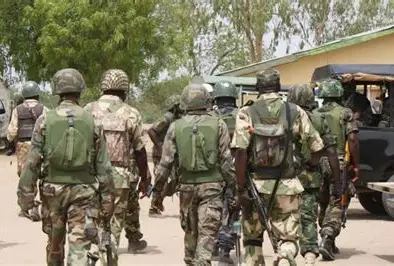
Army trains 380 personnel in specialised skills to boost operations
Mr Adejimi said the training was designed to improve the technical capabilities of personnel.
States
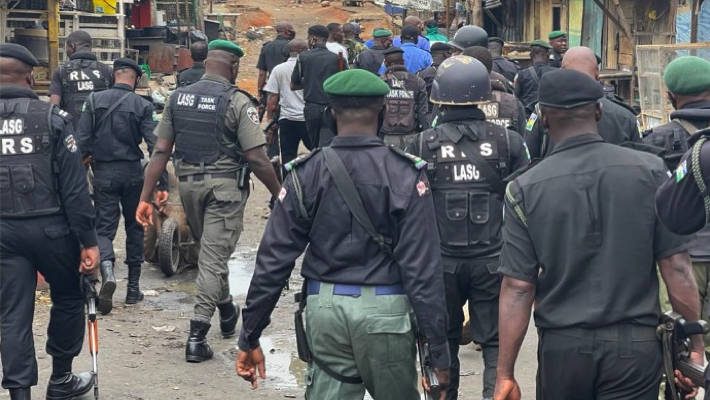
Police nab two suspects for alleged car theft in Niger village
The suspected soldier and one other took to their heels, while the other two were arrested.

States
Niger: Police detain security guard over alleged defilement, death of minor
Mr Abiodun said Mr Dauda allegedly confessed during interrogation to luring the girl into his security room.
NationWide
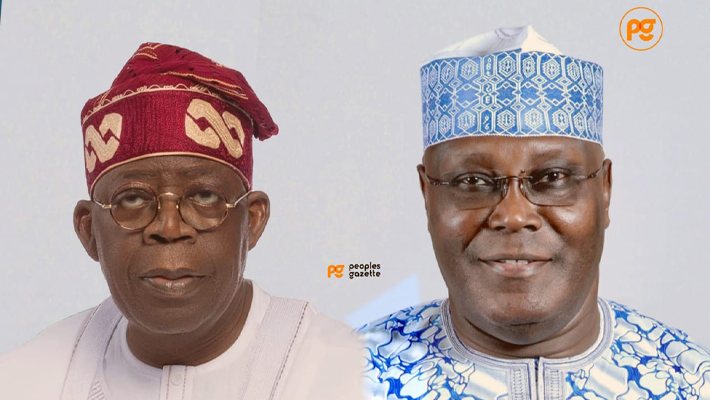
Morka’s gutter language cannot bury Tinubu’s drug record: ADC Campaign Council
The council also challenged the APC to explain inconsistencies in Mr Tinubu’s educational records.


