

Educationists endorse JAMB policy on underage university admissions
Stakeholders in the education sector have commended the Registrar of the Joint Admissions and Matriculation Board (JAMB), Prof. Is-haq Oloyede, for convening the board’s first national stakeholder engagement on the admission of underage students into universities.
The meeting was organised by the JAMB Equal Opportunity Group (JEOG) on behalf of the registrar on Tuesday in Abuja.
The event brought together 283 participants under the theme: “Achieving Success in Higher Education of Underage Students Admitted in the 2025/2026 Session.”
Participants included vice-chancellors, parents, education experts, child development specialists, legal practitioners and underage students.
Addressing newsmen at the end of the engagement, Prof. Emeritus Peter Okebukola, president of the Global University for Innovation (GUNi-Africa), described the initiative as unprecedented globally.
Mr Okebukola said no higher education system had established a coordinated national support structure for underage students comparable to the one introduced by Mr Oloyede.
He disclosed that 96 students below the statutory admission age of 16 years were admitted to universities for the 2025/2026 academic session after passing a rigorous, multi-layered screening process.
According to him, the admission conditions approved by the Federal Ministry of Education in 2025 required candidates to score a minimum of 320 in the Unified Tertiary Matriculation Examination (UTME), representing 80 per cent of the total.
He added that candidates were also required to obtain at least 80 per cent in the post-UTME examinations, the Senior School Certificate Examinations, and an independent expert assessment interview.
Mr Okebukola, who chairs JEOG, said the group viewed the underage students not as challenges but as exceptional young Nigerians representing both opportunity and national responsibility.
He disclosed that mentors had been individually assigned to each of the 96 students, adding that institutions, parents and counsellors all had indispensable roles in supporting their academic and emotional development.
“Our task is to ensure that precocity is met with wisdom, structure and genuine care for the young,” he said.
Mr Oloyede, in his remarks, said the government’s position on the age of admission was rooted in the 1981 National Policy on Education, which aligned educational progression with cognitive and emotional developmental stages.
He noted that the policy ordinarily places candidates for tertiary education admission at approximately 16 years of age, stressing that education was not only about academic exposure but also total learner development.
The registrar added that some institutions, including the University of Ibadan and the Lagos State University, strictly uphold the minimum age requirement irrespective of academic brilliance.
He said, “It is important to state clearly that the position of the government on age and admission did not emerge arbitrarily.
”As far back as the 1981 National Policy on Education, Nigeria, (Section 7, Sub Section 2) had already established a structured educational progression designed to align learning with stages of cognitive and emotional development.
”The policy envisages progression through basic and secondary education in a manner that ordinarily places candidates for tertiary education at approximately 16 years of age.
“This policy direction has remained substantially consistent over the years because educational progression is not merely about academic exposure, but about the total preparation of the learner for life and society.”
The engagement featured three technical sessions focusing on pedagogy for gifted learners, psychological support systems, and legal frameworks that guide child protection and education.
Experts discussed differentiated instruction, mentoring frameworks, counselling models, resilience-building strategies and provisions of Nigeria’s Child Rights Act.
(NAN)

We have recently deactivated our website's comment provider in favour of other channels of distribution and commentary. We encourage you to join the conversation on our stories via our Facebook, Twitter and other social media pages.

More from Peoples Gazette

States
Independence: NBA urges Nigerians to expect better future
The NBA said that ordinary Nigerians should be deriving benefit from the subsidy removal rather than hardship.

Agriculture
FG tasks ECOWAS on leveraging financing strategies for agroecology
The federal government has urged stakeholders in the agriculture and finance sectors in the West Africa region to leverage financing strategies to enhance agroecology practices

Politics
Katsina youths pledge to deliver over 2 million votes to Atiku
“Katsina State is Atiku’s political base because it is his second home.”

Economy
Ondo assembly seeks faster C of O processing to boost investment
The committee’s chairman, Abiola Oladapo, said efficient land administration was critical to creating an enabling environment for businesses.

Heading 4
Minister calls for greater involvement of oncology nurses in cancer care
The minister said cancer’s complexity made multidisciplinary collaboration essential.

Education
NOUN matriculates 70 inmates in Enugu custodial centre
Mr Nwakuche said the NCoS was committed to using education as an instrument for reformation.
Agriculture
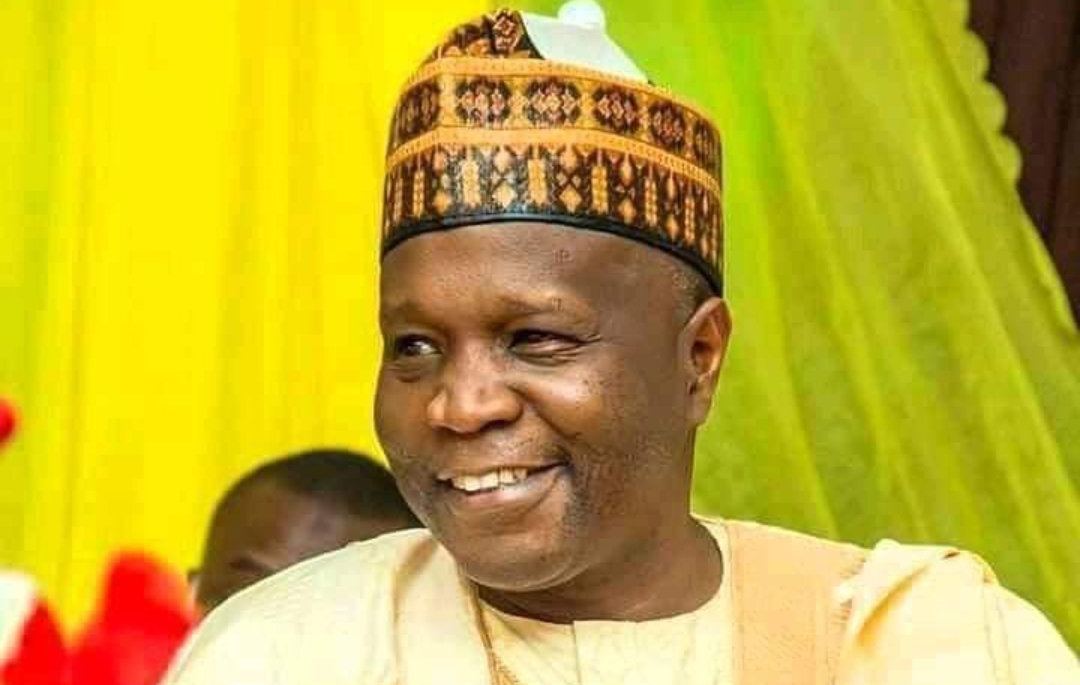
Gombe inaugurates state-wide livestock vaccination campaign
Mr Yahaya said the exercise was aimed at protecting animal health.
NationWide
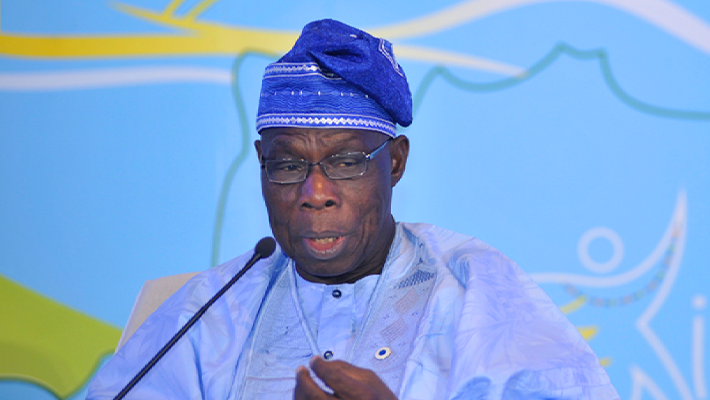
Asaba Massacre: Obasanjo urges forgiveness, reconciliation
He described the massacre as one of the most painful and terrible aspects of the Nigerian Civil War.

World
FBI nabs ISIS-linked Sheikhdoon Mohamud for plottting terrorist attack on Mall of America
He was arrested after buying an AK-47-style rifle, magazines and ammunition from an undercover FBI agent.


