

Enrollees say Nigeria’s health insurance services getting worse
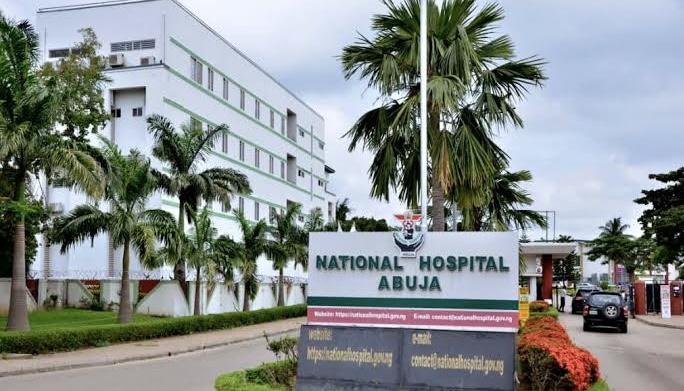
The health insurance policy in Nigeria is designed to reduce out-of-pocket health expenses and promote Universal Health Coverage.
The National Health Insurance Act (NHIA) of 2022, signed into law on May 19, 2021, replaced the 1999 National Health Insurance Scheme Act. Its primary aim is to regulate and integrate health insurance schemes, ensuring that every Nigerian has mandatory health coverage while catering to vulnerable groups.
However, many enrollees are dissatisfied with the scheme’s current state.
They claim that the quality of services has declined, and some benefits have been reduced or are no longer available.
Ese Williams, a civil servant who has been using the scheme for 15 years, shares her concerns.
“It used to be effective, but not anymore. Previously, an enrollee only paid 10 per cent of the hospital bill after treatment. But during the New Year, I was hospitalised and told to pay 40 per cent.
“There was no consultation with stakeholders before this increase. Also, my hospital used to provide quality drugs, but now they only give me paracetamol,” she stated.
Ms Williams believes that the recent reforms did not serve the best interests of enrollees as they did not cover a wide range of ailments, while designated hospitals provide low-quality medications. She urged the government to revisit the reforms to make the scheme more affordable and comprehensive.
Bella Andrew, another enrollee, expressed her surprise that the scheme does not cover basic treatments, such as toothache. She also complained that hospitals are prescribing medications to be obtained from external pharmacies, undermining the purpose of the insurance.
“I almost had an inflamed appendix and couldn’t be treated at my assigned hospital because the procedure wasn’t covered. I had to go to a private hospital for malaria. I was told to get a test at another lab because the hospital couldn’t conduct it. The lab was expensive, but I had no choice. So, why am I even enrolled in the NHIA?” she stated.
Ms Andrew believes Nigeria’s health insurance system should be compared with other countries and offer free treatment for common illnesses like malaria.
Ernest Okon, also a civil servant, argued that enrollees should have the flexibility to choose their premiums, similar to private sector workers. He lamented that public servants have limited access to services because their premiums only cover a small fraction of treatments.
“I know private sector workers who receive top-notch care based on their premiums. We should be allowed to pay higher premiums for more services,” he said.
Mr Okon also suggested that hospitals clearly display the services the scheme covers to avoid confusion and ensure enrollees are not short-changed.
Another enrollee, Emmanuel Afonne, shared a troubling experience with his family’s healthcare.
“My wife and three children were diagnosed with malaria and typhoid, but the hospital gave us prescriptions to buy the medication elsewhere. The hospital claimed that Health Management Organisations owed them money, which delayed treatment.
“I reported the issue to the NHIA, and after follow-up, I was reimbursed for the out-of-pocket expenses,” he said.
These concerns highlight several issues with the management of the health insurance scheme in Nigeria, which has led to a perceived decline in the scheme’s effectiveness.
In July 2024, the NHIA announced a 60 per cent increase in capitation rates and a 40 per cent rise in fee-for-service fees.
Kelechi Ohiri, the NHIA director-general, explained that the price hikes were due to rising healthcare delivery costs.
“The increased capitation will provide healthcare providers with more resources to manage patient care effectively,” he said.
However, he acknowledged that these increases might burden patients and employers who contribute to the health insurance scheme.
On February 3, 2025, Mr Ohiri announced even larger increases in capitation and FFS payments, with capitation rising by 93 per cent and FFS payments increasing by 378 per cent, compared to rates from December 2023.
These revised rates, approved by the Minister of Health and Social Welfare, Prof. Muhammad Pate, will take effect in April 2025.
Mr Ohiri stated that the goal of the adjustments is to improve healthcare quality, incentivise better services, and maintain financial sustainability.
“The increase in premiums should lead to better care without additional costs for enrollees. We will enforce strict quality standards,” he said.
Aminu Magashi, coordinator of the Africa Health Budget Network, commented on the NHIA’s decision, saying it represents a significant shift in the cost structure of health insurance in Nigeria.
While the adjustments aim to improve services, Magashi cautioned that balancing affordability with quality care is the challenge. He suggested that the NHIA must monitor the effects of the changes and adjust them, if necessary, to maintain a robust healthcare system for all Nigerians.
(NAN)

We have recently deactivated our website's comment provider in favour of other channels of distribution and commentary. We encourage you to join the conversation on our stories via our Facebook, Twitter and other social media pages.

More from Peoples Gazette

States
Independence: NBA urges Nigerians to expect better future
The NBA said that ordinary Nigerians should be deriving benefit from the subsidy removal rather than hardship.

Agriculture
FG tasks ECOWAS on leveraging financing strategies for agroecology
The federal government has urged stakeholders in the agriculture and finance sectors in the West Africa region to leverage financing strategies to enhance agroecology practices

Politics
Katsina youths pledge to deliver over 2 million votes to Atiku
“Katsina State is Atiku’s political base because it is his second home.”

Heading 2
Tinubu’s economic reforms yielding results despite doubts: Bagudu
Mr Bagudu described Mr Tinubu as a visionary leader whose decisions demonstrated courage and commitment to national development.

Sport
Flamingos lose 2-1 to Poland in FIFA U-17 Women’s World Cup opener
Poland’s Natalia Skrok made it two in the second half when Blanka Zajac, in the 65th minute, crossed into the Nigerian penalty area.

States
Gov Mbah scraps N750 daily ticket fee for Enugu tricycle operators, extends work hours
Mr Mbah also disclosed that tricycle operators would continue to use the state’s modern transport terminals free of charge.

States
FG unveils five-point strategy to tackle banditry, terrorism in Sokoto
Mr Ribadu called for sustained security deployments around vulnerable settlements, forest corridors and border communities.

Politics
2027: Wike urges Rivers traditional leaders to avoid ‘mistake’, back Tinubu for prosperity
Mr Wike said, “Supporting Tinubu is a support for prosperity.”
Heading 4
NAPTIP raises alarm over rise in parents’ facilitation of children’s sexual exploitation
The NAPTIP boss said parents and guardians were facilitating the sexual exploitation of their children to make money.


