

Experts demand review of Nigeria’s security architecture amid rampaging terrorists, bandits
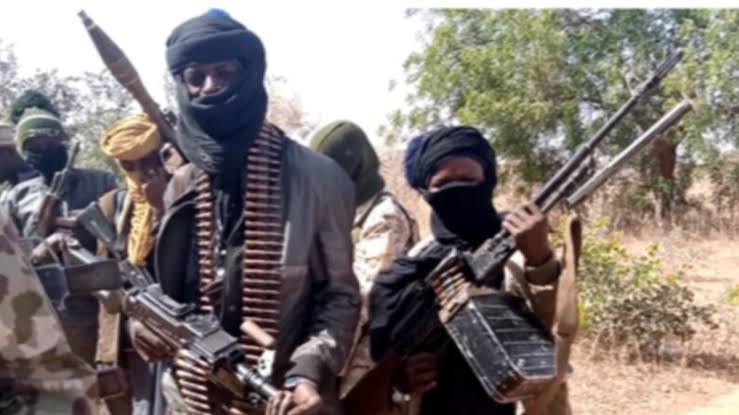
Security experts have underscored the urgent need for a review of the country’s security architecture due to what they described as worsening insecurity in Nigeria.
The general consensus at a discourse on “Security in Nigeria: Where We Are Coming From, Where We Are, and Where We Are Going” was for stronger community-based responses and a national summit to address the security situation in the country.
The discourse was organised by the Senior Staff University of Ibadan Discuss Group on Wednesday in Ibadan.
The event examined the country’s challenges from the perspectives of human security and traditional security.
A Professor of Peace and Conflict Studies at the University of Ibadan, Isaac Albert, said Nigeria was currently facing a deep security crisis.
According to him, both traditional and human security indicators showed the country was not doing well.
Mr Albert said no region of the country could presently be described as fully peaceful, adding that Nigerians were also grappling with weak economic, personal, community, political, and environmental security.
According to him, the worsening situation had forced many citizens to flee the country, while others were being pushed toward desperation and criminality.
He said there was an urgent need for another broad-based national conversation on insecurity, lamenting that past efforts, such as the Oputa Panel, the 2005 national conference, and the 2014 national conference, had not yielded sustainable solutions.
“We have problems, let us face the fact that we have problems. This country is not doing well. Let us stop pretending,” Mr Albert said.
He, however, warned that foreign interventions, if not guided by Nigeria’s national interest, might not provide lasting answers to the nation’s security challenges.
Also speaking, Nelson Fashina of the University of Ibadan said the limitations of the conventional security system had made it necessary to rethink security management in line with Nigeria’s cultural, social, and local realities.
He advocated a bottom-up approach in which security would be strengthened from the local government level.
Mr Fashina, who is also deputy commander general of the Nigerian Forest Security Service, said able-bodied youths should be recruited and trained to secure forests and other ungoverned spaces often used by bandits, insurgents, and terrorists.
He said empowering voluntary and indigenous security structures could complement conventional agencies already overstretched by the scale of insecurity.
According to him, anonymity arising from weak national data systems and poor population management has contributed to criminality.
He said that religion, culture, and education have, in some cases, limited acceptance of indigenous security models that could serve as deterrents.
“So, I am appealing to the National Security Advisor and to President Bola Tinubu that the Nigeria Forest Security Service, as a voluntary organisation that is in charge of the forest, should now be enabled to take care of the forest.
“Let them govern the security management of the forest, to rid our forest of insurgents.
“The president made reference to it in his New Year broadcast in 2026 that he is enabling the forest guards, but now we haven’t heard of anything on implementing that,” Mr Fashina said.
Earlier, Olanrewaju Olaniran, the chairman of the event and the Vice Chancellor of Emmanuel Alayande University of Education, Oyo, said criminal elements were constantly changing tactics.
“There is the need to understand indigenous knowledge systems in addressing insecurity,” Mr Olaniran said.
He noted that security management was not alien to Nigerian society, but poor handling over time had worsened the present crisis.
(NAN)

We have recently deactivated our website's comment provider in favour of other channels of distribution and commentary. We encourage you to join the conversation on our stories via our Facebook, Twitter and other social media pages.

More from Peoples Gazette

Agriculture
FG tasks ECOWAS on leveraging financing strategies for agroecology
The federal government has urged stakeholders in the agriculture and finance sectors in the West Africa region to leverage financing strategies to enhance agroecology practices

Politics
Katsina youths pledge to deliver over 2 million votes to Atiku
“Katsina State is Atiku’s political base because it is his second home.”
![U.S. Mission[Credit: X.com]](https://gazettengr.com/wp-content/uploads/images-78-3.jpeg)
World
U.S. issues security alert to Americans worldwide as Iran kills two soldiers
The U.S. government issued a warning to all Americans worldwide amid the escalating war against Iran.

Heading 3
Tinubu’s scorecard is 139 million Nigerians in poverty; he should resign, not seek re-election: ADC
“The evidence of 139 million people living in poverty and 17 million at risk of starvation is President Tinubu’s scorecard,” the party said.

Lagos
Lagos govt working to tackle flooding, says SSG
She said the government was assessing critical drainage channels and other vulnerable locations to strengthen ongoing flood control measures.

States
Three killed, four injured in Anambra road crash: FRSC
The FRSC said the accident occurred on Friday along the Nnobi–Agulu–Awka road.

Politics
2027: Group asks ADC, Atiku to drop Amaechi as vice-presidential candidate
The group accused Mr Amaechi of desperation, saying that he lacked the grassroots strength required to win the election.
![Jens Spahn. [PHOTO CREDIT: ZDF]](https://gazettengr.com/wp-content/uploads/Jens-Spahn.jpg)
Heading 4
German lawmaker resigns after backlash for welcoming child through surrogacy
The 46-year-old politician and his party, the Christian Democratic Union (CDU), had backed a ban on surrogacy.


