

Only these kinds of people will buy nomination forms for N100 million

There is an unexampled swarming of the presidential nomination arena by a motley crowd of wannabes. One argument for this is that Muhammadu Buhari and Yemi Osinbajo have been such dreadful catastrophes as “president” and “vice president” that all that anyone who succeeds them has to do to impress Nigerians is to just be marginally better than they are, which doesn’t take a lot. I’ll come back to this point later.
Well, when the All Progressives Congress (APC) increased its presidential nomination fees to N100 million (up from N45 million in 2019 and N27.5 million in 2015), people thought it would thin out the crowd of contestants. But it appears to be doing the opposite. Both the wheat and the chaff—mostly the chaff—now litter the presidential nomination field.
So, what kinds of people would pay a non-refundable fee of N100 million just for a chance to run for the primary election of a political party in which victory isn’t guaranteed, in which a snowball has a better chance of surviving in hell than them winning? I can identify at least four kinds of people.
The first are overly bullish political investors. These are people who see politics as an investment and who are unrealistically overconfident that their investment will yield bountiful returns. For them, political office isn’t an opportunity for service; it’s a doorway to immense personal enrichment.
Many of the presidential wannabes in the major political parties don’t expect to win their party’s nomination. They are simply ploughing back some of the money they stole from the government into long-shot presidential contests as down payments for ministerial positions or other “juicy” appointments from whoever emerges as the president in their political party.
Even if their party doesn’t win the presidential election, nothing is lost because the money didn’t come from their hard work. Plus, politicians are a special breed of hopeless optimists. They see victory even in the menacing jaws of defeat.
This is the logical graduation of a new kind of elite corruption that the Buhari regime birthed in the last few years. No appointment is now merit-driven. From ministerial appointments down to janitorial personnel in the federal civil service, everything is lubricated by bribes.
In a December 17, 2019, article titled “Ministership for Sale: Up to N2.5b Per Slot,” I disclosed that “Four different, dependable, and independent sources who don’t know each other but who’re close to the corridors of power were eerily united in telling me that except for a few ministerial nominations (notably those of Adamu Adamu, Ali Isa Pantami, Mohammed Musa Bello, Raji Fashola whom Buhari himself personally penciled— and those that were conceded to Tinubu) every other post was literally auctioned off to the highest bidder.”
That’s why there are no apolitical “technocrats” in the Buhari cabinet like there used to be in previous administrations. No honest, hardworking, and self-respecting professional would leave their day job and give financial inducement to a cabal of Aso Rock thieves just to be appointed a minister.
Since Buhari and Osinbajo have officially made governance a raucous, in-your-face, no-consequence stealing bazaar, people understand the presidential nomination fees as deposits for a chance to steal with impunity from 2023 onwards. So, it’s a grand political pay-to-play scam.
The second kinds of people who would pay a N100 million nomination fee without seeing it as an investment from which they’ll reap hefty rewards later are rich drug addicts who are trapped in a state of hyper-arousal dissociation, who live in a drugged and drunk alternate universe.
Who knows if that is why Buba Marwa, the chairman of the National Drug Law Enforcement Agency (NDLEA,) wrote to APC on April 27 asking to be allowed to conduct mandatory drug tests on the plethora of presidential aspirants that are crowding the party’s platform?
Marwa said that he would send a similar letter to the Peoples Democratic Party (PDP) and to other political parties because “Nigeria requires a mentally stable set of leaders to pilot its affairs.”
Like the rest of us, the NDLEA boss must have reasoned that only drug-induced megalomania can inspire some of these aspirants to think they can be president of a complex country like Nigeria that Buhari and Osinbajo have almost destroyed beyond recognition.
I can bet my bottom dollar that several of these delusional presidential wannabes, whom we all know, will fail a drug test, which is why the idea of a drug test will die a natural death.
The third kind of people who will shell out N100 million to buy a presidential nomination form without expectation of dubious rewards in the future are mentally unhinged individuals with lots of stolen money to throw away.
Many of them are obviously psychotic. Psychosis is defined as a “severe mental disorder in which contact with reality is lost or highly distorted.” For example, anyone who genuinely believes that God spoke to him and urged him to run for office is demonstrably psychotic.
I expect the Association of Psychiatrists of Nigeria (APN), in conjunction with the Association of Psychiatric Nurses of Nigeria (APNON), to ask to be allowed to conduct mental health examinations on presidential aspirants. It would be a valid and justified request because there are many undiagnosed psychiatric patients running for office right now.
The fourth group of people who would purchase a N100 million nomination form even if they are political nonentities are political gamblers, that is, corruptly rich, recklessly wasteful risk takers who don’t fear financial loss because they are animated by a desperate hope for gain or just a frisson of excitement.
Of course, my list doesn’t include people who, because of their networks, political pedigree, proximity to power, etc. are within striking distance of winning their party’s nomination and possibly winning the national election. But among such people are easy glory seekers who want to take advantage of the Buhari/Osinbajo unprecedented failure to shine.
As I pointed out in a February 3, 2018, column titled “How Buhari Has Lowered the Bar of Governance,” it would take the littlest of efforts for Buhari’s successor to impress Nigerians because the Buhari regime went from lowering the bar of governance to throwing the entire bar away.
So, because it took Buhari and Osinbajo six months (actually eight months if you consider that they were elected two months before they were inaugurated) to constitute a familiar, predictable cast of underwhelming characters as ministers, any administration that appoints ministers in the first month of being in power would be celebrated.
Because Buhari is habitually unconcerned and indifferent in the face of heartrending national tragedies, any president who shows just a little bit of emotion through sympathy visits and national broadcasts would win hearts and minds.
Because Buhari never fires anyone who underperforms, any president that fires incompetent people, especially in the security sector, would be praised as proactive and sensitive.
Governing boards of government agencies are the engines of governance. It took Buhari and Osinbajo nearly three years to constitute governing board members, which was why I characterized their administration as an example of “ungovernance.” Even when they did, they appointed dead people and people who weren’t consulted before their appointments.
Any president who appoints members of governing boards of government agencies in the first few months of being in power would be hailed as a miracle worker in governance.
These are just a few examples. But this is really distressing because there is much more at stake in the task of governing Nigeria than just transcending Buhari’s incompetence and mediocrity.

We have recently deactivated our website's comment provider in favour of other channels of distribution and commentary. We encourage you to join the conversation on our stories via our Facebook, Twitter and other social media pages.

More from Peoples Gazette

States
Independence: NBA urges Nigerians to expect better future
The NBA said that ordinary Nigerians should be deriving benefit from the subsidy removal rather than hardship.

Agriculture
FG tasks ECOWAS on leveraging financing strategies for agroecology
The federal government has urged stakeholders in the agriculture and finance sectors in the West Africa region to leverage financing strategies to enhance agroecology practices

Politics
Katsina youths pledge to deliver over 2 million votes to Atiku
“Katsina State is Atiku’s political base because it is his second home.”
Heading 5
Gov Oyebanji reappoints SSG, chief of staff, spokesperson
The reappointments followed Mr Oyebanji’s inauguration for a second term in office.

Anti-Corruption
Witness tells court how NDC Reps candidate Duruibe allegedly defrauded him of N239 million
Ms Duruibe emerged as the House of Representatives candidate for Okigwe South Federal Constituency in June.
Heading 2
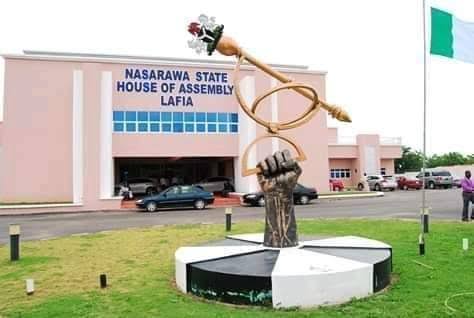
Nasarawa assembly warns contractors against substandard road projects
The committee chairman commended the contractors for the work done so far.
States
Enugu approves payment of N32 billion gratuity arrears from 2000
The SSG said the payments would begin with an initial release of N10 billion.
Africa
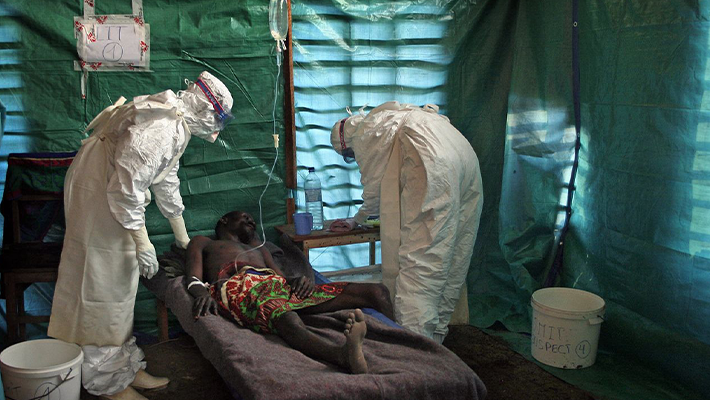
WHO urges vigilance in Kenya after second Ebola case
WHO underlined the importance of appropriate screening to identify travellers who might pose a health risk.
Uncategorized
UK warns citizens against all travel to Sokoto
The directive marked Bauchi State for essential travel only.


