

Why northerners don’t call Tinubu “Jagaban”
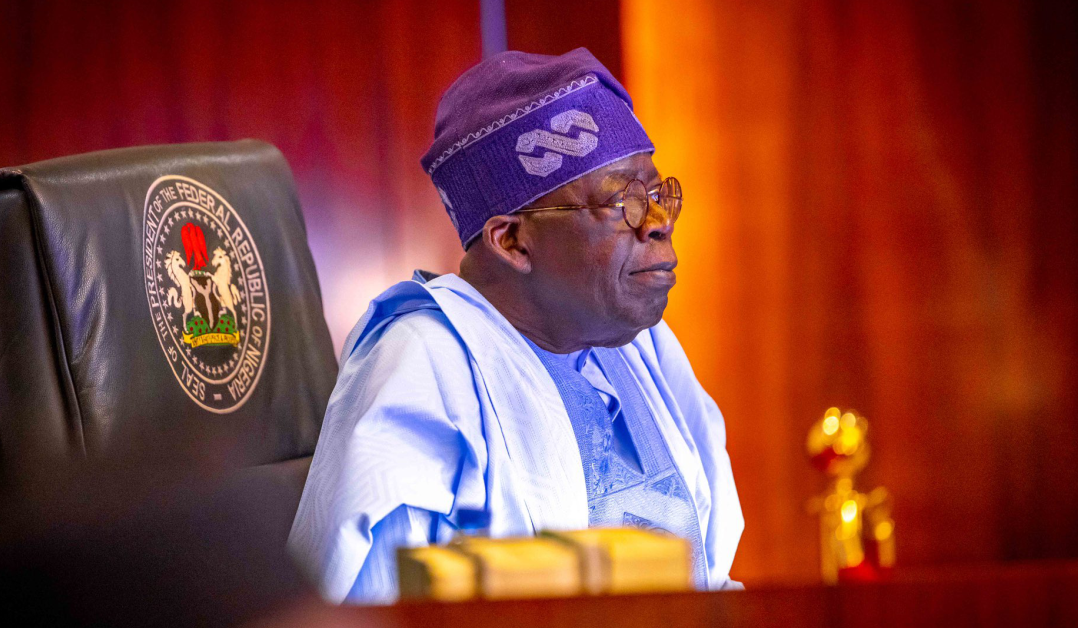
Southern Nigerians have asked me two trivial but persistent and important questions about President Bola Ahmed Tinubu. The first is why most Hausa-speaking northerners don’t call Tinubu “Jagaban” as a standalone title like southerners do.
Since I am from Borgu, I’ve also been asked why Tinubu was knighted as the “Jagaban Borgu” or the “Jagaba of Borgu.” And what does the title mean, anyway?
I didn’t think the questions were worth a response, much less a column-length one, because, until now, Tinubu was either just a major, if unofficial, political player in the Buhari regime or a candidate for president. Now that he is president, I think these questions are deserving of a response in the interest of historical and political education.
Hausa-speaking northerners don’t say “jagaban” as a standalone word because it is ungrammatical in their language. The usual word is “jagaba.” When it transforms to “jagaban” it must be followed immediately by a place name because the additional “n” in the word is a preposition that signifies “of.” So, it is either “the Jagaba of Borgu” or “Jagaban Borgu.” If the title is not associated with a place, it’s simply “Jagaba,” not “Jagaban.”
To say “Jabagan of Borgu” is to commit an ungainly interlingual prepositional tautology since “n” and “of” mean exactly the same thing. Of course, interlingual tautologies are not uncommon. For example, we say Aso Rock even when “aso” means “rock” in the Gbagyi language. We say “Lake Chad” even when “chad” means “lake” in Kanuri. And we say “Sahara Desert” even when “sahara” means “desert” in Arabic.
Since linguistic habits often form and evolve outside notions of correct usage, I won’t be surprised if even Hausa-speaking northerners start to call Tinubu “Jagaban”—or even “Jagaban of Borgu.” Nigeria’s southwest is, after all, the country’s sociolinguistic pacesetter because of the centrality of Lagos as the cultural capital.
So, what does “jagaba” mean? Well, it’s the Hausa word for chief warrior, warlord, frontrunner, or simply a brave man. It’s derived from “ja,” which means pull and “gaba,” which means front in the Hausa language. A jagaba is therefore someone who leads from the front, which is another way of describing a war commander. In other words, “Jagaban Borgu” or the “Jagaba of Borgu” means the Chief Warrior of Borgu.
The title was conferred on President Tinubu in February 2006 by the late Alhaji Haliru Dantoro who was Emir of Borgu in New Bussa from 2002 to 2015. Dantoro and Tinubu struck up an enduring, if unusual, friendship in 1992 when both of them served as senators in IBB’s abortive Third Republic. Dantoro was a senator on the platform of the National Republican Convention (NRC) and Tinubu was elected on the platform of the Social Democratic Party (SDP).
Although they belonged to different political parties, had diametrically opposed ideological temperaments, and Tinubu was much younger than Dantoro, they hit it off and sustained their friendship even after Sani Abacha dissolved the senate.
On February 26, 2006, exactly four years after Dantoro became emir, he knighted Tinubu as “Jagaban Borgu” (or the Jagaba of Borgu) and Remi Tinubu, his wife, as Yon Bana Jagaban Borgu. “When God made me the Emir, I said this man was there when I was in dire need of help, so why can’t I use my position to make him what I feel will help him in future politically?” Dantoro said in a news interview before his death.
Dantoro’s graciousness toward Tinubu doesn’t come to me as a surprise. As I pointed out in my November 07, 2015, column titled “Tribute to Haliru Dantoro, Emir of Borgu,” Dantoro was a conciliatory, even-tempered, and pleasant person who loved to build bridges across cultures, regions, ideologies, and faiths. Six months before his death, former President Muhammadu Buhari testified that even though he imprisoned Dantoro in 1984, along with other Second Republic politicians, he forgave him and even went “ahead to establish [a] very strong and cherished personal relationship” with him.
Dantoro and my father’s immediate younger brother, J.B. Kperogi, were also fierce political rivals in the Second Republic in the old Borgu, yet when I had a chance to meet him in 1999 as a young reporter and he recognised me as the nephew of his former political opponent, he was kind and gracious to me, asked after my uncle, and emphasised the importance of unity in the old Nigerian Borgu that is now splintered in parts of Kwara, Niger, and Kebbi states.
Having said this, it’s important to state that “jagaba” is not a Borgu title; it’s borrowed from Hausa land. The ancient Borgu empire was a pluri-ethnic, confederate polity and was peopled by many ethnic groups, but mostly by the Baatonu (whom Yoruba people Bariba, Ibariba, or Baruba), the Boko (or Bokobaru/Bisa), the Fulani, the Kambari, and the Dendi people.
Ancient Borgu stretched from what is now northeastern Benin Republic (where a Borgou state exists) to present-day Baruten and Kaiama local governments in Kwara State; Borgu and Agwara local governments in Niger State; and Bagudo and Dandi local governments in Kebbi State.
In 1904, Nigerian Borgu, which Lord Salisbury once angrily derided as “a malarious African desert…not worth a war,” was initially designated as a province by British colonisers. That was the equivalent of a state in modern parlance. It was later downgraded to a “division” of several provinces, including Kebbi Province, Kontagora Province, and finally Ilorin Province because it wasn’t economically self-sustaining.
When Kwara State was created in 1967, most of Borgu (except Bagudo and Dandi) became a part of the state and existed as Nigeria’s largest local government area until August 27, 1991, when IBB carved out what is now Borgu and Agwara local governments to Niger State. What was left of Borgu in Kwara State became Baruten and Kaiama local governments.
I don’t know why Dantoro didn’t give Tinubu a title that is native to the Bisa/Boko-speaking people of New Bussa, but Professor Halidu Usman, the Emir of Desa (known as Ilesha Baruba by Yoruba people) in the Baruten Local Government in Kwara State once defended handing out Hausa-derived traditional titles because, according to him, the repertoire of native Borgu titles is severely limited and has been exhausted in light of the changing cultural environment.
In any case, Borgu has always been a melting pot that fuses multifarious cultural influences from far-flung places. Many historic and deeply entrenched Borgu royal titles have Hausa or Kanuri roots. Take Kilishi Yeruma, for example. It is a fossilised, time-honoured title in all of Borgu for the heir apparent to the throne. It is derived from a fusion of Hausa and Kanuri.
Kilishi is the Hausa word for rug (which symbolises the throne) and Yeruma is the corruption of the Kanuri “yerima,” which means prince. The town of Kishi in the Oke-Ogun area of Oyo State, was founded by a Borgu prince called Kilishi Yeruma, and Kishi (or Kisi) is the short form of Kilishi. It’s a historical fact that people of Kishi are intimately familiar with and proud of. That is why the Iba of Kishi attends the yearly Gaani festival in Borgu.
Interestingly, when I discussed Tinubu’s Borgu title with my paternal uncle a few days ago, he jokingly wondered if Tinubu was aware that he was shirking the duties his title required of him by removing fuel subsidies, which has multiplied the deprivation of border communities such as Borgu.

We have recently deactivated our website's comment provider in favour of other channels of distribution and commentary. We encourage you to join the conversation on our stories via our Facebook, Twitter and other social media pages.

More from Peoples Gazette

States
Independence: NBA urges Nigerians to expect better future
The NBA said that ordinary Nigerians should be deriving benefit from the subsidy removal rather than hardship.

Agriculture
FG tasks ECOWAS on leveraging financing strategies for agroecology
The federal government has urged stakeholders in the agriculture and finance sectors in the West Africa region to leverage financing strategies to enhance agroecology practices

Politics
Katsina youths pledge to deliver over 2 million votes to Atiku
“Katsina State is Atiku’s political base because it is his second home.”

Uncategorized
UK warns citizens against all travel to Sokoto
The directive marked Bauchi State for essential travel only.
Heading 5
Gani Adams urges tourism investment to boost Nigeria’s image
Mr Adams urged federal and state governments to prioritise tourism in their economic development plans.
States
Navy, NDLEA raid illicit drug hub, arrest 10 suspects in Delta
According to Mr Folorunsho, the operations addressed two distinct threats to national security.
States
NSCDC rescues two teenage girls from suspected trafficker in Zamfara
The command reiterated its zero tolerance for criminality.

Heading 1
Gbenga Daniel urges Nigerians to demand accountability ahead of 2027 elections
The senator urged voters to prioritise performance, reject violence and defend democratic values.

World
Kate Zacharia resigns after four days as Donald Trump’s press secretary
Ms Zacharia drew scrutiny for referring to herself as a lawyer despite never having passed the bar exam.


