

FCT tricycle operators increase fares as petrol price rises

Some commercial tricycle operators in the Federal Capital Territory (FCT) have increased fares on some routes following the rise in petrol prices to between N1,410 per litre and N1,450 per litre.
The latest adjustment followed an N85 increase in Dangote Petroleum Refinery’s gantry price, from N1,265 per litre to N1,350 per litre, amid a surge in global crude oil prices.
Brent crude is currently trading at 103.21 dollars per barrel, down 1.2 per cent from previous levels, while U.S. crude West Texas Intermediate (WTI) was around 100 dollars per barrel.
The increase has added to the financial pressure on commuters already facing rising transportation costs.
Checks by journalists on Sunday in Abuja showed that fares on several routes had increased.
The fare from Gudu to Lokogoma Junction, previously N200, is now N300, while the fare from Kabusa Junction to Apo Roundabout has risen from N300 to N400.
From Dutse Express to Tipper Garage Junction, the fare increased from N400 to N500, while the fare from Dutse Express to Sokale Roundabout rose from N300 to N400.
In Nyanya, the fare from Nyanya Junction to City College is now N500. In Lugbe, the fare from Chika Bridge increased from N100 to N200, while the fare from Kubwa Village Junction to Byazim is now N400.
A tricycle operator in Kubwa, Saidu Mohamed, said the increase was due to the rising cost of petrol, as well as higher maintenance and spare-parts costs.
Another operator in Dutse, Haruna Abdullahi, said he bought petrol at N1,430 per litre, lamenting the growing financial pressure caused by the increase in fuel prices.
Ibrahim Dauda, a tricycle operator in Kabusa, said he bought petrol at an AY Shafa filling station for N1,430 per litre, which he said had contributed to the fare increase.
He said the impact of rising fuel costs extended beyond transportation to other aspects of daily life.
A commuter in Kubwa, Daniel Aaron, said the fuel price increase had made it difficult for many people to move around and earn a living.
“I find it very difficult to move around for my daily bread again because of the increase in transportation,” he said.
Another commuter, Tony Akinbode, said he hardly went out anymore and was finding it increasingly difficult to feed his family because of the high cost of transportation.
“When you get to the market, traders too are complaining that things are high because of the increase in fuel prices,” he said.
Mr Akinbode called on the federal government to urgently intervene by taking measures to stabilise fuel prices.
A commuter in Kubwa, Jimoh Bashir, said tricycle fares had increased on several routes within the nation’s capital.
He said the increase had left passengers paying more for daily journeys to workplaces, markets, schools and other destinations.
Mr Bashir said the new fares were introduced with little notice, forcing commuters to adjust their daily transportation budgets.
A commuter in Apo, Florence Peters, called for measures to make public transportation more affordable and accessible.
She said transportation remained an essential part of residents’ daily expenses.
Jide Ojo, a public affairs analyst, expressed concern over the federal government’s promotion of compressed natural gas (CNG) as an alternative to petrol.
He said CNG was promoted by the administration of President Bola Tinubu as part of efforts to provide Nigerians with a cheaper alternative to petrol following the removal of the petrol subsidy.
Mr Ojo said that motorists could not obtain CNG in the same way they could purchase petrol in containers when fuel was unavailable at a nearby filling station.
He said that CNG should not be confused with cooking gas, adding that the infrastructure and distribution requirements were different.
Mr Ojo said President Bola Tinubu’s administration could do more to cushion the effect of price volatility while improving domestic crude supply, refining capacity and access to alternative fuels.
The latest adjustment of fuel prices comes amid broader increases in transportation costs, with commuters across the FCT continuing to contend with higher expenses associated with movement from one location to another.
The national publicity secretary of the Independent Petroleum Marketers Association of Nigeria (IPMAN), Chinedu Ukadike, had recently said domestic petrol prices would continue to respond to changes in crude oil costs.
Mr Ukadike urged the federal government to consider supplying crude to domestic refineries at prices slightly below international market levels.
He also urged the federal government to review some statutory charges affecting petroleum-product distribution.
(NAN)

We have recently deactivated our website's comment provider in favour of other channels of distribution and commentary. We encourage you to join the conversation on our stories via our Facebook, Twitter and other social media pages.

More from Peoples Gazette

States
Independence: NBA urges Nigerians to expect better future
The NBA said that ordinary Nigerians should be deriving benefit from the subsidy removal rather than hardship.

Agriculture
FG tasks ECOWAS on leveraging financing strategies for agroecology
The federal government has urged stakeholders in the agriculture and finance sectors in the West Africa region to leverage financing strategies to enhance agroecology practices

Politics
Katsina youths pledge to deliver over 2 million votes to Atiku
“Katsina State is Atiku’s political base because it is his second home.”
World
China advocates global cooperation to modernise traditional medicine
China has called for stronger international cooperation, technological innovation and equitable access to traditional medicine to address emerging global health challenges.

Economy
Nigeria records 93% rise in AI micro-credential enrolments, 113% increase in critical thinking: Report
Enrolment in AI micro-credentials in Nigeria rose by 93 per cent in 2026, while enrolment in critical thinking certification surged by 113 per cent.
Opinion
Abdul Mahmud: The president who loves us too much to campaign
A leader confident in his record should ordinarily welcome the campaign trail, where he can explain what he has achieved and answer questions about what remains unfinished.
Rights
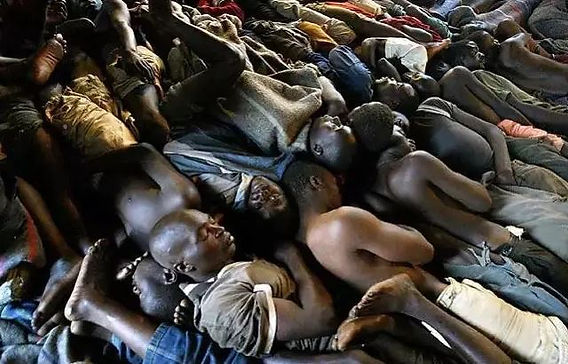
Overcrowding in Nigeria’s prisons hinders rehabilitation of inmates
NCoS says prison congestion and inadequate funding hinder effective rehabilitation and reintegration of inmates.

Politics
Five things Nigerians like about Tinubu and why he’ll struggle to defeat Atiku, Obi
Mr Tinubu appears to have cultivated a coterie of loyalists and supporters across party lines, mentoring and raising several other politicians from within and outside his camp.
NationWide
NCoS seeks professional assessment of sexual offenders’ rehabilitation
NCoS says the rehabilitation of convicted sexual offenders requires appropriate professional assessment, accountability and consideration for public safety and victims’ welfare.


