

FG needs $10 billion yearly investment to revive power sector: Minister

The minister of power, Adebayo Adelabu, says the federal government requires 10 billion dollars investment yearly to revive the power sector for the next ten years.
Mr Adelabu said this in Abuja on Monday at a one-day investigative hearing organised by the Senate committee on power on halting the Nigerian Electricity Regulatory Commission (NERC) ‘s electricity tariff increase.
“For this sector to be revived, government need to spend nothing less than 10 billion dollars annually in the next 10 years.
”This is because of the Infrastructure requirement for the stability of the sector, but government can not afford that.
“And so we must make this sector attractive to investors and to lenders.
“So for us to attract investors and investment, we must make the sector attractive, and the only way it can be made attractive is that there must be commercial pricing,” he said.
Mr Adelabu added: “If the value is still at N66 and government is not paying subsidy, the investors will not come.
“But now that we have increased tariff for a Band, interest has been shown by investors.”
The minister said the major challenge in the sector was absence of liquidity, saying that the sector had been operating on a subsidised tariff regime, given the absence of a cost reflective tariff.
He said that the subsidy had not been funded over the years as huge liabilities were being owed to the generating companies (GenCos) and the gas companies.
Mr Adelabu said the inability of the government to pay the outstanding N2.9 trillion subsidy was due to limited resources, hence the need to evolve measures to sustain the sector.
He appealed to the lawmakers to support the process of paying the debt owed operators across the value chain of generation, transmission and distribution.
“The increase is based on supply, saying that any customer that does not receive 20 hours of power supply will not be made to pay the new tariff,” he said.
He said the government was committed to ensuring sustainable reform in the sector, saying that there was need to clear the outstanding debt owed GenCos and gas companies.
To improve power supply, he said government was investing in hydro electric power, adding that construction of 700 mega watt power in Zungeru had commenced, while Kashimbila Hydroelectric power plant of 40 mega watt was awaiting evacuation to improve generation.
The minister said there was also an on going investment of 26 small hydro power dams to boost electricity production across the country.
However, members of the committee in their separate remarks decried the experiences of Nigerians on electricity supply over the years, despite the unbundling of the sector.
Sen. Lola Ashiru, the vice-chairman of the committee, said Nigerians were paying for the inefficiency of power sector operators.
Mr Ashiru said there was a lot of inefficiency across the value chain of generation, transmission and distribution..
He said poor Nigerians must be protected, adding that there was need to consider a reversal of the tariff increase.
Sen. Solomon Lalong said there was no consultation before the increase, adding that issues of palliative should have been discussed and provided before the tariff increase.
Sen. Enyinnaya Abaribe, the chairman of the committee, said what Nigerians wanted was a solution to the issues and ways to ensure liquidity in the sector.
He also decried the non-appearance of a company, “ZIGLAKS”, over the failed agreement to provide prepaid metres for Nigerians.
He alleged that the company had received N32 billion in 20 years to meter Nigerian electricity consumers.
Sen. Adamu Alero said due consultation was not made before the tariff increase.
He said the public was not at peace with the increase, saying that the increase was over 200 per cent, hence the need for a reversal of the tariff increase.
Some stakeholders at the event included the Nigerian Electricity Regulatory Commission (NERC), Manufacturers Association of Nigeria (MAN), association of power generation (Gencos) and electricity distribution companies (DisCos).
(NAN)

We have recently deactivated our website's comment provider in favour of other channels of distribution and commentary. We encourage you to join the conversation on our stories via our Facebook, Twitter and other social media pages.

More from Peoples Gazette

Agriculture
FG tasks ECOWAS on leveraging financing strategies for agroecology
The federal government has urged stakeholders in the agriculture and finance sectors in the West Africa region to leverage financing strategies to enhance agroecology practices

Politics
Katsina youths pledge to deliver over 2 million votes to Atiku
“Katsina State is Atiku’s political base because it is his second home.”
Africa
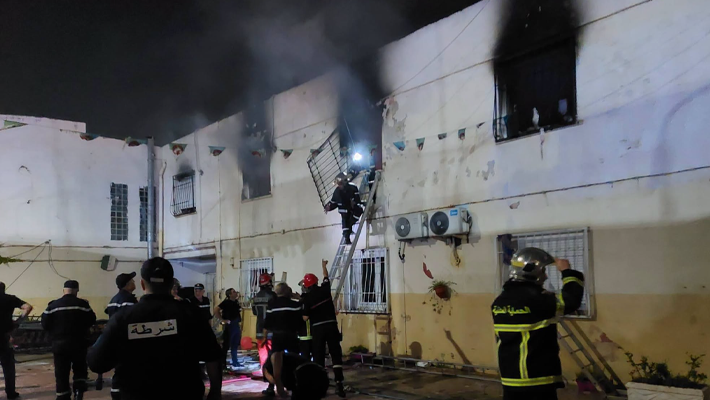
Eleven children killed, 19 injured in Algeria orphanage fire
President Abdelmadjid Tebboune described the tragedy as a huge loss.
Heading 2
Kano empowers 1,900 butchers, to establish cottage industry hubs
He said the government had already made provision for the establishment of the hubs in the 2026 budget.

Heading 3
2027 Elections: Police commence recovery of illegal arms nationwide
Mr Kokumo said the centre had destroyed more than 16,000 unserviceable weapons since its inception.

Heading 5
Court restrains FRSC from operating on Kano township roads
Mr Hikima sued the commission for unnecessarily stopping, searching and questioning him and other motorists.

Heading 5
White House teleprompter operator rakes in over $100,000 betting on Trump’s speeches: Report
Investigators discovered Mr Perez placed bets on more than a dozen of Mr Trump’s speeches over a three-month period.

Hot news Home top
Kidnapped Kogi school principal, NECO official, students regain freedom
Gunmen, on Tuesday, abducted a principal, NECO official and students during exam in Kogi school.


