

FG plans use of compressed natural gas for mass transit

The federal government plans to use Compressed Natural Gas (CNG), which Nigeria has in abundance, to reposition the transportation sector in urban cities across the country.
The Minister of State for Transportation, Ademola Adegoroye, said this in a statement by the spokesman for the ministry, Eric Ojiekwe, on Tuesday in Abuja.
Mr Adegoroye disclosed this when he received the “Implementation-Ready Report on National Strategy Development for the Adoption of Compressed Natural Gas (CNG)-based Transportation System in Nigeria’s Urban Cities” in Abuja.
The minister, while commending his erstwhile colleague, Gbemisola Saraki, assured that the report would be given prompt attention.
According to Mr Adegoroye, greenhouse gas emissions pose health and dire environmental consequences, and Nigeria cannot afford to lag.
He said this was especially because Nigeria is a signatory to the GreenHouse Emission Policy to reduce environmental carbon emissions.
While presenting the report to the minister, the ministry’s permanent secretary, Magdalene Ajani, said the report was sponsored by the World Bank and done by Nigeria Erosion and Watershed Management Project (NEWMAP).
Ms Ajani said this was done through the Federal Ministry of Environment with highlights on strategic steps to adopt CNG vehicles in the transportation sector in the country.
“It will help us in kick-starting the revolution in the change of the transport sector, with vehicle conversion to CNG on the adoption of CNG vehicles, for our road transport mode within the urban city to start with.
“Original Equipment Manufacturers in a couple of years will probably not be supporting vehicles that are by diesel or gas as everyone is moving towards Electric Vehicles (EV).
”The report takes into cognisance of how Nigeria can move from diesel and Premium Motor Spirit (Petrol) to natural gas and in about 10 to 15 years,” Ms Ajani said.
In May 2019, the Federal Executive Council (FEC) approved a National Action Plan to reduce short-lived climate pollutants.
This plan, developed by the Federal Ministry of Environment, aims to improve air quality and reduce Nigeria’s contribution to climate change.
(NAN)

We have recently deactivated our website's comment provider in favour of other channels of distribution and commentary. We encourage you to join the conversation on our stories via our Facebook, Twitter and other social media pages.

More from Peoples Gazette

Agriculture
FG tasks ECOWAS on leveraging financing strategies for agroecology
The federal government has urged stakeholders in the agriculture and finance sectors in the West Africa region to leverage financing strategies to enhance agroecology practices

Politics
Katsina youths pledge to deliver over 2 million votes to Atiku
“Katsina State is Atiku’s political base because it is his second home.”
Politics
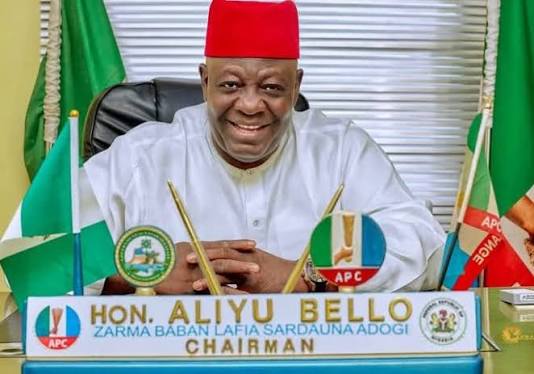
Opposition can’t unseat Tinubu in 2027; they’re in total disarray: APC Chieftain
Mr Bello dismissed reports of an emerging opposition coalition, insisting that the parties remained fragmented.

States
Ex-AGF Michael Aondoakaa mourns victims of Benue killings, demands action to end bloodshed
He said the latest killings highlighted the continued vulnerability of communities in Benue to violent attacks.

Africa
ICPC urges African leaders to scale up fight against anti-corruption
According to him, integrity, transparency, and the rule of law remain the foundation for sustainable development, democratic governance and economic growth in Africa.

Lagos
Lagos urges anti-harassment policies to protect women, workers
She noted that women accounted for more than 90 per cent of the reported workplace harassment cases.

States
Flooding: Ekiti LG boss warns residents against building structures on waterways
“We will no longer tolerate lawlessness and violations of government directives stating that nobody should build houses on waterways,” she said.

States
Ogun govt threatens to close markets over indiscriminate dumping of waste
Mr Akintunde described the practice of dumping refuse in markets rather than at designated collection points as unacceptable.


