

From Blueprint to Reality: An action plan for Nigeria’s sustainable infrastructure future

Nigeria stands at a pivotal crossroads. With an infrastructure deficit estimated at $3 trillion over the next 30 years, the country faces a formidable barrier to economic growth and progress toward the attainment of Sustainable Development Goals (SDGs). Currently, Nigeria’s infrastructure stock is just 30% of GDP, far below the 70% benchmark recommended by the World Bank.
Yet, recent macroeconomic reforms initiated since mid-2023 have opened a critical—though time-sensitive—window to rewrite this narrative. The challenge is no longer identifying the need, but executing a strategy that attracts investment at scale. Given fiscal constraints, mobilising private capital is not optional—it is imperative!
This action plan outlines a three-pillar roadmap to translate Nigeria’s infrastructure ambitions into reality: strengthening institutions, mobilising innovative finance, and embedding sustainability into the nation’s development DNA.
Pillar I: Forging a Foundation of Trust – The Institutional Reform Imperative
Finance may fuel infrastructure, but institutions form the chassis. For private investors, institutional risk is often the decisive factor. Institutional reform is not a policy aspiration—it is a financial strategy.
- Strengthen PPP Project Preparation & Bankability: Nigeria’s PPP pipeline is rich in potential but poor in execution. Many projects fail to reach financial closure due to weak feasibility and risk modelling. Establishing and capitalising a Project Development Facility (PDF) is a top priority. This facility would fund rigorous feasibility studies, financial modelling, and risk assessments to convert concepts into credible, investment-ready projects.
- Improve World Governance Indicators: World Bank data confirms that institutional quality is the single most important driver of private infrastructure investment. Nigeria must target improvements in Regulatory Quality and the Rule of Law, with a focus on judicial independence and contract enforcement. These reforms will send a strong signal to global capital markets and could unlock billions in annual investment.
- Enhance Regulatory Capacity: Institutions like the Infrastructure Concession Regulatory Commission (ICRC) must be equipped with the technical expertise and resources to oversee complex, long-term concession agreements. A stable, transparent regulatory environment builds investor confidence and ensures accountability.
Pillar II: Powering Progress – Mobilising Innovative Finance
To meet its infrastructure needs, Nigeria must expand beyond traditional funding models and embrace a diverse, sophisticated financing toolkit.
- Operationalise the Nigerian Climate Investment Platform (NCIP), led by the Nigeria Sovereign Investment Authority (NSIA), the NCIP aims to mobilise $500 million in its initial phase for climate-aligned projects. Its full activation is a short-term priority to attract co-investment from domestic and international partners.
- Scale Up Sovereign Sustainable Bond Issuance: As Africa’s first sovereign green bond issuer, Nigeria has a head start. The government should now leverage its Sovereign Sustainable Bond Framework to issue regular, large-scale green, social, and sustainability bonds—funding eligible budget projects while tapping into ESG-focused global capital.
- Unlock Domestic Pension Funds: Nigeria’s vast pension assets remain underutilised. Regulators like PENCOM and SEC, alongside entities such as InfraCorp, must develop investment vehicles—e.g., listed infrastructure funds and bonds—that align with institutional investors’ risk-return profiles. This is the cornerstone of a resilient, self-financing strategy.
Pillar III: Building for Tomorrow – Integrating Climate and Biodiversity
In the 21st century, ignoring environmental risks in infrastructure planning is fiscally reckless. Sustainability must be the compass guiding every investment decision.
- Mandate Climate Risk Screening: Nigeria faces acute climate threats—from coastal flooding in Lagos to desertification in the north. Updating Public Investment Management (PIM) guidelines to require climate risk screening for all major projects will prevent stranded assets and embed climate adaptation into fiscal policy.
- Align Infrastructure and Biodiversity Plans: Infrastructure is a leading driver of habitat loss. Nigeria’s updated National Biodiversity Strategy and Action Plan (NBSAP) must be integrated with the National Integrated Infrastructure Master Plan (NIIMP). A formal inter-ministerial working group should ensure biodiversity impact assessments are mandatory and meaningful.
- Develop a National Green Infrastructure Strategy: Green infrastructure must extend beyond renewable energy. Nigeria should invest in nature-based solutions—like mangrove restoration for coastal defence, wetland protection and restoration, as well as watershed protection for water security. These approaches often deliver superior development outcomes while enhancing climate resilience, biodiversity, and livelihoods.
Conclusion: A Window of Opportunity, A Call to Action
The recent macroeconomic reforms have laid the groundwork. But this window will not remain open indefinitely. Sustained political will, institutional reform, and strategic execution are now essential.
By advancing these three pillars in parallel—institutional strengthening, financial innovation, and environmental integration—Nigeria can transform its infrastructure landscape and build the resilient, inclusive future its citizens deserve.
The time for action is now.
By Eugene Itua AND Maximus Ugwuoke, both of Africa Green Economy and Sustainability Institute

We have recently deactivated our website's comment provider in favour of other channels of distribution and commentary. We encourage you to join the conversation on our stories via our Facebook, Twitter and other social media pages.

More from Peoples Gazette

States
Independence: NBA urges Nigerians to expect better future
The NBA said that ordinary Nigerians should be deriving benefit from the subsidy removal rather than hardship.

Agriculture
FG tasks ECOWAS on leveraging financing strategies for agroecology
The federal government has urged stakeholders in the agriculture and finance sectors in the West Africa region to leverage financing strategies to enhance agroecology practices

Politics
Katsina youths pledge to deliver over 2 million votes to Atiku
“Katsina State is Atiku’s political base because it is his second home.”

Economy
Lagos butchers seek land for Eko Ranches, plan pilot scheme
The Lagos State Butchers Association says it is seeking approval to begin a pilot ranching scheme at Oko-Oba Abattoir while awaiting land for Eko Ranches.

World
Five Nigerians appointed to UN information system consultation group
Five Nigerians have been appointed to the 92-member Multistakeholder Consultation Group of the United Nations Group on the Information Society.
States
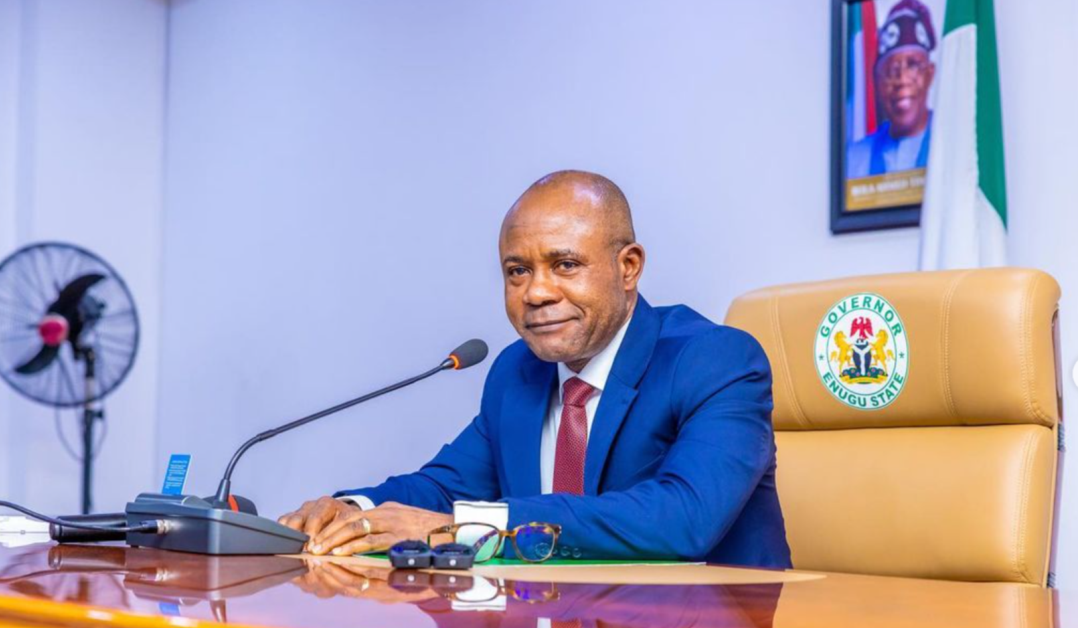
Mbah inaugurates multibillion-naira pharmaceutical company in Enugu
Governor Peter Mbah has inaugurated Anchorage Pharmaceutical Industries Limited, a multibillion-naira pharmaceutical company in Trans-Ekulu, Enugu.

Maiduguri
Shettima arrives in Maiduguri to inaugurate projects
Vice-President Kashim Shettima has arrived in Maiduguri, Borno, to inaugurate Kashim Ibrahim University Teaching Hospital, a hostel, and 104 staff housing units.
Abuja
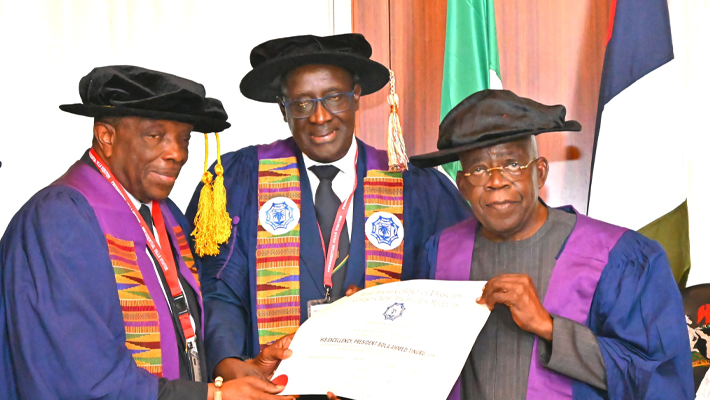
Tinubu receives medical fellowship from WACP
Mr Tinubu said his government was committed to championing comprehensive health sector reforms to make healthcare delivery more accessible and affordable.
Economy
Women-led businesses targeted as DBN, AfDB sign $61 million financing agreement
The Development Bank of Nigeria has signed a $61 million gender-focused financing agreement with the African Development Bank to support women-led businesses.


