

From Matawalle’s mouth to God’s ears
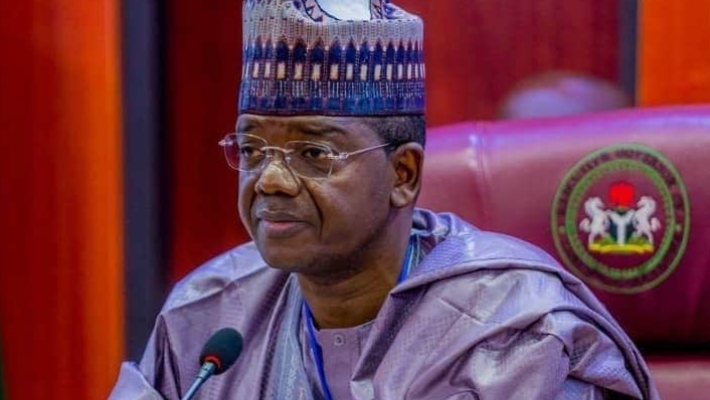
Public office sometimes produces statements that outlive the occasion that gave birth to them. They remain in the public memory because they reveal something deeper than a policy position or a momentary lapse of judgment. They disclose how power understands itself and how responsibility is conceived by those entrusted with it. One such statement came from Bello Matawalle, Minister of State for Defence: “It is only God that can bring an end to this insecurity, alongside our collective prayers and efforts. It should not be used as a tool to condemn others or score political points.” One reads the words repeatedly in search of reassurance and finds instead a surrender disguised as humility.
The invocation of God in public life is familiar to Nigerians and, in itself, entirely unremarkable. Faith accompanies our grief, steadies private sorrow, and often gives language to experiences that seem beyond human endurance. Nobody should quarrel with prayer. Nobody should object to the expressions of belief. The problem arises when prayer is elevated into an explanation for governmental inadequacy and presented as a substitute for public duty.
The statement becomes especially difficult to accept when placed beside the reports surrounding the death of retired General Rabe Abubakar, once the public face of military communication, whose reported killing by abductors and the subsequent return of his remains to the Government of Katsina State produced a scene heavy with national symbolism and unbearable irony. A retired military spokesman should not become an emblem of the insecurity he once defended the military high command against.
There is something profoundly unsettling in the image of a former representative of state authority ending his life at the mercy of criminal violence. The event carries a meaning beyond personal tragedy because it confronts the country with a disturbing question about the distance between official declarations and lived reality. At such a moment, a minister responsible for defence speaks and says only God can bring an end to insecurity.
One struggles to understand what office means under such reasoning. States do not exist because human beings concluded that history should be left to providence. Government emerged from the recognition that protection cannot rest entirely on hope and that organised authority has obligations that cannot be transferred upward to heaven whenever circumstances become difficult.
It is for this reason that the Constitution vests the State with the legal authority to secure the lives and property of its citizens, recognising that government derives its legitimacy not merely from power but from its duty of protection. Section 14(2)(b) of the Constitution of the Federal Republic of Nigeria 1999 (as amended) provides that: “the security and welfare of the people shall be the primary purpose of government.”
The Defence Ministry was established to formulate responses to threats, coordinate institutions, deploy capacity and maintain public confidence. Citizens do not invest public resources into security institutions as an act of collective devotion. They do so because the government accepts a burden and promises competence.
That burden cannot be carried through declarations of helplessness.
The statement attempts to soften its tone by adding the phrase “alongside our collective prayers and efforts,” but the sequence matters because language has embedded priorities. When the first and strongest proposition offered by the Minister of State for Defence is divine intervention, citizens are entitled to wonder what remains of human agency within government. The effect is subtle but dangerous. The moment insecurity is framed chiefly as a matter for divine intervention, accountability begins to recede, failure becomes easier to explain than to confront, and government risks presenting itself less as an agent of protection than as a witness to events beyond its control.
Insecurity did not descend on Nigeria as an inscrutable mystery. It has roots in identifiable failures, neglected warnings, policy choices, institutional weaknesses and the inability of successive authorities to build public trust through sustained competence. These are human matters requiring human responses. Prayer may accompany action. It cannot explain the absence of action.
There was another troubling line in Matawalle’s statement. He warned that insecurity should not be used as a tool to condemn others or score political points. That caution appears reasonable until one considers its implications. Public criticisms of insecurity aren’t political opportunism. Citizens questioning those in authority are participating in democratic life exactly as they should. Public office creates obligations and one of those obligations is answering difficult questions without treating criticism as hostility.
A grieving country does not owe silence to government. People living under fear do not become political actors simply because they ask whether those entrusted with their safety are succeeding. Questions aren’t acts of sabotage. Citizens who demand better outcomes are not enemies of the state. The attempt to recast scrutiny as point-scoring risks creating a moral shield around public office at the very moment greater openness and seriousness are required.
There is also a theological problem hidden inside statements of this kind.
God occupies a strange place in Nigerian public language. Leaders invoke Him with ease when institutions fail and invoke Him with enthusiasm when announcing achievements. Success becomes evidence of wisdom. Failure becomes evidence of divine mystery. One wonders what conception of God permits such convenient arrangements. Perhaps God listens to these declarations and asks why those who speak so confidently in His name hesitate to speak with equal confidence about strategy, coordination, intelligence and measurable outcomes.
Perhaps, too, heaven receives these statements with something close to disbelief, or God watches and laughs, not because suffering is amusing, but because human beings entrusted with authority continue to confuse piety with performance and reverence with responsibility.
Faith deserves better than being turned into official cover.
Nigerians deserve better than being told that insecurity belongs principally to the jurisdiction of heaven.
The government cannot kneel where it should stand. Public office holders cannot become prayer-warriors while responsibility keeps sentry at the door. From the mouth of Matawalle to the ears of God travelled a sentence intended to calm a troubled nation. What returned to many Nigerians sounded less like faith and more like an admission that those charged with protecting them had begun to speak as bystanders to events unfolding around them.
Abdul Mahmud, a human rights attorney in Abuja, writes weekly for The Gazette

We have recently deactivated our website's comment provider in favour of other channels of distribution and commentary. We encourage you to join the conversation on our stories via our Facebook, Twitter and other social media pages.

More from Peoples Gazette

States
Independence: NBA urges Nigerians to expect better future
The NBA said that ordinary Nigerians should be deriving benefit from the subsidy removal rather than hardship.

Agriculture
FG tasks ECOWAS on leveraging financing strategies for agroecology
The federal government has urged stakeholders in the agriculture and finance sectors in the West Africa region to leverage financing strategies to enhance agroecology practices

Politics
Katsina youths pledge to deliver over 2 million votes to Atiku
“Katsina State is Atiku’s political base because it is his second home.”

Health
Group urges lawmakers to strengthen oversight on nutrition funding
The programme manager said accountability in nutrition financing has been lacking over the years.

Economy
Nigeria’s inflation dropped to 14.63% in September: NBS
NBS said September headline inflation fell by 0.65 per cent to 14.63 per cent, down from 15.39 per cent in August.

States
Remi Tinubu inaugurates 50 CNG buses, launches ₦1 billion empowerment programme in Edo
Mrs Tinubu said the initiatives would improve transportation and create economic opportunities for residents.

Uncategorized
Alleged Fraud: Witness tells court he facilitated N1.4 billion forex transactions for Yahaya Bello’s associate
Justice Maryanne Anineh adjourned the case until October 27 and November 24, 2026, to continue the trial.
Politics
2027: Only eight women on INEC’s list of Katsina’s 420 legislative candidates
The final list released by INEC showed that only eight women will be contesting in the general elections in Katsina.

World
Finland’s Appeal Court reduces terrorism sentence of IPOB agitator Simon Ekpa
A Finnish district court had last year sentenced Mr Ekpa to six years’ imprisonment for terrorism and tax fraud.


