

Ganduje blames poor people, INEC for corruption in Nigeria
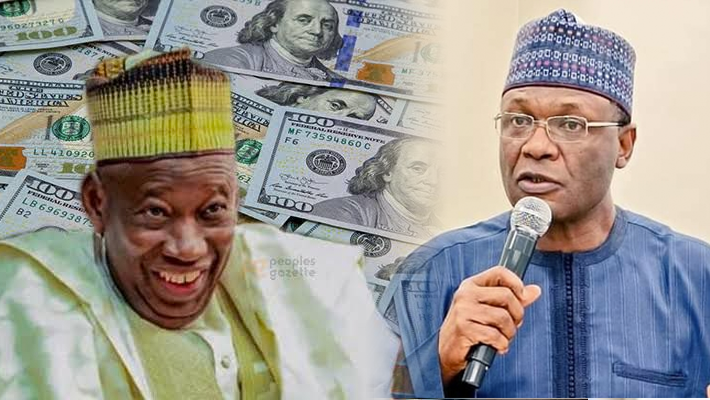
Former Governor Abdullahi Ganduje and Bishop Mathew Kukah, the founder of The Kukah Centre (TKC), have attributed political corruption to dishonest poor Nigerians, INEC and other institutions. Mr Ganduje insisted that blaming politicians and public officeholders would solve the problem of weak institutions in Nigeria.
This was stated at a high-level meeting with national executives of political parties and other stakeholders on Tuesday in Abuja, organised by TKC.
Mr Ganduje, who is roiled in a corruption case in Kano, said, “The major problem we have in Nigeria is that of weak institutions because we are just going on an atrocious circle. Unless we break that circle and make our institutions strong, we are just blaming the politicians. Political parties are also weak and because of that weakness, corruption thrives.”
The APC chair added, “Let us not be blaming the politicians, officeholders, those who win elections. Yes, we blame them but let us look at the security system, the Independent National Electoral Commission (INEC) that oversees the election.
“These institutions man the polling booths. So tell me, can you win an election free? Even the poor man is not honest. If we are to go into details of what happens practically, you will see voters saying they cannot vote until they are paid.’’
Mr Kukah moderated a panel session calling for learning from past mistakes and then building on them for stronger institutions and democracy in Nigeria through some processes.
He said, “Whether it is the judiciary or bureaucracy, all is a work in progress, and the most important thing is for us to learn the mistakes of the past and then develop the mechanism for ensuring that things don’t continue to repeat themselves.
“So, if you ask who built institutions? Institutions are supposed to be a mirror reflecting the aspirations, the fears, the hopes and the anxieties of an entire people. That means that for the police to become an institution and for the bureaucracy to become an institution, Nigerians must collectively and individually learn to say no to things going contrary to the principles of that institution.
“So, I think it is everybody’s business really for Nigeria to have stronger institutions.’’
Mr Kukah commended the European Union for strengthening democracy in Nigeria, especially in developing the Political Party Management Toolkit (PPMT).
(NAN)

We have recently deactivated our website's comment provider in favour of other channels of distribution and commentary. We encourage you to join the conversation on our stories via our Facebook, Twitter and other social media pages.

More from Peoples Gazette

States
Independence: NBA urges Nigerians to expect better future
The NBA said that ordinary Nigerians should be deriving benefit from the subsidy removal rather than hardship.

Agriculture
FG tasks ECOWAS on leveraging financing strategies for agroecology
The federal government has urged stakeholders in the agriculture and finance sectors in the West Africa region to leverage financing strategies to enhance agroecology practices

Politics
Katsina youths pledge to deliver over 2 million votes to Atiku
“Katsina State is Atiku’s political base because it is his second home.”
Lagos
Funding major challenge impeding Lagos development: Hamzat
Mr Hamzat said Lagos had developed the structures and capacity to implement its development plans but required sustainable funding.
Uncategorized
FG pays academic, non-teaching allowances to tertiary institution staff
The minister said the unveiling marked a significant milestone in the government’s efforts to improve staff welfare.
States
Gov. Oyebanji sacks heads of agencies, technical advisers
The governor, however, noted that a few appointments had been retained given the nature of the officials’ assignments.
Africa
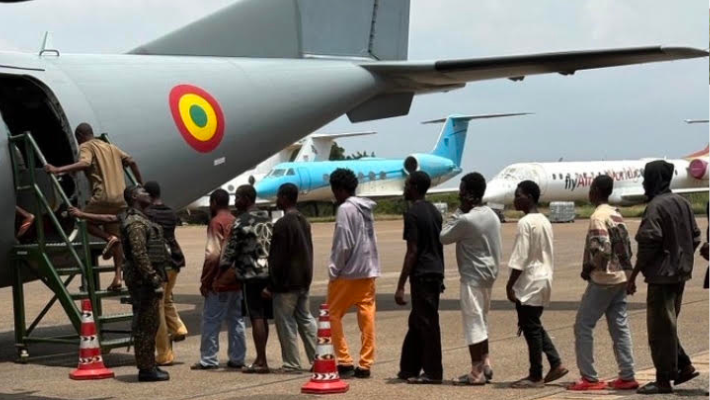
Ghana repatriates 120 Nigerians arrested in Yahoo Boys’ hideout crackdown
Mr George said a joint operation by U.S., UK, Ghanaian, and Nigerian forces led to the arrests.

World
World Bank launches Philanthropy Hub to connect donors with development projects
The statement noted that philanthropic organisations are already contributing to World Bank Group initiatives.
Abuja
Ajaero using FCT teachers’ strike to ‘cripple’ govt for ADC, says Wike
Mr Wike insisted that his administration has met its financial obligations and invested heavily in public school infrastructure.


