

Gender inclusion improves health service delivery: Kaduna Deputy Gov
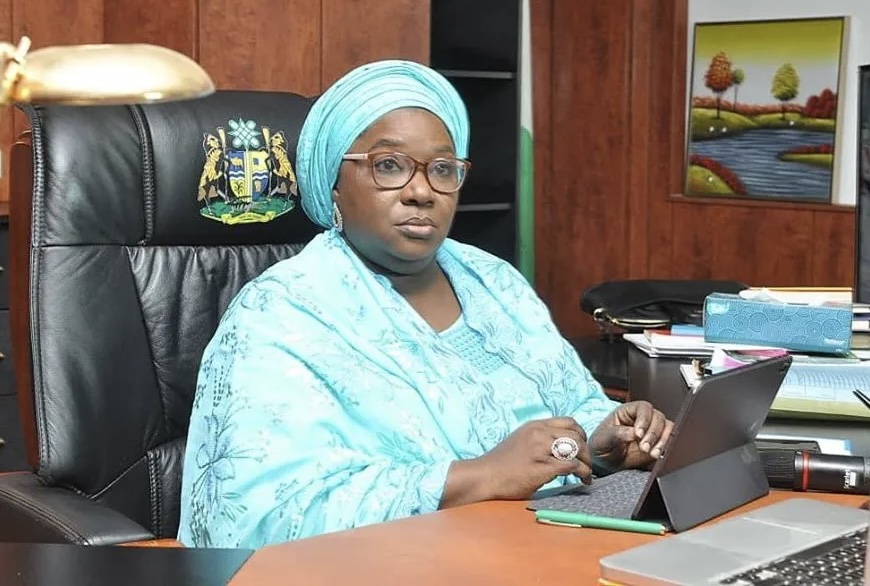
The Deputy Governor of Kaduna State, Dr Hadiza Balarabe, has noted that systems grow steadier, communities become safer and decisions reflect the full range of human needs when women head the health sector.
Ms Balarabe who is a medical doctor, buttressed her assertion with her own professional trajectory, which began in the field, culminating in her emergence as director of Public Health at the Federal Capital Territory in 2014.
She said, “I watched local immunization teams succeed because the women who led them understood the rhythms of their communities. I saw primary health facilities survive difficult years because women supervisors held them together with discipline and a sense of duty.”
The deputy governor who spoke at the public unveiling of Women In Public Health Leadership In Africa (WiPHLA) at the weekend, noted that “that experience shaped my conviction that leadership is not a gift for a few. It is a discipline that is learned, strengthened, and proven over time.’’
Ms Balarabe also reinforced her statement with the gender equity and inclusion policy of the All Progressive Congress(APC)-led administration in Kaduna State.
She stated, “In Kaduna State, we have been fortunate to work under a governor who believes in women’s capacity to lead. This is not a slogan. It is reflected in decisions that have placed two women at the helm of the ministry of health from 2019 to this day.
“Their stewardship, combined with firm political will, has guided major reforms that continue to reposition our health sector. It is also reflected in the leadership of the state’s health supply chain, where two women have led the agency consecutively, improving efficiency, stabilising commodity flow, and making Kaduna a model studied by other states. These results did not appear by chance. They came from trust, opportunity, and competence.”
According to Ms Balarabe who is a registered professional public health physician and consultant with over two decades of practice, “global evidence supports what we have seen at home.’’
She added, ‘’Studies by the Harvard School of Public Health show that teams with gender balanced leadership record stronger governance practices and better organisational resilience.”
She lamented that “the World Health Organization has noted that women account for the majority of the health workforce worldwide, yet remain underrepresented in senior decision making.
‘’The gap limits performance. When leadership reflects the people it serves, systems respond more accurately, more quickly, and more fairly. Across industries, the pattern is similar.”
The deputy governor also pointed out that “research from McKinsey and Catalyst points to higher organisational performance in institutions where women hold strategic leadership positions.
“These are not abstract claims. They speak to the simple idea that diversity strengthens judgment and widens the range of solutions available to a system. Health is no exception,’’ she said.
Ms Balarabe noted that WiPHLA is entering the landscape with a clear purpose, which is “to gather, to prepare, and to elevate. These three steps form the foundation of durable leadership.’’
“You gather women whose commitment is already evident. You prepare them with the skills and evidence that leadership demands. You elevate them to positions where their knowledge can guide policy and strengthen systems,’’ she added.
She noted, “If WiPHLA keeps these three tasks at the centre of its mission, it will build a community that outlives any single moment and shapes the continent’s future.’’
The deputy governor envisages that “WiPHLA can help shape this future. It can stand as a resource, a mentor, and a partner. It can open doors for emerging leaders.
“It can offer guidance to seasoned professionals. It can create a community that helps women lead with purpose, with confidence, and with a sense of responsibility to the continent,’’ she said.
Ms Balarabe advised that WiPHLA should be anchored on three pillars, namely evidence, integrity, service.
‘’Evidence guides our decisions. Integrity guides our conduct. Service guides our purpose. When these three stand firm, leadership becomes more than a position. It becomes a contribution to society,’’ she said.

We have recently deactivated our website's comment provider in favour of other channels of distribution and commentary. We encourage you to join the conversation on our stories via our Facebook, Twitter and other social media pages.

More from Peoples Gazette

States
Independence: NBA urges Nigerians to expect better future
The NBA said that ordinary Nigerians should be deriving benefit from the subsidy removal rather than hardship.

Agriculture
FG tasks ECOWAS on leveraging financing strategies for agroecology
The federal government has urged stakeholders in the agriculture and finance sectors in the West Africa region to leverage financing strategies to enhance agroecology practices

Politics
Katsina youths pledge to deliver over 2 million votes to Atiku
“Katsina State is Atiku’s political base because it is his second home.”

States
Police nab masqueraders for obstructing road in Akwa Ibom
The police said the suspects were armed with machetes and other dangerous weapons, creating unnecessary tension among road users.

NationWide
Military rescued 119 abducted travellers, killed terrorists in one week: DHQ
Mr Onoja said the operation demonstrated the military’s determination to deny terrorists the opportunity to abduct civilians.

States
FERMA engages 50 youths to maintain federal highways in Borno
The maintenance engineer urged the youths to demonstrate commitment.

States
Tinubu returns to Plateau for campaign rally seven months after 10-minute airport visit
Mr Tinubu arrived in Jos earlier on Saturday and was received by his party members.

Heading 1
Telecommunications failures disrupt nearly 50,000 flights across U.S.
The disruption, which started on Friday afternoon, left hundreds of thousands of passengers stranded at airports.

Heading 5
Gov Aliyu approves N1.59 billion for renovation of seven PHCs, upgrade of hospital
He added that the council approved N239.4 million for the installation of solar power systems in 30 PHCs across the state.


