

Google intensifies fight against misinformation
Google is set to initiate a new campaign in Germany to fight misinformation and make people more resilient to the adverse effect of online misinformation by releasing a series of short videos educating the public on the techniques familiar to most online misinformation before they encounter them.
The short videos will be released as advertisements on platforms like Facebook, YouTube, or TikTok in Germany.
This new approach is called ‘prebunking’. It involves teaching people how to spot online misinformation before they encounter them.
The techniques common to most online misinformation include fear-mongering, scapegoating, false comparisons, exaggeration, and missing context.
Beth Goldberg, head of research and development at Jigsaw, an incubator division of Google that studies emerging social challenges, stated that the campaign is a novel and exciting solution.
“Using ads as a vehicle to counter a disinformation technique is pretty novel. And we’re excited about the results,” Beth Goldberg said.
Alex Mahadevan, director of MediaWise, a media literacy initiative of the Poynter Institute, welcomed the google initiative as good news and an efficient way to combat misinformation.
“This is a good news story in what has essentially been a bad news business when it comes to misinformation,” Mr Mahadevan said.
He added that the strategy is a “pretty efficient way to address misinformation at scale because you can reach a lot of people while at the same time address a wide range of misinformation.”
The Poynter Institute has already incorporated prebunking into its programmes in Brazil, Spain, France, and the US.
The Associated Press reported that Meta has also incorporated prebunking into its many media literacy and anti-misinformation campaigns in recent years.
According to VOA, Google would announce its new German campaign ahead of next week’s Munich Security Conference.
Sander Van der Linden, a University of Cambridge professor considered an expert in prebunking theory, stated that misinformation is like a virus that spreads when unchecked.
“You can think of misinformation as a virus. It spreads. It lingers. It can make people act in certain ways,” Van der Linden told AP. “Some people develop symptoms. Some do not. So, if it spreads and acts like a virus, then maybe we can figure out how to inoculate people.”

We have recently deactivated our website's comment provider in favour of other channels of distribution and commentary. We encourage you to join the conversation on our stories via our Facebook, Twitter and other social media pages.

More from Peoples Gazette

Agriculture
FG tasks ECOWAS on leveraging financing strategies for agroecology
The federal government has urged stakeholders in the agriculture and finance sectors in the West Africa region to leverage financing strategies to enhance agroecology practices

Politics
Katsina youths pledge to deliver over 2 million votes to Atiku
“Katsina State is Atiku’s political base because it is his second home.”
Africa
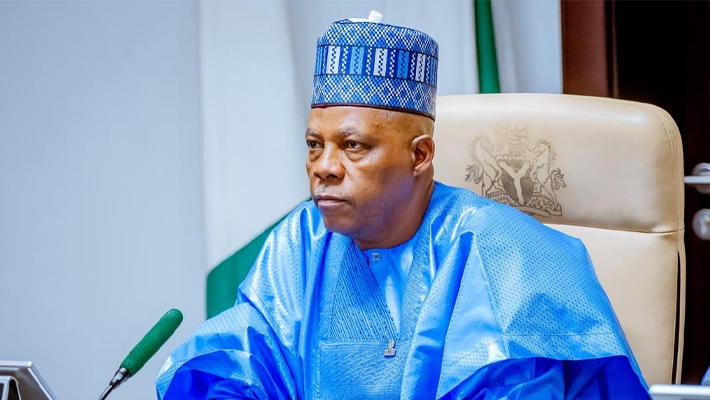
Shettima tasks new ECOWAS leadership on regional integration
Mr Shettima assured Mr Diop of Nigeria’s continuous cooperation and support.

Africa
Police discover tenth female corpse in South Africa
The ENCA news reported that the body was found inside the Mooifontein Cemetery in Tembisa near an Informal Settlement.

NationWide
Yeni Kuti unveils activities for 2026 Felabration
Ms Kuti spoke during an interview on Saturday in Lagos, ahead of the 2026 edition of the annual festival.

Heading 1
Choose credible leaders in 2027; nobody forcing candidates on you, Kukah tells Nigerians
The cleric urged Nigerians to vote to stay alive.

States
Robbery suspect nabbed with pistol during stop-and-search operation in Oyo
The police said the firearm and ammunition were immediately secured as exhibits.

Heading 3
Re-elect me to complete good works my govt started, Tinubu begs Nigerians
Mr Tinubu assured that said peace and development were gradually returning to the country.


