

Government, farmers urged to adopt biosecurity for healthy livestock

An animal scientist at the Institute of Agricultural Research and Training (IAR&T), Ibadan, Prof. Boye Omole, has advised livestock farmers to adopt biosecurity, which is critical in preventing infectious diseases.
Mr. Omole made the remark in an interview with the News Agency of Nigeria (NAN) on Monday in Ibadan.
He said biosecurity remains the cheapest, most effective means of disease control available and designed to keep potentially infected animals and contaminated objects from healthy livestock farms.
“The purpose of biosecurity is to establish a prevention barrier to disease-causing agents and other threats by minimizing the movement of biological organisms and external threats onto and within livestock operations.
“It recognises that animal diseases cannot be eliminated, but that livestock producers can manage disease risk through effective control measures,” he said.
Mr. Omole emphasised that such infectious agents, whether they cause clinical or sub-clinical disease, significantly reduce the productivity, profitability and long term financial viability of livestock operation.
“Biosecurity is very crucial in livestock production in order to prevent economic loss caused by production losses/premature animal depopulation,” he said.
He, therefore, urged the farmers and government to take every precaution to prevent these diseases, such as keeping animal houses clean and vaccinating livestock, adding that diseases of animals remain a concern because of the economic loss they cause and the possible transmission of the causative agents to humans.

We have recently deactivated our website's comment provider in favour of other channels of distribution and commentary. We encourage you to join the conversation on our stories via our Facebook, Twitter and other social media pages.

More from Peoples Gazette

States
Independence: NBA urges Nigerians to expect better future
The NBA said that ordinary Nigerians should be deriving benefit from the subsidy removal rather than hardship.

Agriculture
FG tasks ECOWAS on leveraging financing strategies for agroecology
The federal government has urged stakeholders in the agriculture and finance sectors in the West Africa region to leverage financing strategies to enhance agroecology practices

Politics
Katsina youths pledge to deliver over 2 million votes to Atiku
“Katsina State is Atiku’s political base because it is his second home.”

Sport
2027 AFCON Qualifier: Guinea-Bissau beat Madagascar, extend lead over Nigeria in Group L
Guinea-Bissau now have 10 points, Nigeria seven points, while Madagascar and Tanzania have two points each.
Africa
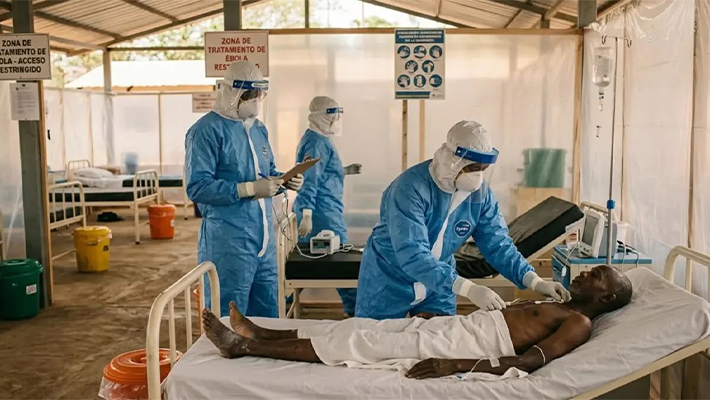
WHO raises concern over rising Bundibugyo Ebola deaths, insecurity in DR Congo
Mr Ghebreyesus said the outbreak, declared six months ago, had spread across 67 health zones in eight provinces in the DR Congo.

Africa
Afreximbank urges industries to boost intra-African trade as alternative to China in global markets
“As global markets look to diversify production beyond China, Africa must position itself as a natural partner of choice,” Mr Maayergi said.

World
Russell Brand faces probe over prison message to supporters
Mr Brand was convicted at Southwark Crown Court of one count of rape and three counts of sexual assault.
Politics
Tinubu admits cost-of-living crisis after APC dismissed widespread hunger claims
According to Mr Tinubu, the 2027 election is about the country’s future and direction.

World
WHO pushes for stronger vaccination, screening, treatment to eliminate cervical cancer
WHO said that expanding HPV vaccination, improving screening access, and ensuring timely treatment are critical to protecting women.


