

Health minister opposes amendment to teaching hospitals bill

The Minister of Health, Osagie Ehanire, has expressed reservation about the University Teaching Hospitals (UTHs) Amendment bill aimed at restructuring the composition of the governing board of the institutions.
At the public hearing of a bill for the amendment of the UTHs act by the House Committee on Health Institutions in Abuja on Wednesday, Mr Ehanire said the passage of the bill into law would lead to a huge disruption in the health sector.
He added that it would worsen the brain drain syndrome being experienced in the country and lower the standard of healthcare services in Nigeria.
“Rather than this bill, expertise should be placed on addressing the brain drain and improving hospital infrastructure,” Mr Ehanire said.
The minister, represented by Adebimpe Adebiyi, the director of hospital services, said the UTH was a well-organised system under the Ministry of Health with a mandate on manpower training.
He said the UTHs were designed primarily to train medical students, adding that the hospital’s chief medical director was not only an administrator because he had the responsibility to ensure that standards were maintained.
Meanwhile, Uche Ojinmah, the president of the Nigerian Medical Association (NMA), said the association rejected the bill entirely.
Mr Ojinmah said the bill sought to defeat the purpose of enacting the principal act that was seeking to amend.
“It is important for us to know that unlike other government hospitals, UTHs, starting with UCH, Ibadan was established primarily for the purpose of training the medical students.
“Prior to the enactment of the principal act, UCHs were run by directors of administration.
“This caused a lot of crisis as the directors of administrations were more focused on the financial bottom line to the detriment of training and research,” Mr Ojinmah said.
He said that the principal act made the chief medical director a full-time position to be occupied by a person with professional qualifications.
Speaking earlier, the speaker of the House of Representatives, Femi Gbajabiamila, said stakeholders’ views either for or against the subject would be addressed.
He said that it would add to the quality of legislations of the ninth assembly, which it would bequeath to the citizenry at the end of its tenure.
(NAN)

We have recently deactivated our website's comment provider in favour of other channels of distribution and commentary. We encourage you to join the conversation on our stories via our Facebook, Twitter and other social media pages.

More from Peoples Gazette

Agriculture
FG tasks ECOWAS on leveraging financing strategies for agroecology
The federal government has urged stakeholders in the agriculture and finance sectors in the West Africa region to leverage financing strategies to enhance agroecology practices

Politics
Katsina youths pledge to deliver over 2 million votes to Atiku
“Katsina State is Atiku’s political base because it is his second home.”

World
At least two killed, five injured in Toronto street festival shooting
The police said investigations are ongoing to fish out the shooter, warning the public to stay away from the area.
NationWide
INEC extends deadline for submission of 2027 presidential, NASS candidates’ lists
INEC said the extension followed the Inter-Party Advisory Council’s appeal on behalf of political parties.

Sport
Nigeria’s Flamingos beat Benin 5-3 to reach FIFA U-17 World Cup
The FIFA U-17 Women’s World Cup will take place in Rabat, Morocco, from October 17 to November 7, featuring the world’s leading youth teams.

Sport
World Cup: Argentina overcome Switzerland 3-1 after extra time
Argentina advanced into the World Cup semifinals, keeping alive their pursuit of another global title.

Sport
Bellingham brace fires England into 2026 World Cup semifinal
The final whistle confirmed England’s place in the semi-finals, where they will meet either Argentina or Switzerland.
Heading 5
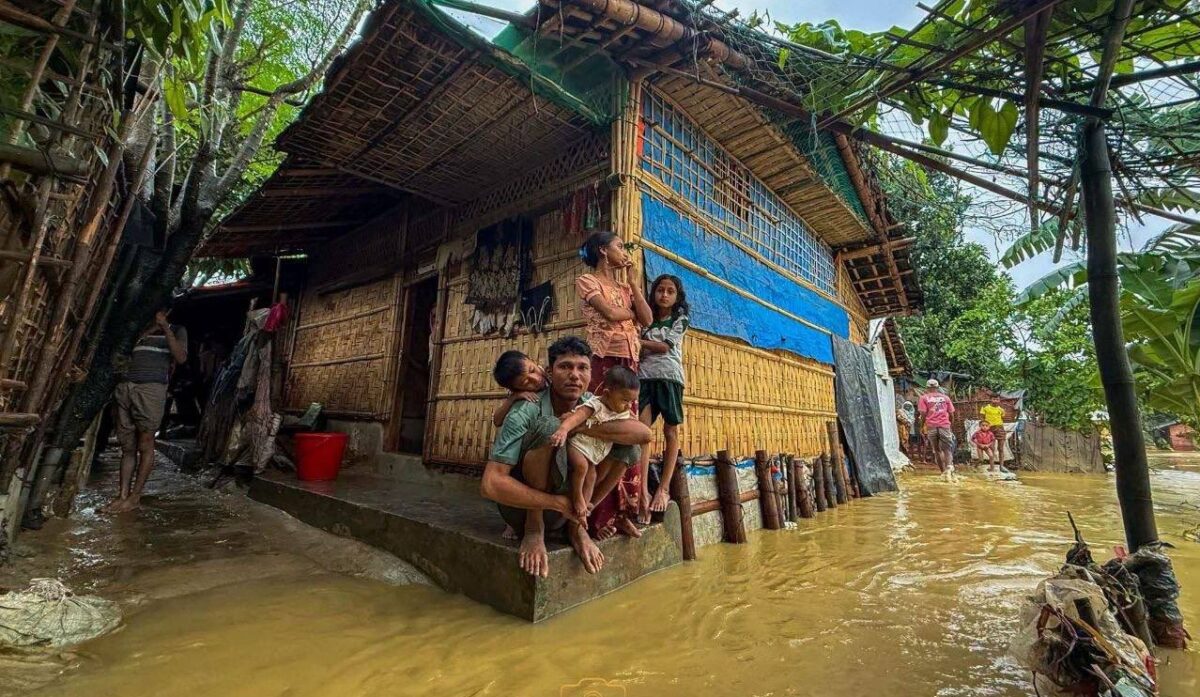
Floods kill 44 people, leave more than one million stranded in Bangladesh
Many households remain trapped in their communities, stranded without food, clean water, and electricity.


