

Human Rights Watch asks Mali junta to reverse suspension of political parties, associations

Mali’s transitional military government should immediately reverse its suspension of political parties and associations, Human Rights Watch said today. The suspension violates both Malian law and the rights to freedom of expression, association, and assembly under international human rights law.
On April 10, 2024, the council of ministers adopted a decree suspending the activities of political parties and associations across the country “until further notice.” On April 11, the Malian communications regulatory body (Haute autorité de la communication) directed all media to stop “broadcasting and publishing the activities” of political parties and associations.
The action appeared to be in response to the March 31 call by more than 80 political parties and associations for a return to constitutional order by holding presidential elections as soon as possible. The military junta, which seized power in a coup in May 2021, had announced in September that the elections scheduled for March 26 would be delayed indefinitely for technical reasons.
“The Malian authorities apparently suspended all political parties and associations because they didn’t like their call to hold democratic elections,” said Ilaria Allegrozzi, senior Sahel researcher at Human Rights Watch. “Mali’s junta, like all governments, needs to respect human rights, and should immediately lift the suspension.”
Following months of renewed hostilities between separatist armed groups and Malian forces in the northern part of the country, Col. Assimi Goita, Mali’s military president, announced on December 31, 2023, the establishment of an “inter-Malian dialogue for peace and reconciliation,” aimed at eliminating “the roots of community and intercommunity conflicts” by prioritizing “national ownership of the peace process.”
In an April 10 news release, Col. Abdoulaye Maïga, the minister of territorial administration, claimed the suspension of political parties and associations was justified to ensure that the inter-Malian dialogue “[would] take place in a climate of serenity and not cacophony.”
“The minister’s declaration has contradictions,” said a member of the political party African Solidarity for Democracy and Independence (Solidarité africaine pour la démocratie et l’indépendance, SADI). “Authorities are inviting people to the national dialogue, and at the same time are stripping them of their political clothes. … Who do they [authorities] want to attend the dialogue? People should be entitled to participate both as citizens and as political leaders or members of political parties.”
In January, the authorities took legal action against the SADI party, threatening to dissolve it, following a message posted on social networks by its leader, Oumar Mariko. Mariko had alleged that the Malian armed forces had committed war crimes against members of the Strategic Permanent Framework (Cadre stratégique permanent), a coalition of armed and political groups from northern Mali.
Since the military coup, Mali’s junta has increasingly cracked down on peaceful dissent, political opposition, civil society, and the media, shrinking the country’s civic space, Human Rights Watch said.
On March 13, the minister of territorial administration dissolved the Association of Pupils and Students of Mali (L’Association des élèves et étudiants du Mali) accusing its members of “violence and clashes in schools and universities.” The association was the fourth organization that the government dissolved in less than four months. On March 6, the authorities had dissolved the Coordination of Movements, Associations, and Sympathizers of Imam Mahmoud Dicko (Coordination des mouvements, associations et sympathisants de l’imam Mahmoud Dicko), which had been calling for presidential elections as part of restoring civilian democratic rule, accusing it of “destabilization and threat to public security.”
On February 28, the authorities had dissolved the political organization Kaoural Renewal (Kaoural Renouveau), citing “defamatory and subversive remarks” against the military junta. And on December 20, the authorities had dissolved the Observatory for Elections and Good Governance (Observatoire pour les élections et la bonne gouvernance), a civil society group that monitored the fairness of elections, accusing its chairman of “statements likely to disturb public order.”
The junta has also targeted dissidents and whistleblowers. On March 4, the authorities forcibly disappeared gendarmerie Col. Alpha Yaya Sangaré, who had recently published a book about abuses by the Malian armed forces. His whereabouts remain unknown.
A Malian human rights activist said that “the authorities want to maintain a monopoly over political power by denying opponents the right to express their views and conduct political activities.”
Mali’s constitution and the International Covenant on Civil and Political Rights, which Mali ratified in 1974, protect the rights to freedom of association, expression, and peaceful assembly. Article 25 of the ICCPR ensures the right of citizens to participate in public affairs. The United Nations Human Rights Committee, the body of independent experts that monitor state compliance with the convention, has upheld everyone’s right to “join organizations and associations concerned with political and public affairs.”
“The junta’s decision to suspend political parties is part of its relentless crackdown on peaceful opposition and dissent,” Allegrozzi said. “The authorities should immediately lift the suspension, allow the political parties and associations to operate freely, and commit to upholding fundamental rights and freedoms.”

We have recently deactivated our website's comment provider in favour of other channels of distribution and commentary. We encourage you to join the conversation on our stories via our Facebook, Twitter and other social media pages.

More from Peoples Gazette

States
Independence: NBA urges Nigerians to expect better future
The NBA said that ordinary Nigerians should be deriving benefit from the subsidy removal rather than hardship.

Agriculture
FG tasks ECOWAS on leveraging financing strategies for agroecology
The federal government has urged stakeholders in the agriculture and finance sectors in the West Africa region to leverage financing strategies to enhance agroecology practices

Politics
Katsina youths pledge to deliver over 2 million votes to Atiku
“Katsina State is Atiku’s political base because it is his second home.”
NationWide
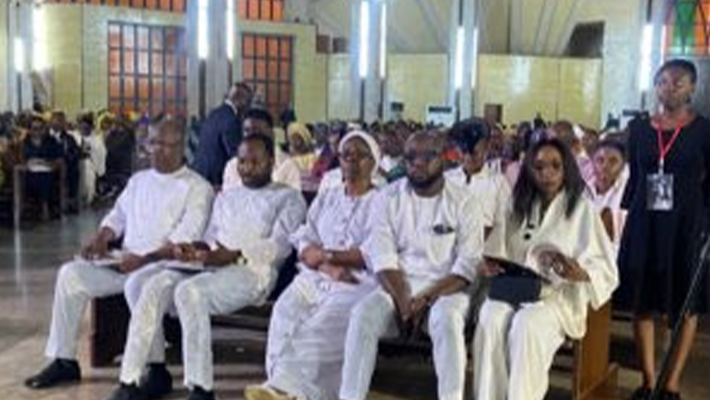
Obasanjo, Jonathan, Gowon mourn, pay tributes to ex-Aso Villa chaplain William Okoye
“Nigeria will miss you. Your family will miss you. The church will miss you. You stood for integrity,” Mr Jonathan said.
States
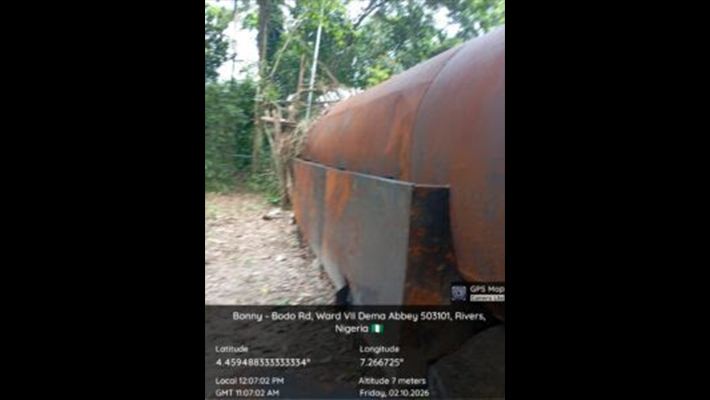
Navy uncovers Rivers’ illegal refining site, dismantles three storage tanks
Mr Folorunsho said the site was discovered on September 30, following credible intelligence.
Heading 3
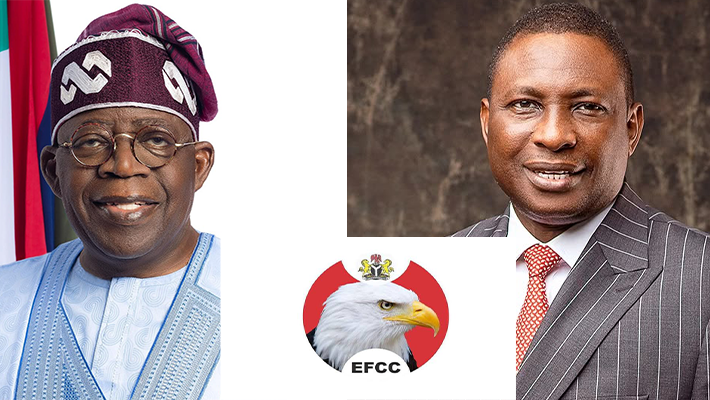
You’ve justified my confidence in you, Tinubu hails EFCC for anti-graft efforts
Mr Olukoyede reaffirmed the commission’s commitment to preventive frameworks in tackling corruption in the country.
Showbiz
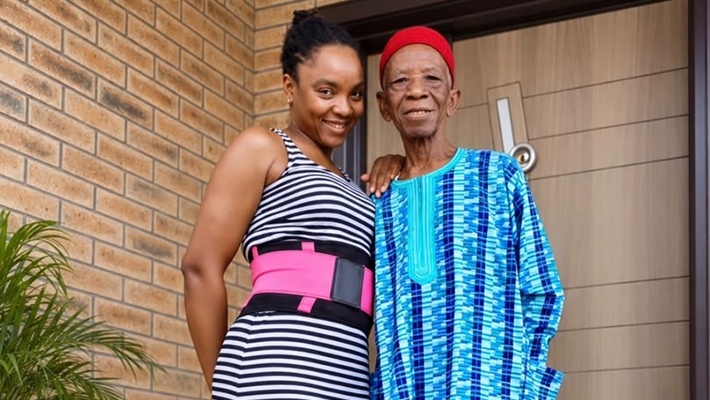
Nollywood actress Chioma Chukwuka-Akpotha loses father
“No matter how many years we are given with a parent, we still want one more conversation, one more embrace, one more day,” she said.
Africa
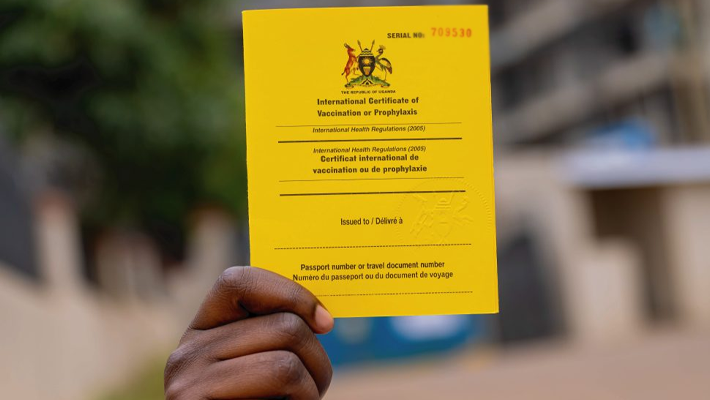
Uganda ends yellow fever entry requirement for travellers
The statement noted that the yellow fever vaccination certificate was not listed among the requirements on Uganda’s e-visa application portal.

States
2027: Tinubu’s Door-to-Door group launches campaign vehicles, posters in Yobe
The group distributed the vehicles and campaign materials at the 27th August Stadium in Damaturu.


