

Imo, Abia farmers seek governments’ intervention to tackle challenges
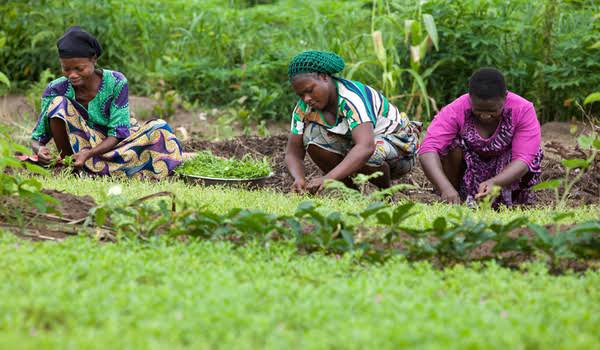
A survey of farmers in Imo and Abia revealed that the main obstacles they face each harvest season are ongoing pest attacks and unfavourable government regulations.
The farmers spoke in separate interviews with journalists in Owerri and Umuahia.
They said that they needed urgent interventions by the government at all levels to deal with the challenges.
The farmers complained that a large portion of their harvest was attacked by pests, especially rodents, and the opening of the country’s borders by the federal government contributed immensely to great losses on their investment.
A yam farmer, Everest Oparaji, said birds and rodents most times invade the crops before they fully mature for harvesting.
Mr Oparaji also said that some of the cheap and affordable pesticides make the seeds unsafe for humans, while the safe alternatives are very expensive. He appealed to the government to include safer pesticides at subsidised rates when distributing agro inputs to farmers.
Another farmer, Steve Akalonu, complained about the difficulty they encounter transporting their produce to the market due to poor road conditions.
Mr Akalonu said that most roads in the rural communities had been damaged by rain, causing farmers to spend more to transport their produce out from their farms.
“The transporters, who are able to come to our communities, charge exorbitant fares, and this cuts into our profits,” he said.
Contributing, Chinaka Uzoma, who cultivates yam and cassava, appealed to the government at all levels to invest in mechanised farming to help farmers in the state improve their yield.
Mr Uzoma said that the government should do more to support farmers, saying that it was not enough to give agro inputs at the beginning of the farming season and not offer other technical and miscellaneous support.
He said, “Providing machinery not only makes it easier to cultivate but also helps with the work that needs to be done between planting and harvesting, such as weeding and application of manure and pesticides.
“There are machines that help farmers do their work in less time. That will help to ensure that we are able to expand our farms and cultivate larger areas. These machines cost a lot, and we cannot afford them as individual farmers or farming cooperatives.”
Henry Iwundu, a student of the Department of Agricultural Extension, Federal University of Technology, Owerri, who owns large hectares of farmland in his Umuohiagu, Ngor Okpala Village, also decried the huge losses he usually suffered in his farming business.
Mr Iwundu, a beekeeper who also farms pepper, cassava and cereals, expressed concern that local farmers were running losses as imported food items were competing with the local substitutes.
“The opening of borders has brought a lot of competition. In spite of the availability of foodstuffs in the market, we are unfortunately experiencing losses because we planted when the borders were closed. We bought inputs at exorbitant prices, but today, we’re selling at lower prices with the opening of the borders,” he said.
Ugochi Nwanne, who cultivates cassava at Emii, Owerri North Local Government Area, complained that she was having serious challenges harvesting her crops due to insecurity.
“I fear that my farm might be invaded by suspected herders and other produce thieves, because we hear cases of stealing around this farm settlement,” Ms Nwanne said.
Friday Nwamkpa, who owns hectares of farmland and also cultivates palm trees, urged the federal government to consider the impact of its policies on the farmers and their investments.
Mr Nwamkpa said that the price of palm oil had remained stagnant for some time owing to the rains. He expressed the hope that the price would rise with the start of the rainy season to enable farmers, especially those who had stored palm oil, to recoup their investment and make a profit.
In Umuahia, some farmers also sought the government’s intervention to ensure adequate food production, particularly by checking incessant security breaches around the agrarian communities.
The chairman of the All Farmers Association of Nigeria (AFAN) in Abia, Ndudim Ikelua, said that communal clashes at the peak of the harvest period prevented farmers from accessing their farms.
“We lost so much of our produce and were only able to salvage less than 10 tonnes, instead of the 42 tonnes we projected,” Mr Ikelua said.
He further said that the ugly situation highlighted the urgent need to strengthen security around farming communities.
He explained that in spite of the setbacks, the season’s general output was high across the Abia communities and neighbouring states, leading to the current fall in food prices.
“Right now, a bushel of rice sells between ₦30,000 and ₦33,000, and this drop is not due to any government policy but the large quantity of rice and other foods that have flooded the market,” he said.
The state AFAN boss said that his group had begun to set up processing and storage facilities to mitigate post-harvest losses and maintain quality.
“We are planning to establish a processing plant and warehouse to enable us to carry out high-quality rice production from start to finish. If rice is properly dried and processed, it reduces humidity and can be stored longer,” Mr Ikelua said.
He appealed to government agencies to support farmers with loans, tax rebates, and grants to expand production and also called for sustained collaboration between farmers and export agencies, such as the Nigerian Export Promotion Council, to help farmers explore international markets once local demands had been adequately met.
The first national president of the Nigerian Cassava Processors and Marketers Association, Philip Ajomiwe, described the production level in this year’s harvest as encouraging.
Mr Ajomiwe, however, expressed worry that farmers were faced with rising operational costs and poor market prices.
“The cost of harvesting, transportation, and diesel for operating tractors and processing machines has gone up; labour is expensive, and getting workers is difficult. Yet, when we sell, the price of garri has gone down drastically,” he said.
Mr Ajomiwe, who is the traditional ruler of Oriendu Autonomous Community, also lamented the growing security threats faced by farmers in many communities of Abia.
“In my community and others, herders invade farms at night, uproot cassava to feed their cattle, and destroy large portions of farmlands while grazing. This is a serious threat to investment in farming here that discourages farmers,” he said.
On post-harvest management, Mr Ajomiwe said his factory processes cassava into high-quality cassava flour and other derivatives but pointed out that storage and value addition remained his major challenges.
“We are also advocating the inclusion of 20 per cent high-quality cassava flour in wheat for bread production to boost demand and stabilise prices,” he said.
He said that the industry’s growth depended on consistent government support, mechanisation, and financial access.
Also, a cassava and cocoa farmer, Michael Nmerole, urged the authorities to provide single-digit loans and grants to ease farmers’ access to finance and boost food production.
“The yield we get these days is not as promising as before because the cost of labour, fertiliser, chemicals and other inputs has become very high. For cocoa, the cost of pesticides and farm chemicals is almost unbearable, but we are not giving up,” he said.
Mr Nmerole said that pest infestations also affected maize farms in the area, saying that many farmers battled insects that attacked the crop at early growth stages. He appealed to the government to ensure that agricultural support programmes reach genuine farmers rather than political intermediaries.
Another farmer, who cultivates cassava and vegetables, Chinyere Ukachi, said the season’s yield was encouraging but decried the high cost of fertiliser, transportation and labour.
“Many young labourers no longer want to work on the farm, so we do most of the work ourselves. Also, inputs and transportation costs have gone up so high,” she said.
She urged the government to assist smallholder farmers with fertiliser, affordable credit and processing machines to reduce losses and boost production.
(NAN)

We have recently deactivated our website's comment provider in favour of other channels of distribution and commentary. We encourage you to join the conversation on our stories via our Facebook, Twitter and other social media pages.

More from Peoples Gazette

States
Independence: NBA urges Nigerians to expect better future
The NBA said that ordinary Nigerians should be deriving benefit from the subsidy removal rather than hardship.

Agriculture
FG tasks ECOWAS on leveraging financing strategies for agroecology
The federal government has urged stakeholders in the agriculture and finance sectors in the West Africa region to leverage financing strategies to enhance agroecology practices

Politics
Katsina youths pledge to deliver over 2 million votes to Atiku
“Katsina State is Atiku’s political base because it is his second home.”

Africa
Economic growth in Nigeria, other Sub-Saharan Africa countries gaining momentum despite global uncertainty: World Bank
Building the foundations for an AI-ready economy can help turn Africa’s growth into more jobs and better opportunities for the region’s rapidly growing labour force.

NationWide
ITUC-Africa warns political leaders against inflammatory comments ahead of 2027 polls
Mr Odigie expressed concern over inflammatory political rhetoric as Nigeria approaches the 2027 elections

Heading 2
Abducted corps member’s sister begs Nigerians to support her rescue
Ms Olawole said her sister was suffering from chronic ulcer.

Africa
When Streets Become Pharmacies: Booming illicit markets in Central Africa
From 2020 through 2025, authorities seized 251 tonnes of medical products in Cameroon, the Republic of Congo, Gabon, the Central African Republic, and Chad.

Ibadan
40-year-old man arraigned for allegedly breaking into woman’s shop
The defendant pleaded not guilty to the charge.

Politics
ADC tackles Gov Lawal over N20 billion projects in Zamfara LGAs
The Zamfara chapter of the African Democratic Congress has called on Governor Dauda Lawal to account for the N20 billion in projects executed in each council area.


