

In new NBS report, inflation down by 0.05%, food index up by 22.72%
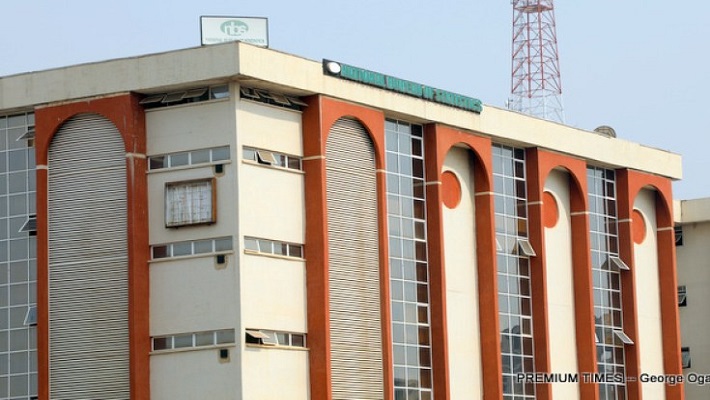
The National Bureau of Statistics (NBS), says the inflation rate decreased by 0.05 per cent in April compared to what was obtained in March.’
It said while the inflation rate stood at 18.17 per cent in March, it reduced to 18.12 per cent in April.
The rate is contained in the NBS’s Consumer Price Index (CPI) report for April 2021 released on Monday in Abuja.
The CPI measures the average change over time in prices of goods and services for day-to-day living.
The report also said increases were recorded in all Classification of Individual Consumption by Purpose (COICOP) divisions that yielded the headline index.
“On a month-on-month basis, the headline index increased by 0.97 per cent in April. This is 0.59 percentage points higher than the rate recorded in March (1.56 per cent)”, the report said.
The NBS said that the percentage change in the average composite of CPI for the 12 months period ending in April over the average of CPI for the previous 12 months period was 15.04 per cent.
This, it said, represented a 0.48 per cent increase over 14.55 per cent recorded in March.
It, however, said that the rural index also rose by 0.95 per cent in April, down by 0.57 per cent, compared to the 1.52 per cent rate recorded in March.
“The corresponding twelve-month year-on-year average percentage change for the urban index is 15.63 per cent in April.
“This is higher than 15.15 per cent reported in March, while the corresponding rural inflation rate in April is 14.48 per cent compared to 13 per cent recorded in March,’’ it stated.
The NBS said that composite food index rose by 22.72 per cent in April compared to 22.95 per cent in March.
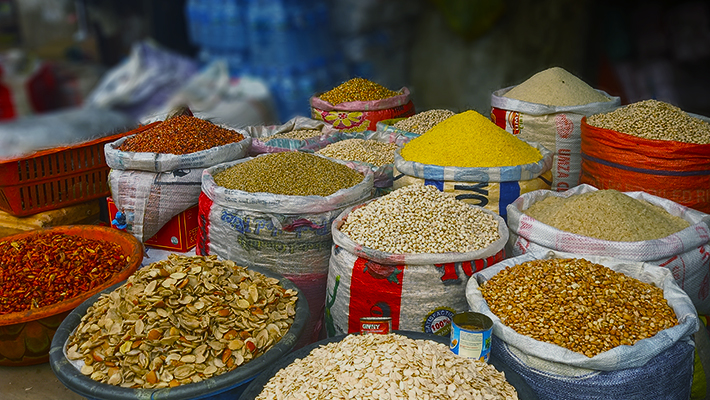
It added that on a month-on-month basis, the food sub-index increased by 0.99 per cent in April, down by 0.91 per cent from 1.90 per cent recorded in March.
It said that the rise in the food index was caused by increases in prices of coffee, tea and cocoa, bread and cereals, soft drinks, milk, cheese and eggs, vegetables, meat, oil and fats, fish and potatoes, yam and other tubers.
The data bureau said that “All items less farm produce’’ or Core inflation, which excludes the prices of volatile agricultural produce stood at 12.74 per cent in April, up by 0.07 per cent when compared with 12.67 per cent recorded in March.
It added that on a month-on-month basis, the core sub-index increased by 0.99 per cent in April, down by 0.07 per cent when compared with 1.06 per cent recorded in March.
It said that the highest increases were recorded in the prices of pharmaceutical products, vehicle spare parts, hairdressing salons and personal grooming establishments.
Other areas are garments, furniture and furnishing, medical services, shoes and other footwear.
Others are motor cars, major household appliances whether electric or not, dental services, hospital services, non-durable household goods and fuel and lubricants for personal transport equipment.
For the state profile, the NBS said that in April, “all-items’’ inflation on a year-on-year basis was highest in Kogi at 24.33 per cent, Bauchi State at 22.93 per cent and Sokoto State at 20.96 per cent.
Abia at 15.94 per cent, Kwara at 15.70 per cent and Katsina State at 15.58 per cent recorded the slowest rise in headline year-on-year inflation.
On a month-on-month basis, however, in April “all-items’’ inflation was highest in Kebbi at 2.24 per cent, Cross River at 1.99 per cent and Jigawa at 1.78 per cent.
Ebonyi at 0.12 per cent recorded the slowest rise in headline inflation month-on- month with Rivers and Ogun recording price deflation or negative inflation.
For food inflation on a year-on-year basis, in April, it was highest in Kogi at 30.52 per cent, Ebonyi 28.07 per cent and Sokoto State at 26.90 per cent.
Abuja at 18.63 per cent, Akwa Ibom at 18.51 per cent and Bauchi State at 17.64 per cent recorded the slowest rise in year-on-year inflation.
On month-on-month basis, however, April food inflation was highest in Kebbi at 2.46 per cent, Ekiti State at 2.42 per cent and Kano State 2.17 per cent.
Meanwhile Abuja at 0.05 per cent recorded the slowest rise in month-on-month food inflation with Rivers and Ogun recording price deflation or negative inflation.
(NAN)

We have recently deactivated our website's comment provider in favour of other channels of distribution and commentary. We encourage you to join the conversation on our stories via our Facebook, Twitter and other social media pages.

More from Peoples Gazette

Agriculture
FG tasks ECOWAS on leveraging financing strategies for agroecology
The federal government has urged stakeholders in the agriculture and finance sectors in the West Africa region to leverage financing strategies to enhance agroecology practices

Politics
Katsina youths pledge to deliver over 2 million votes to Atiku
“Katsina State is Atiku’s political base because it is his second home.”

Heading 2
Ooni of Ife pays tribute to late elder brother, says his death created irreplaceable vacuum
The monarch prayed for the departed soul to rest in peace and for comfort for his immediate family, friends, business associates and everyone whose lives he impacted.

Africa
Information minister congratulates Ibietan on re-election as APRA scribe
Mr Idris described Mr Ibietan’s re-election as a well-deserved recognition of his professionalism.

States
Niger governor donates N100 million to IBBU’s College of Medicine, 41 pioneer medical students
Mr Bagana stated that the 41 pioneer medical students of the institution comprised 21 males and 20 females.

Politics
2027: Minister vows to mobilise one million votes for Tinubu, Radda in Katsina
Mr Rabe-Darma vowed to mobilise over one million votes for President Bola Tinubu and Governor Dikko Radda ahead of the 2027 elections.

Heading 5
Mamdani considers arresting Israeli PM Netanyahu if he visits New York
Mr Mamdani said his administration’s legal department is weighing the option of arresting the Israeli leader as determined by the law.
Lagos
LAWMA unveils reforms to end waste backlog in Lagos
He said conventional dumpsites were no longer sustainable because of Lagos’ coastal terrain, limited land availability and growing urban population.


