

Jigawa farmers lament as irregular rainfall threatens crop cultivation
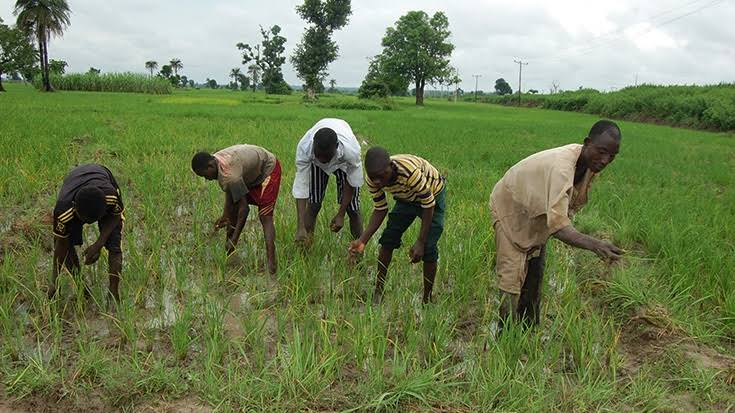
Some farmers in Dutse, Jigawa, have expressed apprehension over irregular rainfall threatening crop cultivation in the area.
The situation had forced many farmers to delay planting water-intensive crops amid fears of low yields at harvest.
They said the prolonged dry spell after planting had left many crops struggling to establish, while uncertainty over rainfall disrupted farming activities. A cross-section of the farmers stated this in separate interviews on Friday in Dutse.
Ayuba Sadisu, a farmer, described the erratic rainfall pattern as a major challenge, saying that many farmers planted their crops expecting consistent rains.
Yahaya Haruna said inadequate rainfall posed a greater threat to smallholder farmers, whose livelihoods depend largely on rain-fed agriculture.
Salihu Auwalu, a farm labourer who also provides ox-ploughing services, said that irregular rainfall had slowed his farming operations.
“Many farmers usually engage my services to prepare their rice fields, but most of them have suspended the work because they are waiting for the rains to become consistent before cultivating the farmlands.
“Without adequate rainfall, crops are at risk of withering before they become properly established,” he said.
An agricultural expert, Hussaini Tukur, said irregular rainfall during the early stages of the rainy season could affect seed germination, reduce crop establishment and delay planting decisions, particularly for water-intensive crops such as rice.
He advised farmers to adhere to weather forecast advisories from the Nigerian Meteorological Agency (NiMet) before planting and adopt good farming practices to minimise losses.
“Farmers should avoid rushing to plant immediately after the first rainfall. They should ensure the rainy season is fully established, cultivate drought-tolerant or early-maturing seeds, and seek guidance from extension officers,” he said.
(NAN)

We have recently deactivated our website's comment provider in favour of other channels of distribution and commentary. We encourage you to join the conversation on our stories via our Facebook, Twitter and other social media pages.

More from Peoples Gazette

States
Independence: NBA urges Nigerians to expect better future
The NBA said that ordinary Nigerians should be deriving benefit from the subsidy removal rather than hardship.

Agriculture
FG tasks ECOWAS on leveraging financing strategies for agroecology
The federal government has urged stakeholders in the agriculture and finance sectors in the West Africa region to leverage financing strategies to enhance agroecology practices

Politics
Katsina youths pledge to deliver over 2 million votes to Atiku
“Katsina State is Atiku’s political base because it is his second home.”

Economy
UN chief seeks increased investment in clean electricity
Mr Guterres made the call during a high-level dialogue on clean energy transition and electrification, titled ‘35 by 35: Powering the Future’, in Antalya, Türkiye.
Opinion
Rudolf Okonkwo: Diary of an African travelling across Europe
The Europeans who once crossed oceans to divide Africa among themselves have now found ways to bring much of their own continent together.

Showbiz
Meta deactivates Russell Brand’s Instagram, Facebook accounts after rape sentencing
Meta has deactivated British former comedian and actor Russell Brand’s Instagram and Facebook accounts following his conviction and sentencing for four sexual offences.

Abuja
NSITF: EFCC continues N2 billion fraud trial against ex-labour minister Chris Ngige
The Economic and Financial Crimes Commission, EFCC, says it has continued prosecuting former labour minister Chris Ngige over alleged abuse of office.

Economy
Stock market loses N293 billion as profit-taking persists
The Nigerian stock market closed on a negative note on Wednesday as investors’ wealth declined by N293 billion.

Health
Domestic TB funding rose 14% to $5.6 billion, says WHO
WHO says domestic funding for TB rose 14 per cent to $5.6 billion between 2024 and 2025, helping sustain essential services despite declining international financing.


