

Jonathan Ishaku and Nigeria’s post-hegemonic moment

In his forthcoming book, Nigeria, Northern Hegemony and 2027: Power without Consent and the Reckoning of a Broken Order, my friend and respected former editor of the Nigerian Standard, Jonathan Ishaku, offers what may well be read as a nunc dimittis for Nigeria’s political order, an order he sees approaching its moment of exhaustion. He argues that the northern hegemony has entered a post-hegemonic phase, one in which its authority has waned without any coherent or compelling alternative yet taking shape.
At first glance, his insight, though grounded in the northern hegemonic experience, illuminates the broader Nigerian condition: a polity suspended between the collapse of an old order and the uncertainty of what might succeed it; and he extended his arguments in two recent essays, Beyond Bwala: Recognising Tinubu’s and Nigeria’s Post-Hegemonic Moment; and Peter Obi and the Paradox of Nigeria’s Post-Hegemonic Transition, which explore the tensions and contradictions of a country caught in transition, but not yet metamorphosed.
Ishaku is right to suggest that Nigeria stands at what can be described as a post-hegemonic moment, because what we are witnessing today is not just political competition in the ordinary sense, but a deeper unravelling of an old order that once held the country together, even if imperfectly, and the uncertain search for something new that has not yet fully taken shape. To understand how Nigeria arrived at what he calls “the inflection point”, one must look back at the post-independence order, an order dominated by a tight circle of political and economic elites who, despite changes in uniforms from military to civilian rule, maintained a remarkable continuity in how power was exercised, distributed, and preserved, such that the state became less a neutral institution serving all and more a mechanism through which a narrow class governed the many, often with limited accountability.
For decades, this arrangement endured because it combined control with a measure of consent, offering enough stability, patronage, and symbolic unity to prevent a complete breakdown of belief in the system, even when its failures were obvious. However, over time, the contradictions of this “oligarchic order” (borrowing the phrase from Jonathan Ishaku) deepened, as economic hardship widened, public institutions weakened, corruption became more visible and more brazen, and citizens grew increasingly aware that the promises of governance were no longer matched by reality, leading to a gradual but steady erosion of trust. What once appeared as a strong centre began to look weak, not because it had disappeared, but because it no longer commanded the confidence or obedience it once did, and in its place emerged a more fragmented landscape in which authority is contested by multiple actors, including political elites, regional interests, civil society groups, bandits and terrorists, and an increasingly vocal youth population.
So, the question one would ask is how, then, did Nigeria arrive at the post-hegemonic moment that Jonathan Ishaku argues about?
Nigeria reached its post-hegemonic moment, not through a single dramatic event but through a slow, wearing away of legitimacy, a quiet withdrawal of belief, and a growing sense among citizens that the old ways of organising power can no longer deliver the future they seek. In simple terms, the house did not collapse in one day, as Karl Maier argued in his book This House Has Fallen: Nigeria in Crisis, but over many years, until it became clear that living in it as it was would no longer be possible.
At this point, the insight of Antonio Gramsci becomes especially useful, because he described such periods as an interregnum, a time when the old order is dying but the new one has not yet been born, and in this space of uncertainty, strange and often troubling developments emerge, not because they are inevitable, but because there is no longer a stable framework to contain them.
Nigeria today reflects this condition in many ways, as one sees both the persistence of old political habits and the restless search for new forms of expression, representation, and power.
This brings us to another question: can Nigeria be said to be in a post-hegemonic transition? The answer is that it can be argued so, but with an important qualification: the transition is uneven, incomplete, and still deeply contested. A transition implies movement, a sense that the political order is not only breaking down but also reconstituting itself in some form, even if that form is not yet clear or stable. In Nigeria, there are clear signs of such movement, as different political actors and social groups are not merely competing for office but are also advancing different visions of what the country should become, whether through calls for restructuring, demands for stronger institutions, appeals to identity and regional autonomy, or efforts to redefine citizenship and participation.
What makes this moment particularly significant, and what gives weight to Ishaku’s argument, is that these actors are not simply individuals seeking power in the narrow sense, but are, as he rightly notes, embodiments of competing historical trajectories, each representing a different answer to the question of how Nigeria should be governed, how its resources should be shared, and how its diverse peoples should live together. In this sense, elections are no longer just periodic contests but arenas in which deeper struggles over the future of the state are being played out.
In spite of the signs of transition, it would be misleading to suggest that Nigeria has fully moved beyond its post-hegemonic moment into a clear and coherent post-hegemonic order, because the elements of confusion, chaos, and uncertainty remain very strong. The various visions on offer have not yet crystallised into a dominant consensus, and the institutions that would normally mediate such a change are themselves part of the crisis, often lacking the strength or credibility to guide the process toward resolution.
To make this easier to grasp, one might imagine a family that has long been led by a fatherly figure whose decisions, though sometimes flawed, were accepted as final, but who gradually loses the respect and confidence of the household, leading to a situation in which every member begins to assert their own ideas about how things should be run, resulting in arguments, shifting alliances, and moments of cooperation mixed with conflict, all without a clear agreement on who should lead or what rules should be followed. In such a family, the old authority has faded, but the new order has not yet been agreed upon, and so the household exists in a state of transition that is both dynamic and unstable.
This is where Nigeria stands today, caught between what it has been and what it might become, moving yet not settled, changing yet not transformed, and it is this dual condition that defines both its post-hegemonic moment and its tentative post-hegemonic transition. The moment and the transition are not strictly separate stages that follow one another neatly, but overlapping realities that coexist, as the breakdown of the old continues even while the search for the new intensifies.
In the final analysis, Ishaku’s assertion captures an essential truth about Nigeria’s present condition, which is that the struggle ahead is not merely about who wins the next election, but about which vision of the country will take root and whether a new form of hegemony, more inclusive, more accountable, and more legitimate, can emerge from the current uncertainty. Until that happens, Nigeria will continue to inhabit this uneasy space described by Gramsci, where the past refuses to fully let go, and the future has not yet firmly arrived, leaving the present as a field of contestation, possibility, and profound consequence.
We have to pay attention to Ishaku.
Abdul Mahmud, a human rights attorney in Abuja, writes weekly for The Gazette

We have recently deactivated our website's comment provider in favour of other channels of distribution and commentary. We encourage you to join the conversation on our stories via our Facebook, Twitter and other social media pages.

More from Peoples Gazette

States
Independence: NBA urges Nigerians to expect better future
The NBA said that ordinary Nigerians should be deriving benefit from the subsidy removal rather than hardship.

Agriculture
FG tasks ECOWAS on leveraging financing strategies for agroecology
The federal government has urged stakeholders in the agriculture and finance sectors in the West Africa region to leverage financing strategies to enhance agroecology practices

Politics
Katsina youths pledge to deliver over 2 million votes to Atiku
“Katsina State is Atiku’s political base because it is his second home.”

World
UK court sentences Irish lawmaker Jeffrey Donaldson to 15 years in prison for raping children
One of the women described the rape as “the worst moment of her life”.
Africa
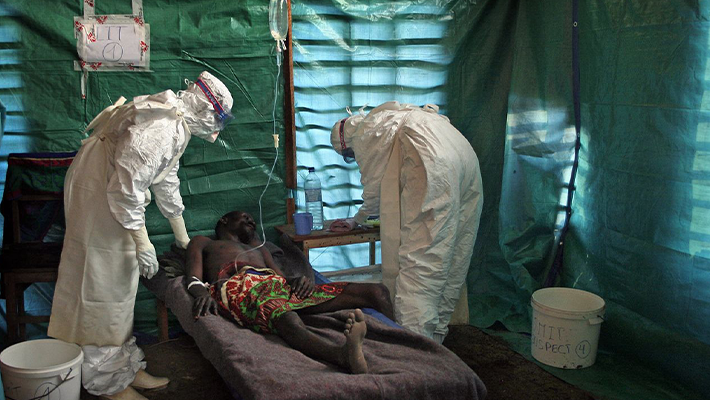
Kenya announces second Ebola case, downplays wider spread
The ministry said the victim had been in contact with 128 people.
States
Bauchi govt restates commitment to girls education
The commissioner enjoined parents to support their children, especially girls, to complete their education.

Heading 4
Presidency to send State Police Bill to National Assembly in two weeks
He described the proposed legislation as the most consequential bill of Mr Tinubu’s administration.
States
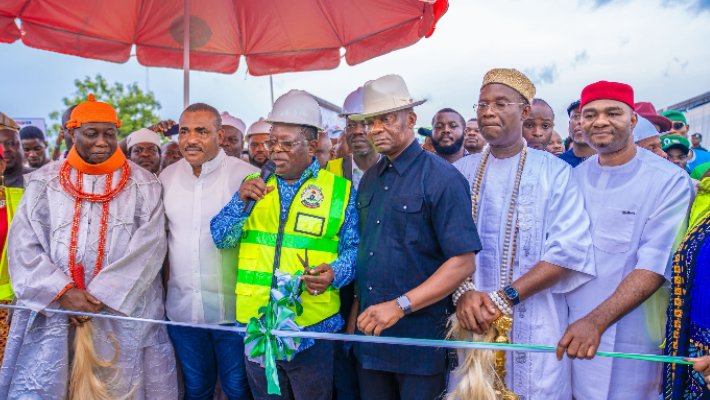
FG reopens First Niger Bridge after 38 days
Mr Umahi said the intervention reflected President Bola Tinubu’s commitment to maintaining critical infrastructure.

Health
Group urges lawmakers to strengthen oversight on nutrition funding
The programme manager said accountability in nutrition financing has been lacking over the years.


