

June 12 Photos: From Epetedo declaration to Emilokan proclamation
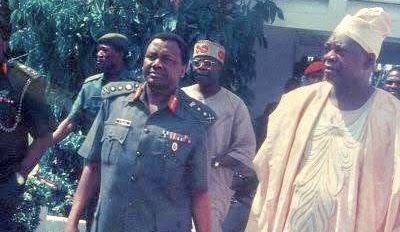
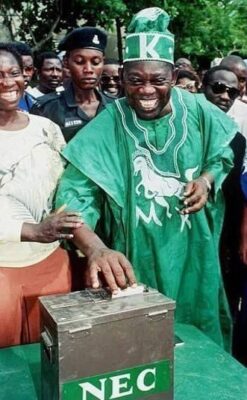
A major event in the aftermath of the annulled June 12, 1993, election was the Epetedo Declaration of June 11, 1994, in which Moshood Abiola, the presumed winner of the election, declared himself Nigeria’s president.
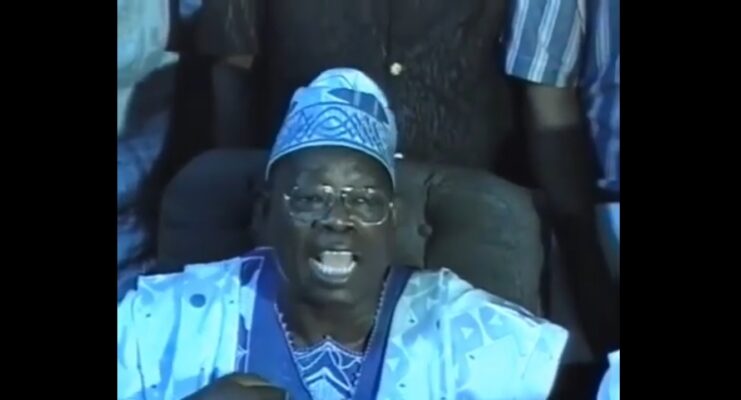
Dressed in a sky blue agada and blue cap, Mr Abiola of the Social Democratic Party, in the Epetedo Declaration, condemned military rule, declaring himself Nigeria’s president based on the June 12 election in which he polled 8,341,309 votes (58.36 per cent of the votes cast), while his challenger, Bashir Tofa, presidential candidate of the National Republican Convention, polled 5,952,087 votes (41.64 per cent of the votes).
“We have endured 24 years of military rule in our 34 years of independence. Military rule has led to our nation fighting a civil war with itself. Military rule has destabilised our nation today as not before in its history. Military rule has impoverished our people and introduced a dreadful trade in drugs, which has made our country’s name an anathema in many parts of the world,” Mr Abiola said.
The SDP presidential candidate declared, “As of now, from this moment, a new Government of National Unity is in power throughout the length and breadth of the Federal Republic of Nigeria, led by me, Bashorun M.K.O. Abiola, as president and commander-in-chief.”
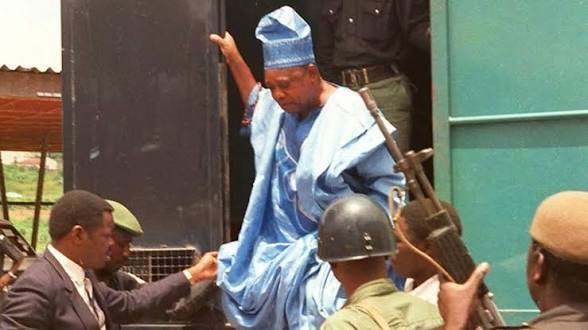
While the June 12 election annulment sparked groundswelling protests that ousted the military dictatorship of Ibrahim Babangida, the Epetedo Declaration marked the beginning of Mr Abiola’s incarceration by General Sani Abacha. Mr Abiola’s struggle for the presidency ended in death on July 7, 1998, but his agitation for a return to democracy, sustained by pro-democracy activists, the press, and civil society, eventually ushered in democratic rule in 1999.
General Abdulsalami Abubakar, who took over after Mr Abacha’s death in 1998, commenced Nigeria’s transition to democratic rule, which culminated in the February 27, 1999, presidential election, won by Olusegun Obasanjo of the Peoples Democratic Party.
On May 29, 1999, Mr Abdulsalami handed over to Mr Obasanjo, six years after the June 12 presidential election was annulled. Mr Obasanjo secured a second term in 2003, serving until 2007.
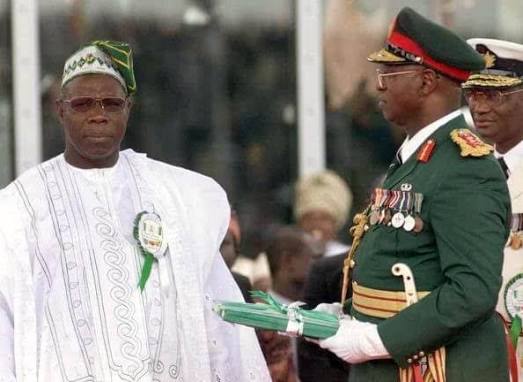
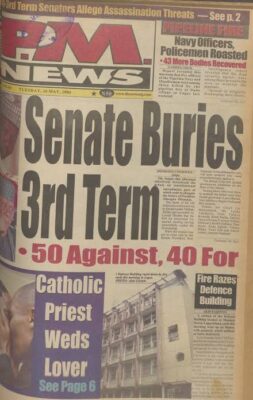
Mr Obasanjo’s third-term scheme marked another episode of a leader scheming to sit tight upon Nigeria’s return to democratic rule. However, Nigerians vehemently opposed it, and the Nigerian Senate quashed it.
Then came Umaru Musa Yar’Adua’s government on May 29, 2007, after an election conducted on April 21, 2007. Mr Yar’Adua, whose government proposed a seven-point agenda, admitted the election that brought him to power was fraught with irregularities and then pushed electoral reforms that saw his party men lose their governorship seats to opposition parties based on a tribunal judgement. Mr Yar’Adua also mediated an amnesty deal for the Niger Delta militants amid the crisis over resource control in the region.
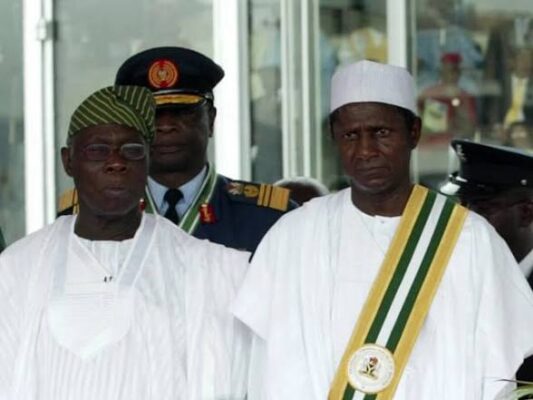
Terminally ill Mr Yar’Adua’s government lasted about three years and was famous for the “cabal” who imposed a sick and dying president on the country. His long absence from office for months triggered agitation for him to be declared incapacitated and for his deputy, Goodluck Jonathan, to be sworn in as president. Eventually, Mr Jonathan became acting president and later president upon Mr Yar’Adua’s death.
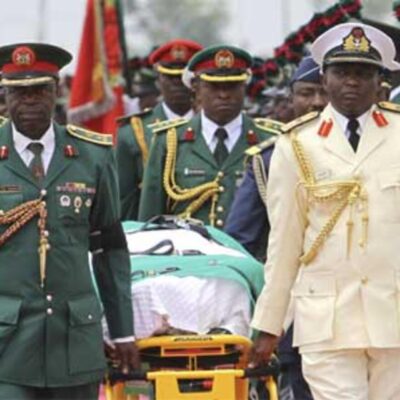
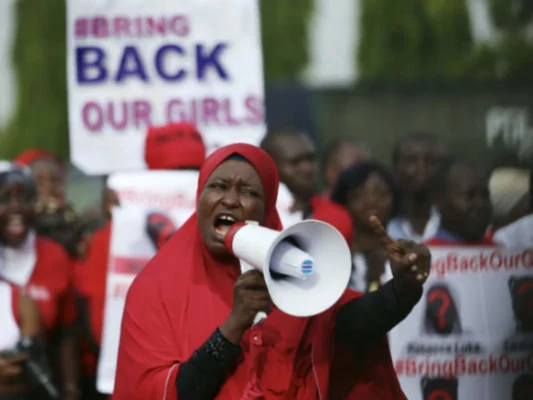
Mr Jonathan won the 2011 presidential election. In 2014, Nigerians witnessed the mass school abduction of 275 Chibok school girls in Borno. The abduction sparked national and global outrage.
Amid festering insecurity that saw Boko Haram bomb the United Nations building in Abuja, opposition parties, namely Action Congress of Nigeria, led by Bola Tinubu, Congress for Progressive Change led by Muhammadu Buhari, and a faction of All Progressives Grand Alliance led by Rochas Okorocha, formed a merger that gave birth to the All Progressives Congress in 2014.
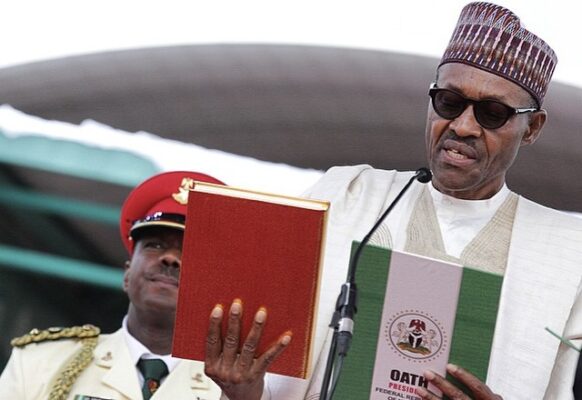
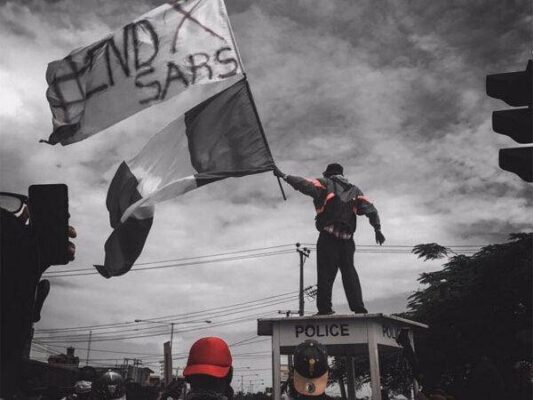
The 2015 presidential election marked the first time an incumbent president, Mr Jonathan, was defeated by an opposition candidate, Mr Buhari of the APC. Mr Buhari served two terms from 2015 to 2023. His government was characterised by the bloody massacre of Shiites, IPOB and historic EndSARS protesters at Lekki Toll Gate on October 20, 2020.
However, in 2018, 25 years after the June 12 presidential election, Mr Buhari changed the date of the Democracy Day celebration from May 29 to June 12. Mr Buhari signed the Public Holiday Amendment Act into law on June 10, 2019 and also honoured Mr Abiola with the Grand Commander of the Federal Republic (GCFR), an honour strictly reserved for heads of state.
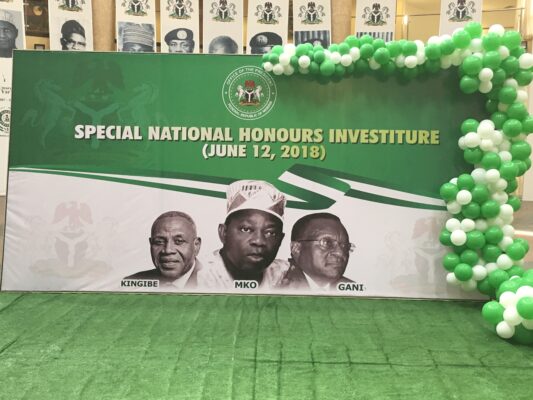
Some 29 years after Mr Abiola declared himself president and died in a military gaol, Mr Tinubu proclaimed that it was his turn to be president with the now infamous ‘emi lokan’ and fought his way into Aso Villa, the seat of power.
Faced with forces scheming against his presidential bid in the APC, a party he played a critical role in forming in 2014, Mr Tinubu declared, “emi lokan” (Yoruba expression meaning “it’s my turn”). He clinched the APC presidential primary ticket and eventually won the election.
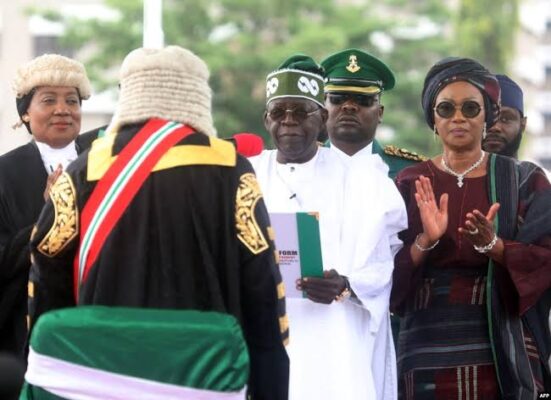
Mr Abiola’s Epetedo Declaration was a bold confrontation against a military dictator. Tinubu’s “emi lokan” was a self-driven ambition to transform himself from a kingmaker to the king.

We have recently deactivated our website's comment provider in favour of other channels of distribution and commentary. We encourage you to join the conversation on our stories via our Facebook, Twitter and other social media pages.

More from Peoples Gazette

Agriculture
FG tasks ECOWAS on leveraging financing strategies for agroecology
The federal government has urged stakeholders in the agriculture and finance sectors in the West Africa region to leverage financing strategies to enhance agroecology practices

Politics
Katsina youths pledge to deliver over 2 million votes to Atiku
“Katsina State is Atiku’s political base because it is his second home.”
States
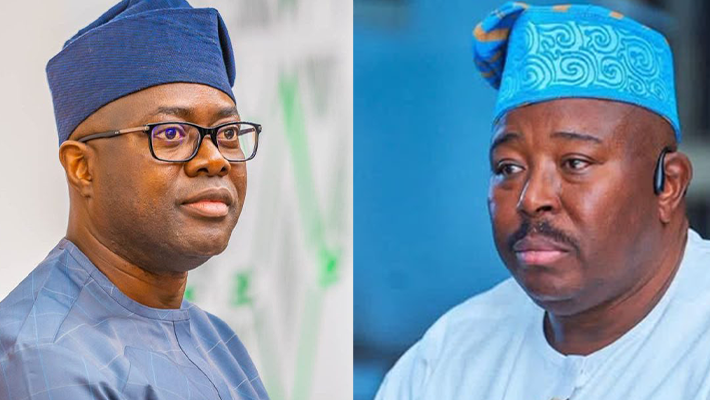
Alli campaign organisation tells APM to build national spread, stop asking Tinubu to hand over to Makinde
The campaign council described the demand by the APM as laughable.

NationWide
2027: Naval chief tasks military personnel on political neutrality
Mr Abbas reiterated the need for personnel to renew commitment to the service of the nation.

World
Al Jazeera kicks against Israeli PM Netanyahu’s ‘toxic’ media remark
It noted, “This rhetoric cannot be separated from the heavy toll borne by Al Jazeera’s journalists in Gaza.”
NationWide
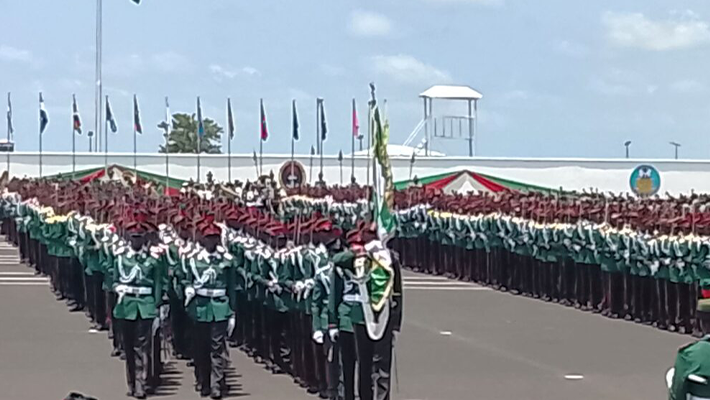
Tinubu charges newly commissioned military officers to protect Nigerians
Mr Tinubu said the NDA had enhanced its counter-terrorism and counter-insurgency training.
Showbiz
Mr Macaroni paid me N1 million for featuring in movie scene, says veteran actor Fatomilola
Mr Fatomilola, in an interview with Africa List, hailed Mr Adedayo for his show of generosity during their encounters.
States
Troops rescue 14 victims freed in Katsina, nab three suspects with N2.7 million
Mr Danja stated that the suspects and the recovered items were in military custody for further investigation.


