

IMF scores Nigeria high on forex reserves, low on prosperity with 63% trapped in poverty; flags Tinubu’s off-budget spending
IMF Executive Board Concludes 2026 Article IV Consultation with Nigeria
FOR IMMEDIATE RELEASE
Washington, DC – June 9, 2026: The Executive Board of the International Monetary Fund (IMF) concluded the Article IV consultation[1] with Nigeria on June 1, 2026.
Strong reforms over the past three years have yielded improved macroeconomic outcomes and built resilience. Still, conditions for many Nigerians remain difficult. Poverty reached 63 per cent (national poverty line) and 27 million Nigerians are estimated to have faced food insecurity in the fall of 2025.
Higher global fuel, food and fertilizer prices will improve exports and fiscal revenues, but also give rise to inflationary pressures, potentially aggravating poverty and food insecurity. Growth is estimated at 4 per cent in 2025 and projected at 4.1 per cent in 2026, as headwinds from higher food and transport costs weigh on economic activity. After being on a declining trend for over a year, inflation nudged up to 15.4 per cent year-on-year in March 2026 as the jump in international fuel and food prices started hitting Nigeria. While the external shock to fuel and food prices will push up inflation in the short run, the disinflation path is projected to continue in the second half of the year.
Gross international reserves increased to US$46 billion in 2025 from US$40 billion at end-2024, supported by the current account surplus, net purchases of central bank open market operations by non-residents, and a Eurobond issuance. Net international reserves increased to US$35 billion at end-2025 from US$23 billion at end-2024.
The overall deficit of the consolidated government is estimated to have increased to 4.4 percent of GDP in 2025. While non-oil revenues were on target, oil revenues fell short of budget expectations. The shortfall was offset by under execution of reported capital expenditures, while some additional capital spending that took place outside the budget perimeter has now been included in the budget through the repeal and reenactment bills.
Risks to the outlook come from the uncertain global environment, in particular the outlook for fuel and food prices. The domestic security situation is another risk to people and economic activity. On the upside, quick gains on revenue mobilization would create additional budget space for growth-enhancing priority spending.
Executive Board Assessment[2]
Executive Directors agreed with the thrust of the staff appraisal. They commended the authorities’ reforms over the past three years that have strengthened macroeconomic stability and resilience. Directors cautioned that conditions remain difficult for many Nigerians, with poverty and food insecurity likely to worsen in the current external environment. Tight macroeconomic policies and continued reforms supported by technical assistance from the Fund and other partners will be crucial to preserve stability and boost inclusive growth.
Directors called for a neutral fiscal stance in 2026 to support macroeconomic stability and disinflation, while protecting priority and social spending. They welcomed the recent tax reforms, noting that additional tax policy measures may be needed over the medium term, including to fund a scaled up cash transfer program to provide relief to the most vulnerable. Highlighting concerns about off‑budget spending and complex financing instruments, they called for accelerating reforms to strengthen the budget process, public financial management, fiscal reporting and risk framework, transparency, and accountability.
Directors commended the authorities’ success in bringing down inflation, while noting renewed external inflationary pressures. They agreed that the Central Bank of Nigeria should maintain a tight monetary policy stance with a data‑dependent approach until disinflation is entrenched and inflation expectations are anchored. Directors welcomed progress toward adopting inflation targeting and encouraged steps to strengthen monetary transmission and communication.
Directors welcomed the authorities’ commitment to the flexible exchange rate regime, recognising that foreign exchange interventions can play a complementary role under certain circumstances. Directors called for reducing reliance on portfolio flows with roll‑over risk, phasing out remaining exchange restrictions, capital flow management measures, and remaining multiple currency practices as conditions permit.
Directors welcomed that the financial system remains resilient, helped by the recent recapitalisation of banks, while encouraging continued vigilance of rising NPLs and the sovereign‑bank nexus. They encouraged the authorities to accelerate Basel III implementation, including the countercyclical capital buffer and the liquidity coverage ratio. Directors stressed the importance of further strengthening supervision and bringing stablecoin and other crypto‑asset activities into the regulatory perimeter. They welcomed Nigeria’s removal from the FATF grey list and noted that sustained implementation will be key to preserving recent gains in financial integrity.
Directors emphasised the need for reforms to support inclusive growth and diversification. They flagged governance, security, electricity, agriculture, infrastructure, and human capital as priority areas. Directors called for strengthening macroeconomic statistics to support policy formulation and implementation. Some Directors stressed the importance of integrating climate considerations into macroeconomic policy and development policies.
The next Article IV Consultation with Nigeria is expected to be held on the standard 12‑month cycle.
Table 1. Nigeria: Selected Economic and Financial Indicators, 2024–27
| 2024 | 2025 | 2026 | 2027 | |
| 4/28/2026 11:47 | Act. | Est. | Proj. | Proj. |
| National income and prices | Annual percentage change, unless otherwise specified | Annual percentage change, unless otherwise specified | Annual percentage change, unless otherwise specified | Annual percentage change, unless otherwise specified |
| Real GDP (at 2019 market prices) | 4.1 | 4.0 | 4.1 | 4.3 |
| Oil and Gas GDP | 5.5 | 8.5 | 4.5 | 4.1 |
| Non-oil GDP | 4.0 | 3.9 | 4.0 | 4.3 |
| Non-oil non-agriculture GDP | 5.0 | 4.2 | 4.6 | 5.0 |
| Production of crude oil (million barrels per day) | 1.55 | 1.64 | 1.71 | 1.75 |
| Nominal GDP at market prices (trillions of naira) | 373 | 442 | 529 | 618 |
| Nominal non-oil GDP (trillions of naira) | 358 | 430 | 517 | 604 |
| Nominal GDP per capita (US$) | 1,084 | 1,223 | 1,556 | 1,565 |
| GDP deflator | 14.1 | 13.9 | 15.2 | 11.9 |
| Consumer price index (annual average) 1/ | 33.2 | 23.0 | 16.0 | 15.9 |
| Consumer price index (end of period) 1/ | 34.8 | 15.2 | 17.0 | 14.5 |
| Investment and savings | Percent of GDP | Percent of GDP | Percent of GDP | Percent of GDP |
| Gross national savings | 23.8 | 22.0 | 24.2 | 22.4 |
| Public | 3.5 | 1.6 | 0.9 | 0.9 |
| Private | 20.3 | 20.5 | 23.3 | 21.5 |
| Investment | 16.2 | 17.2 | 20.3 | 20.4 |
| Public | 3.5 | 2.7 | 5.7 | 4.6 |
| Private | 12.7 | 14.5 | 14.6 | 15.8 |
| Consolidated government operations | Percent of GDP | Percent of GDP | Percent of GDP | Percent of GDP |
| Total revenues and grants | 10.8 | 10.2 | 10.8 | 10.6 |
| Of which: oil and gas revenue | 3.0 | 3.1 | 3.8 | 3.5 |
| Of which: non-oil revenue | 6.8 | 6.8 | 6.7 | 6.9 |
| Total expenditure and net lending | 12.0 | 12.0 | 15.5 | 14.2 |
| Financing (overall balance from financing side) | 2.4 | 4.4 | 4.7 | 3.6 |
| Non-oil primary balance (from financing side) | -3.1 | -5.1 | -5.9 | -4.6 |
| Public gross debt 2/ | 39.3 | 36.1 | 35.4 | 36.7 |
| Of which: FX denominated debt | 19.0 | 16.9 | 17.2 | 19.1 |
| FGN interest payments (percent of FGN revenue) | 40.8 | 53.2 | 53.7 | 52.4 |
| Money and credit | Contribution to broad money growth, unless otherwise specified | Contribution to broad money growth, unless otherwise specified | Contribution to broad money growth, unless otherwise specified | Contribution to broad money growth, unless otherwise specified |
| Broad money (percent change; end of period) | 50.3 | 14.6 | 15.9 | 15.9 |
| Net foreign assets | 35.8 | 4.3 | 9.3 | 4.8 |
| Net domestic assets | 14.5 | 10.4 | 6.6 | 11.1 |
| Of which: Claims on consolidated government | -8.2 | 6.2 | 1.4 | 5.6 |
| Credit to the private sector (y/y, percent) | 30.1 | -1.2 | 14.0 | 14.2 |
| Velocity of broad money (ratio; end of period) | 3.3 | 3.0 | 3.2 | 3.2 |
| External sector | Annual percentage change, unless otherwise specified | Annual percentage change, unless otherwise specified | Annual percentage change, unless otherwise specified | Annual percentage change, unless otherwise specified |
| Current account balance (percent of GDP) | 7.5 | 4.8 | 3.9 | 2.0 |
| Exports of goods and services | -4.5 | 8.7 | 18.3 | -6.0 |
| Imports of goods and services | -0.8 | 8.5 | 8.4 | 6.0 |
| Terms of trade | -0.7 | -5.7 | 5.8 | -10.5 |
| Price of Nigerian oil (US$ per barrel) | 79.9 | 68.3 | 80.2 | 71.5 |
| External debt outstanding (US$ billions) 3/ | 105.9 | 109.3 | 119.3 | 132.0 |
| Gross international reserves (US$ billions, CBN definition) 4/ | 40.2 | 45.8 | 58.1 | 62.0 |
| Equivalent months of prospective imports of G&S | 7.7 | 8.1 | 9.7 | 10.2 |
| Sources: Nigerian authorities; and IMF staff estimates and projections. | Sources: Nigerian authorities; and IMF staff estimates and projections. | Sources: Nigerian authorities; and IMF staff estimates and projections. | Sources: Nigerian authorities; and IMF staff estimates and projections. | Sources: Nigerian authorities; and IMF staff estimates and projections. |
| 1/ Consumer price index (CPI) projections are derived based on rebased CPI data starting January 2025 and staff estimates. | 1/ Consumer price index (CPI) projections are derived based on rebased CPI data starting January 2025 and staff estimates. | 1/ Consumer price index (CPI) projections are derived based on rebased CPI data starting January 2025 and staff estimates. | 1/ Consumer price index (CPI) projections are derived based on rebased CPI data starting January 2025 and staff estimates. | 1/ Consumer price index (CPI) projections are derived based on rebased CPI data starting January 2025 and staff estimates. |
| 2/ Gross debt figures for the Federal Government and the public sector include overdrafts from the Central Bank of Nigeria (CBN). | 2/ Gross debt figures for the Federal Government and the public sector include overdrafts from the Central Bank of Nigeria (CBN). | 2/ Gross debt figures for the Federal Government and the public sector include overdrafts from the Central Bank of Nigeria (CBN). | 2/ Gross debt figures for the Federal Government and the public sector include overdrafts from the Central Bank of Nigeria (CBN). | 2/ Gross debt figures for the Federal Government and the public sector include overdrafts from the Central Bank of Nigeria (CBN). |
| 3/ Includes both public and private sector. | 3/ Includes both public and private sector. | 3/ Includes both public and private sector. | 3/ Includes both public and private sector. | 3/ Includes both public and private sector. |
| 4/ Based on the IMF definition of gross international reserves (para 6.64 in IMF’s Balance of Payments and International Investment Position Manual (BPM6)), GIR was $8 billion lower relative to CBN’s official gross reserves at end-2025. | 4/ Based on the IMF definition of gross international reserves (para 6.64 in IMF’s Balance of Payments and International Investment Position Manual (BPM6)), GIR was $8 billion lower relative to CBN’s official gross reserves at end-2025. | 4/ Based on the IMF definition of gross international reserves (para 6.64 in IMF’s Balance of Payments and International Investment Position Manual (BPM6)), GIR was $8 billion lower relative to CBN’s official gross reserves at end-2025. | 4/ Based on the IMF definition of gross international reserves (para 6.64 in IMF’s Balance of Payments and International Investment Position Manual (BPM6)), GIR was $8 billion lower relative to CBN’s official gross reserves at end-2025. | 4/ Based on the IMF definition of gross international reserves (para 6.64 in IMF’s Balance of Payments and International Investment Position Manual (BPM6)), GIR was $8 billion lower relative to CBN’s official gross reserves at end-2025. |
[1] Under Article IV of the IMF’s Articles of Agreement, the IMF holds bilateral discussions with members, usually every year. A staff team visits the country, collects economic and financial information, and discusses with officials the country’s economic developments and policies. On return to headquarters, the staff prepares a report, which forms the basis for discussion by the Executive Board.
[2] At the conclusion of the discussion, the Managing Director, as Chairman of the Board, summarizes the views of Executive Directors, and this summary is transmitted to the country’s authorities. An explanation of any qualifiers used in summing ups can be found here: http://www.IMF.org/external/np/sec/misc/qualifiers.htm.

We have recently deactivated our website's comment provider in favour of other channels of distribution and commentary. We encourage you to join the conversation on our stories via our Facebook, Twitter and other social media pages.

More from Peoples Gazette

Agriculture
FG tasks ECOWAS on leveraging financing strategies for agroecology
The federal government has urged stakeholders in the agriculture and finance sectors in the West Africa region to leverage financing strategies to enhance agroecology practices

Politics
Katsina youths pledge to deliver over 2 million votes to Atiku
“Katsina State is Atiku’s political base because it is his second home.”
Heading 5
2027: YPP unveils Lagos secretariat
Mr Filani said the party was committed to rescuing Nigeria through purposeful leadership.

Hot news Home top
Spain, Argentina, France top FIFA rankings
Spain moved up one place to displace Argentina from the top spot.
Agriculture
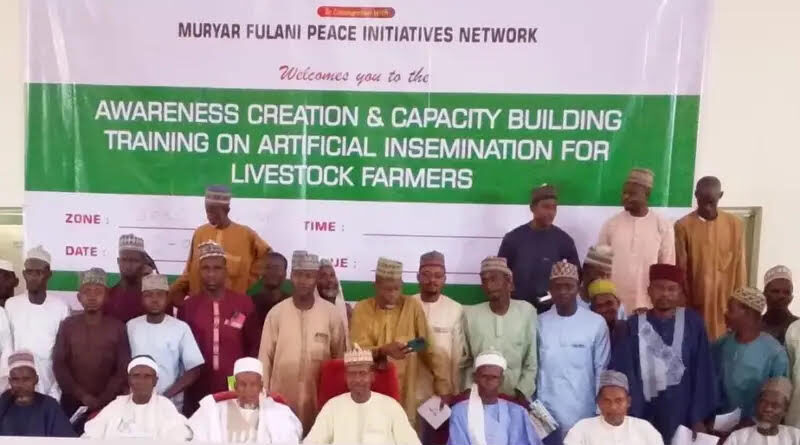
Sokoto trains livestock farmers on artificial insemination
Mr Abubakar said the initiative would strengthen breeders’ capacity.

Heading 5
NAFDAC nabs two fake alcohol merchants in Lagos
He urged operators dealing in regulated products to comply with all NAFDAC regulatory requirements.
Lagos
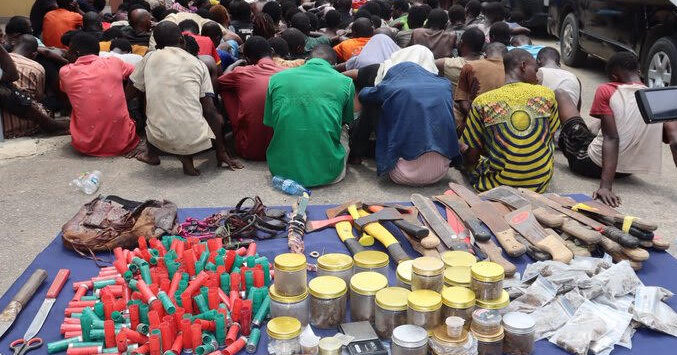
Police nab 147 suspected criminals in Lagos
The operatives targeted criminal hideouts across the state on Sunday, July 19, 2026.

Heading 1
Tinubu names Fayose, 25 others in new appointments
All the appointments take immediate effect.


