


Kaduna DisCO blames TCN for power outages
The Kano Electricity Distribution Company has attributed the poor power supply to a drop in megawatts received from the Transmission Company of Nigeria.
The company’s managing director, Abubakar Yusuf, said this at a news conference on Tuesday in Kano, describing the 180 megawatts as grossly inadequate.
He said the company has been receiving 180 megawatts for distribution to its customers in Kano, Katsina and Jigawa for the last three months.
“We felt it necessary to address you on the shortage of power supply being experienced in the states so that you can enlighten our customers on the current challenges.
“This is necessary because we are the last in the value chain because we can only distribute what we have. No businessman will deliberately deny his customers goods,” Mr Yusuf said.
According to him, the company requires 600 megawatts for adequate and effective supply to its customers in the three states.
“We need 600 megawatts to adequately serve our customers in the three states, which are our franchise areas,” he said.
Therefore, Mr Yusuf called on customers in the three states to bear with the situation as the problem was not peculiar to Kano but to the country at large.
The managing director of the Kano disco said that Sunday’s fire outbreak at the Dan’agundi transmission station had seriously affected the company’s operations.
He said that one of the high-performance capacity transformers in the transmission station was burnt beyond repair, while the other still needs to be repaired.
Regarding revenue generation, the managing director said the company had been experiencing electricity theft, which had affected its targeted revenue.
He said the company intends to solicit the support of religious leaders to sensitise customers to desist from electricity theft through illegal connections and meter bypass, among other illegal acts.
He explained, “We received N14 billion invoices monthly, but the collection is 25 per cent or N3.5 billion, which is far below what we are expected to collect as revenue due to the refusal of our customers to pay their electricity bills.
“So, we believe by the time our religious leaders preach in their sermons how Islam and Christianity forbid electricity theft, it will go a long way in checking the illegal acts.
(NAN)

We have recently deactivated our website's comment provider in favour of other channels of distribution and commentary. We encourage you to join the conversation on our stories via our Facebook, Twitter and other social media pages.

More from Peoples Gazette

Agriculture
FG tasks ECOWAS on leveraging financing strategies for agroecology
The federal government has urged stakeholders in the agriculture and finance sectors in the West Africa region to leverage financing strategies to enhance agroecology practices

Politics
Katsina youths pledge to deliver over 2 million votes to Atiku
“Katsina State is Atiku’s political base because it is his second home.”
States
One killed, three injured after gunman invaded Kano wedding: Police
Police said they arrested a 34-year-old man, Rabiu Mukhtar, in connection with the attack.

Heading 1
At least 30 killed, 60 abducted in terrorist attacks on four Niger communities
“The main attack largely took place in Dekara community, where over 30 people were killed, and over 60 people were taken away,” he said.
NationWide
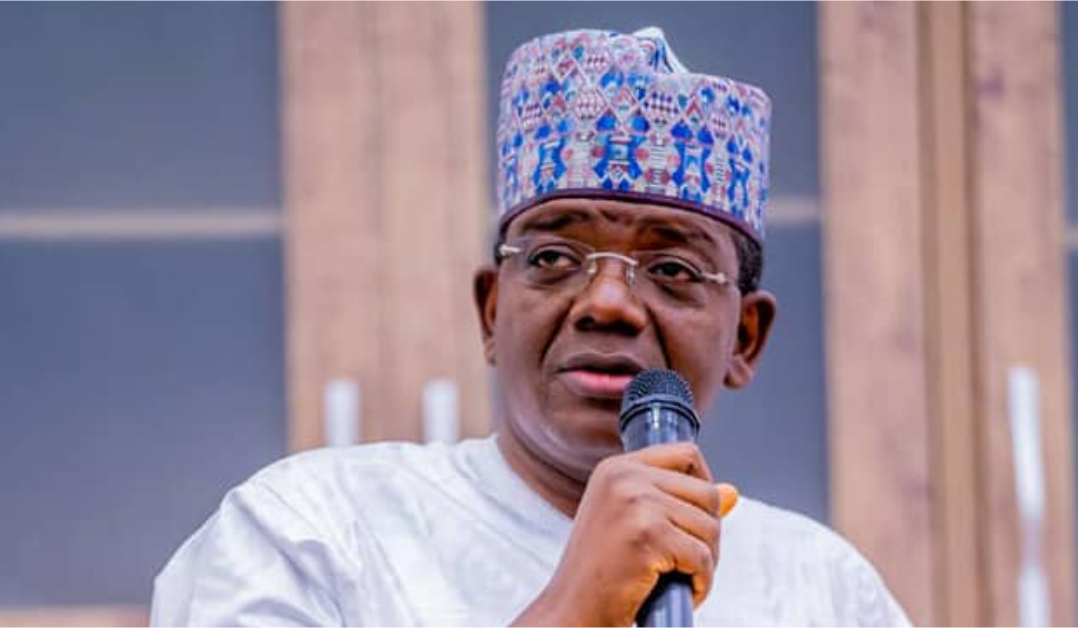
2027: Matawalle urges prayers for peace
Mr Matawalle urged Muslims in Nigeria to use the Maulud period to pray for peace ahead of the 2027 elections.


States
Umahi apologises over Benin-Sapele road, orders arrest of contractors
Mr Umahi apologised to commuters for the deplorable condition of the Benin-Sapele road, which he said has caused untold hardship.

States
FG to review Benin-Asaba highway concession over poor handling
Mr Umahi said the concessionaire lacked the technical competence required to execute the project.


