

Kaduna govt trains revenue officers on new tax reforms
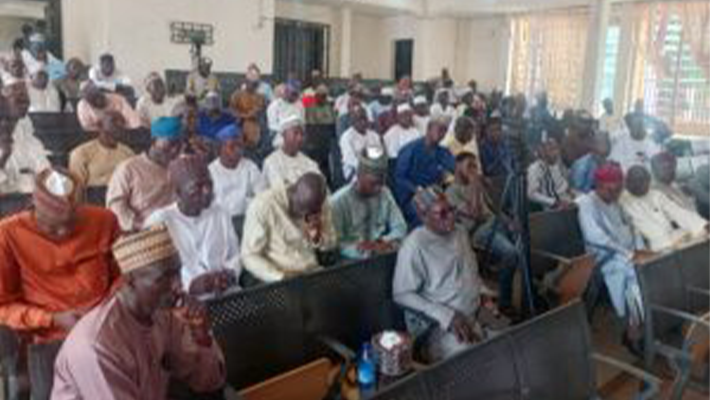
The Kaduna State Internal Revenue Service (KADIRS) has trained revenue officers from the state’s 23 local government areas on new tax reforms.
The one-day training was organised to advance Disbursement-Linked Indicator (DLI) Four, which aims to improve revenue administration and compliance across the state.
Speaking at the training in Kaduna on Friday, Richard Bature, head of Local Government Revenue at KADIRS, described the programme as a redirection for improved revenue administration.
Mr Bature urged participants to pay close attention to the presentations and ensure the knowledge gained translated into improved practices within their respective local governments.
He said the participants represented their local government revenue committees and should cascade the knowledge acquired to other committee members.
According to him, the Kaduna State Tax Codification and Consolidation Law had existed since 2016 and was subsequently amended in 2020.
Mr Bature said field reports had raised concerns for the government and KADIRS, necessitating the training and renewed focus on proper revenue administration.
He urged the officers to apply the training lessons immediately, saying the service expected noticeable improvements in their operations.
Mr Bature also encouraged participants to freely ask questions and seek clarification during the interactive sessions to ensure a better understanding of the reforms.
The acting executive chairman of KADIRS, Muhammad Lawal, said the training was important because the revenue system depended on the efficiency of its various components.
Mr Lawal said inefficiency in any component of the revenue system could negatively affect the entire structure and undermine government revenue objectives.
He explained that revenue administration involved regulators, courts, tax appeal mechanisms, revenue agencies, government institutions, development partners, and the media.
The chairman said the ongoing tax reforms required revenue officers to demonstrate higher standards of professionalism and greater responsibility in carrying out their duties.
According to him, feedback and complaints the service received were largely associated with local government revenue administration.
Mr Lawal said Kaduna State failed to meet some disbursement-linked indicators under last year’s programme, causing the state to lose grants.
He said the development underscored the need for officers to take the training seriously and improve their contribution to the overall revenue system.
Mr Lawal urged participants to listen attentively, ask questions, and seek clarification, stressing that no individual could address all challenges within the system on their own.
He said the training should not be an end in itself but a means of achieving measurable improvements in revenue administration.
“The output is what you gain from the training, while the outcome is how you apply that knowledge to improve the system,” Mr Lawal said.
He said KADIRS expected the training to improve tax compliance, revenue performance, and the professional conduct of tax operators across the state.
Mr Lawal commended Governor Uba Sani for his commitment to strengthening revenue administration and creating an enabling environment for reforms aimed at improving the state’s internally generated revenue.
He thanked the governor for his continued support for KADIRS, saying the administration’s investment in institutional reforms had provided the foundation for improved tax administration and service delivery.
The resource person at the training, Abdulrauf Aliyu, presented a paper titled “The New Tax Regime, Ease of Doing Business, Taxpayers’ Rights and Professional Conduct”.
Mr Aliyu said taxation was increasingly shifting from mere revenue collection towards intelligent, transparent, and taxpayer-centred revenue governance.
He said the new tax reforms sought to establish a simpler, coordinated, technology-enabled, and predictable tax environment that encouraged voluntary compliance.
According to him, the reforms are designed to address overlapping taxes, multiple collection institutions, and unpredictable procedures that increased taxpayers’ compliance costs.
Mr Aliyu said sustainable revenue growth depended on expanding the compliant taxpayer base rather than placing heavier burdens on existing taxpayers.
He explained that the Nigeria Tax Administration Act, the Nigeria Tax Act, and other related laws formed the foundation of the country’s new tax architecture.
The presenter said the laws, which commenced in January, required revenue officers to apply the reform principles in their daily work.
He urged officers to distinguish between legal provisions, regulations, and personal opinions when determining taxes, levies, and other revenue obligations.
Mr Aliyu said the new regime emphasised harmonisation to reduce duplication and ensure taxpayers were not subjected to similar charges on the same tax base.
He added that taxpayers had the right to know the legal basis, amount, and payment method for any tax obligation imposed on them.
Mr Aliyu stressed that revenue officers must uphold taxpayers’ rights, follow due process, and maintain professionalism while carrying out their responsibilities.
He said improved tax administration and respect for taxpayers’ rights would promote ease of doing business and strengthen public confidence in government revenue institutions.
(NAN)

We have recently deactivated our website's comment provider in favour of other channels of distribution and commentary. We encourage you to join the conversation on our stories via our Facebook, Twitter and other social media pages.

More from Peoples Gazette

States
Independence: NBA urges Nigerians to expect better future
The NBA said that ordinary Nigerians should be deriving benefit from the subsidy removal rather than hardship.

Agriculture
FG tasks ECOWAS on leveraging financing strategies for agroecology
The federal government has urged stakeholders in the agriculture and finance sectors in the West Africa region to leverage financing strategies to enhance agroecology practices

Politics
Katsina youths pledge to deliver over 2 million votes to Atiku
“Katsina State is Atiku’s political base because it is his second home.”

Lagos
Motorist hospitalised after auto crash at Mobolaji Bank Anthony Way
The Lagos State Traffic Management Authority said the accident occurred at a traffic light around NITEL, inward Ikeja, along Mobolaji Bank Anthony Way.

Abuja
Nigeria’s Ebola index case flown out to Switzerland
Nigeria’s Ebola index case has been flown to Switzerland for further treatment. Health minister Ali Pate announced this on Monday.
Hot news Home top
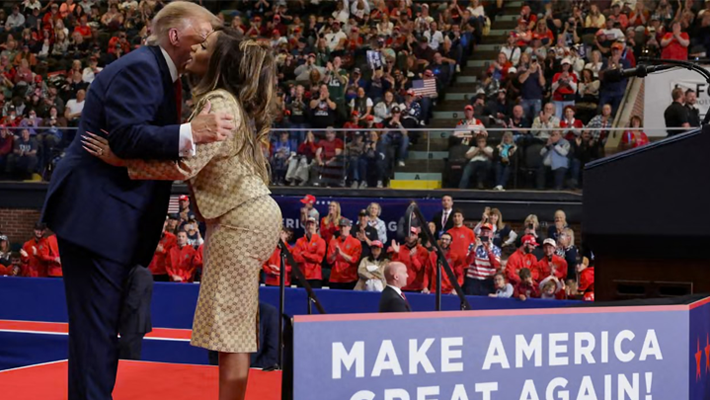
Trump hails Nicki Minaj’s backside, says butt ‘stands out, hard to miss’
Mr Trump made the remarks during a rally in Michigan on Sunday, joking about the physique of Republican Senator Jon Husted before comparing his backside to Nicki Minaj’s.

Health
WHO launches working paper series to document traditional medicine practices
The World Health Organisation has launched a working paper series to document complementary and integrative medicine practices globally.
World
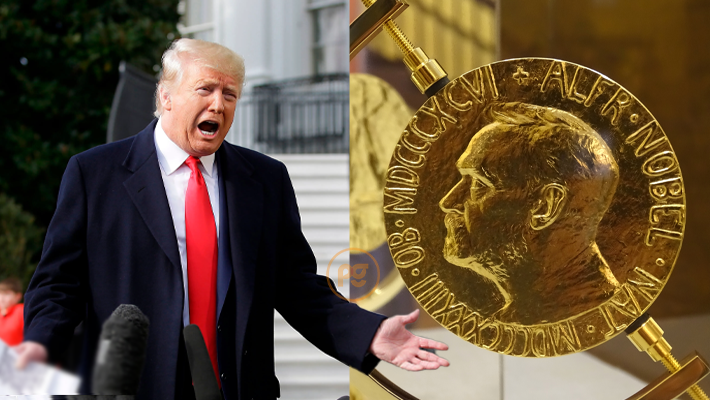
Trump hurls insults at Norway over Nobel Peace Prize snub
Mr Trump launched a tirade against Norway on Sunday, describing it as a “shithouse country” that “sucks” after Oslo again failed to award him the 2026 Nobel Peace Prize.

Showbiz
Chinese film ‘The Shadow’s Edge’ emerges overall best film at 23rd AIFF
Chinese film ‘The Shadow’s Edge’ won the coveted Golden Jury Award (Overall Best Film) at the 23rd edition of the Abuja International Film Festival.


