

Kogi, Niger, Nasarawa governors begged to sign death warrants of criminals

Some residents of Kogi, Niger, and Nasarawa have called on their governors to sign death warrants for prisoners on death row. This is in the interest of justice and decongestion of prisons, the residents explained.
In separate interviews, the residents also appealed for the outright abolition or fine-tuning of the law to address its attendant challenges and threats.
The residents responded to the agency’s survey on reasons for the governor’s negative attitude toward the death warrants. The respondents called for outright stripping of the governors of such power provided in the constitution.
Section 212(1), 33(1), and (161) of the 1999 Constitution granted governors the power to exercise mercy and pardon offenders, including the signing of death warrants.
Taiye Alabi, a Kogi-based lawyer, said most governors do not want to be the cause of death of any person, and have deliberately refused to sign any death warrant before them.
“Inasmuch as there is no need for abolishing the laws on the death penalty, the signing by governors should be cancelled. Once an accused is tried and all evidences show and prove that the person is guilty and sentenced to death, he or she should immediately be killed without delay by any governor needing to sign to determine his or her fate,” Mr Alabi said.
Adegboyega Kolade, a legal practitioner, said he supported the death penalty law simply because people, unfortunately, play politics with everything in Nigeria. Mr Kolade flayed calls for the abolition of the death penalty.
Hamza Lawal, the executive director of Initiative for Grassroot Advancement in Nigeria, said many governors since 2016 have refused to sign death warrants for inmates on the death row largely due to the slow process of appeals on those cases.
Mr Lawal, a human rights activist, said, “We all know that an accused or convict has the right to appeal his or her conviction or judgment.”
He noted that such a process took time due to a huge backlog of cases resulting from the limited capacity of courts and judges in the country.
“I don’t think death penalty should be abolished because certain crimes deserve the death penalty, especially intentional murder and reasonable offences,” stated Mr Lawal. “One challenge that is already surfacing due to the refusal by governors to sign death warrants is the over-congestion of our correctional institutions.”
However, Idris Miliki, the executive director of Conscience for Human Rights and Conflict Resolution, expressed displeasure with the death penalty, calling for its scrapping.
Another lawyer, Mr Adejo Isah, said, “The law on death sentence should be abolished. We know that death is sacrosanct, but adequate use must be made of every human being before his death. The impact of the refusal by the governors to sign death warrants is monumental on the positive side.”
In Niger, a public commentator and security expert, Abdullahi Jabi, has called for the establishment of a special body with the sole responsibility of executing those people convicted by the competent court of law. He said that it had become imperative since the governors found it difficult to sign the warrant.
“I am of the opinion that a specialised body be put in place specifically for the execution of those people who had been convicted by the nation’s competent courts for one offence or another,” said Mr Jabi. “With this in place, no doubt it will go a long way to address the ugly situation headlong and not necessarily waiting for the governors to sign the warrant, being the case today.”
Additionally, lawyer Mohammed-Abdulkadir Lapai stated that rather than killing those convicted by the nation’s competent courts, they should be pardoned and engaged in meaningful ventures for the benefit of society.
He, however, urged relevant authorities to consider alternative solutions, such as pardoning those who were convicted and engaging them in meaningful ventures that would benefit society.
A cross-section of stakeholders in Nasarawa expressed mixed feelings over the reluctance of state governors to sign death warrants for condemned criminals. While some respondents argued that the governors are shirking their constitutional responsibilities, others described the decision to spare lives as a moral and humane responsibility.
Pius Audu, a legal practitioner in Lafia, stated that the governors’ decisions were always influenced by the committee’s recommendations on the prerogative of mercy. He explained that the committee usually recommends such cases to the governor for approval, and if he feels it is appropriate, he signs the sentence; otherwise, he reduces the sentence to life imprisonment.
“It is not automatic for a governor to just sign a death warrant because the court condemned a convict; the law gives him the option to either sign or lessen the sentence. After a judgment of death sentence was passed by the court, there are a lot of procedures to be followed because of the importance attached to the life of a human being.
“The constitution of the country guarantees the right to life. Therefore, it cannot be taken easily,” the legal practitioner explained.
The lawyer further explained that the condemned convict also has the right under the law to appeal his or her death sentence.
He stated that the convict has 90 days to appeal the death sentence and can even seek the court’s leave to file the appeal. The appeal must be concluded and decided before any action can be taken.
On his part, Mohammed Abdullahi, a lecturer at Nasarawa State University, Keffi, stated that the governors’ reluctance to sign death warrants undermined the rule of law and emboldened criminals.
Additionally, Hannatu Bala, who spoke on behalf of civil society, argued that the decision to sign death warrants was a complex one that required careful consideration of various factors, including the fairness of the trial and the possibility of wrongful convictions.
(NAN)

We have recently deactivated our website's comment provider in favour of other channels of distribution and commentary. We encourage you to join the conversation on our stories via our Facebook, Twitter and other social media pages.

More from Peoples Gazette

Agriculture
FG tasks ECOWAS on leveraging financing strategies for agroecology
The federal government has urged stakeholders in the agriculture and finance sectors in the West Africa region to leverage financing strategies to enhance agroecology practices

Politics
Katsina youths pledge to deliver over 2 million votes to Atiku
“Katsina State is Atiku’s political base because it is his second home.”
NationWide
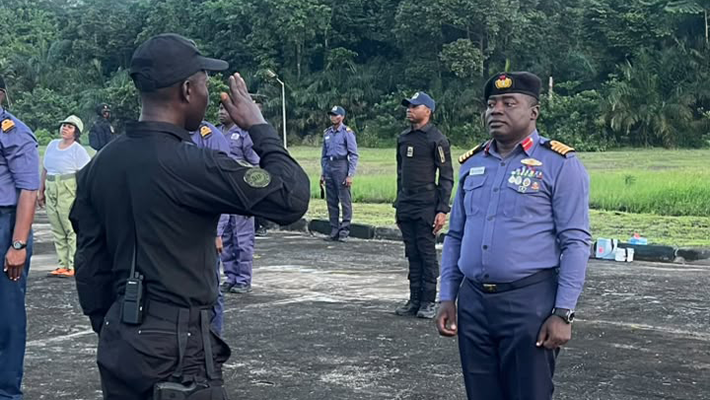
Navy holds route march to boost combat readiness
The exercise, conducted through Egweama communities in Brass, aimed to enhance physical endurance, promote healthy living, and maintain a physically fit force.

Sport
Nigeria’s Stallions beat Ghana, fall to Morocco in Africa rugby men’s sevens
The Stallions opened their campaign with a 26-5 victory over Ghana’s Black Eagles but suffered a 36-5 defeat to Morocco in their second match of the competition.

Heading 4
APC reviews structures, declares readiness for 2027
APC National Chairman, Prof. Nentawe Yilwatda, said the review covered the party’s structures from the national, state, local government and ward levels to polling units.
Heading 1
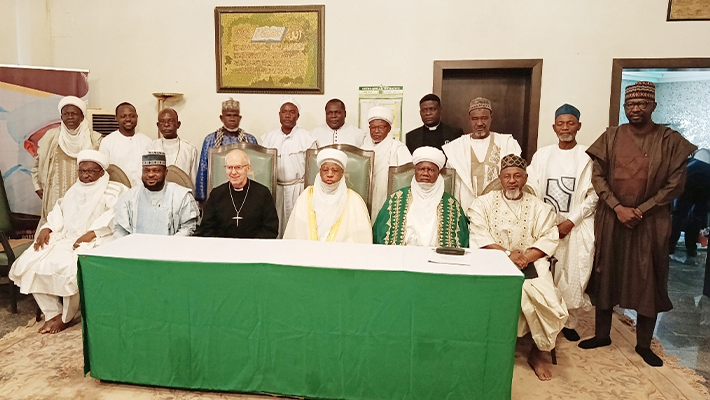
Sultan, ex-Archbishop of Canterbury urge peaceful coexistence in Nigeria, beyond
“There is a need for a strong call on religious and faith communities to work towards checking all forms of hatred,” the Sultan said.

Abuja
Police arrest suspected ‘one chance’ robbers in Abuja
The FCT police command arrested three suspected members of a ‘one chance’ robbery gang in Abuja.

Economy
TCN, Imcomtel inspect Katsina substation ahead of major installation
TCN, Katsina sub-region, and Imcomtel Engineering Limited inspected the Katsina 330/132/33 kilovolt (kV) transmission substation project ahead of a major installation.


