

Letter to the Editor: Curbing Nigeria’s rising drug addiction despite heightened enforcement
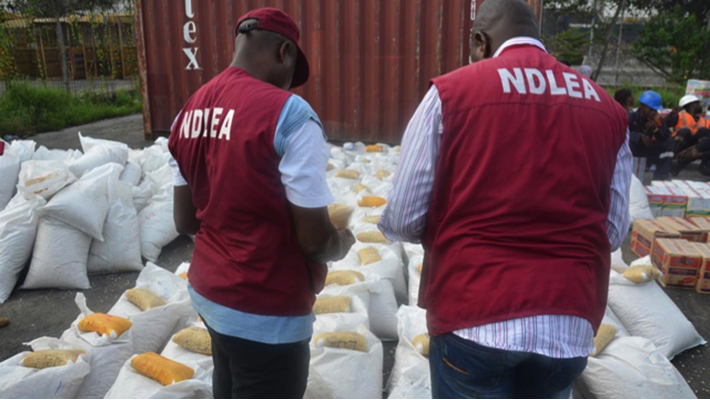
Nigeria’s fight against illicit drugs has intensified in ways that are impossible to miss. Across the country, seizures have increased, trafficking routes have been disrupted, and criminal networks have come under sustained pressure. The National Drug Law Enforcement Agency has been at the centre of this effort, expanding its operational reach and reinforcing the message that drug trafficking carries real consequences. These actions have improved security, reduced the brazenness of drug markets, and reassured many communities that the state is present and alert.
Yet for all this progress, many Nigerians still encounter drugs in their everyday environments. Familiar faces linger in the same spots, open drug scenes re-emerge, and drug-related petty crime continues to unsettle neighbourhoods. This reality is often misinterpreted as a sign of enforcement weakness, but a closer look reveals a different truth. The persistence of drugs on the streets is driven less by the failure to stop supply and more by the continued presence of people who are already dependent on drugs and have nowhere else to go.
Decades of research in criminology and public health show that once dependence takes hold, demand becomes stubbornly resistant to pressure. Prices can rise, dealers can be arrested, and routes can shift, but the dependent user keeps searching. This is why many low-level drug offenders appear repeatedly in arrest records. They are not hardened criminals adapting to enforcement; they are individuals trapped in a cycle of addiction, relapse, and survival. Without treatment, enforcement clears the street temporarily, only for demand to recreate the market.
Modern drug policy increasingly recognises drug dependence as a chronic health condition influenced by social and economic realities. Unemployment, trauma, displacement, untreated mental health conditions, and social exclusion all raise the risk of problematic drug use. Punishment alone does little to address these drivers. Evidence from multiple countries shows that while enforcement is necessary to maintain order, long-term reductions in drug use and drug-related crime depend heavily on accessible treatment and rehabilitation services.
This is why rehabilitation is not a soft option or a diversion from security priorities; it is a core security tool. Every dependent person who receives effective treatment represents one less steady customer for street dealers, one less repeat arrest for law enforcement, and one less vulnerable individual feeding the illicit drug economy. Studies consistently show that treatment and rehabilitation reduce relapse rates, cut drug-related offences, and ease the burden on courts, prisons, and policing. In practical terms, rehabilitation locks in the gains that enforcement creates.
NDLEA’s evolving approach already reflects this understanding. Beyond seizures and arrests, the agency has increasingly emphasised counselling, treatment referrals, and rehabilitation as part of its broader mandate. This integrated thinking aligns with global best practice. However, the scale of drug dependence far outstrips the current capacity of rehabilitation facilities. Many communities lack functional centres altogether, while others rely on informal or overstretched options that cannot support sustained recovery.
Expanding rehabilitation infrastructure is, therefore, not a critique of what has been done but a logical extension of it. More treatment centres, trained addiction professionals, structured aftercare, and community reintegration programmes would reduce relapse and break the cycle that returns people to the streets. Effective rehabilitation does more than detoxify; it restores dignity, rebuilds skills, and reconnects individuals to families and productive lives. Where recovery systems are strong, drug markets naturally shrink as demand fades.
Nigeria’s drug control challenge will not be resolved by choosing between enforcement and compassion. The country has already demonstrated resolve through strong law enforcement. The next phase of progress lies in matching that resolve with investment in recovery. A society cannot arrest addiction out of existence, but it can treat it out of circulation. When lives are restored, streets remain clean not because they are constantly cleared, but because fewer people are driven back to them.
Christiana Daniel writes from Jalingo

We have recently deactivated our website's comment provider in favour of other channels of distribution and commentary. We encourage you to join the conversation on our stories via our Facebook, Twitter and other social media pages.

More from Peoples Gazette

States
Independence: NBA urges Nigerians to expect better future
The NBA said that ordinary Nigerians should be deriving benefit from the subsidy removal rather than hardship.

Agriculture
FG tasks ECOWAS on leveraging financing strategies for agroecology
The federal government has urged stakeholders in the agriculture and finance sectors in the West Africa region to leverage financing strategies to enhance agroecology practices

Politics
Katsina youths pledge to deliver over 2 million votes to Atiku
“Katsina State is Atiku’s political base because it is his second home.”

Heading 5
2027: INEC assures PWDs of inclusive participation in Zamfara
The REC stressed that the right to vote belongs to every eligible citizen.

Heading 1
Ilhan Omar calls Trump ‘pedophile protection party’s president’
The Somali-born American politician insisted that her name had always been Ilhan Omar.
Heading 3
Shettima inaugurates teaching hospital, schools in Borno
Mr Shettima commended Governor Babagana Zulum for establishing the hospital.

Hot news Home top
14 bandits killed as hunters repel attack in Katsina village
The commissioner stated that intelligence report revealed the movement of 26 armed bandits on 13 motorcycles.
States
Police nab man for allegedly killing retired teacher in Ogun
The victim was reportedly killed at her residence in Agbaakin Emere, Abeokuta, on February 27, 2026.

Health
Zamfara NMA intensifies surveillance against Ebola
He said the NMA has developed an incident action plan to create public awareness about Ebola.


