

#MakeWeHalla movement won’t make domestic violence thrive in Nigeria: Charles Inojie

Nollywood actor and director Charles Inojie has opened up about what inspired him and actor Ali Nuhu to create the #MakeWeHalla movement against domestic violence.
In a recent interview with Wazobia FM, Mr Inojie noted that he wanted to use his platform to change the culture of silence around domestic violence, and he realised that the way to do it was to make a noise.
He said, “When we all keep quiet, the abuser, perpetrator of this act of abuse seems confident to do more. But when we speak up and against the abuse without being violent, it sends a signal to the perpetrator that he should desist. This evokes what prompted myself and Ali to decide to join our voices for this matter. We thought about it and arrived at the fact that we all are guilty if we continue to keep quiet, and watch domestic abuse happen around us. “Make We Halla” is actually a call to action to everybody around to say “if you see something that is bad, speak out and do not keep quiet.”
Mr Ali Nuhu and Mr Inojie recently teamed up in a viral video, “Make We Halla,” that continued to make waves on social media. In the video, the two friends start banging on their plates in a restaurant in an attempt to call out the domestic violence they witness. Other patrons join in on the halla in a moving display of solidarity, and the violence stops.
The two film stars have gone a step further to start the #MakeWeHalla challenge that has seen celebrities such as Wumi Toriola, Kiki Bakare, and Tosin Olaniyan, and many other fans jump on the #MakeWeHalla train and lend their voice.
Explaining the challenge during his interview, Mr Inojie said, “We’ve been overwhelmed by how much support we’ve seen in this movement. It just shows how much we need this conversation. People have spoken up, shared their stories, and most importantly, committed to “Halla” whenever they see domestic violence.”
He noted, “The #MakeWeHalla challenge for everyone is very easy. Just go to Tiktok or Instagram. Almost everybody is now on Tiktok, almost everybody is on Instagram. Take your phone. It’s easy. No rules, just halla your way. Anyhow, you deem fit to add your voice in raising awareness against domestic violence is welcome. Halla, talk am. Or if you feel like “I am someone that is shy,’ you can go to the videos already uploaded -whether my own oo, or Ali’s own – you can duet. Just post with the hashtag #MakeWeHalla. And the beautiful thing is that joining in the challenge to create more awareness even gets you a reward. The best Halla video will collect brand new iphone 12. The hashtag is important so that we can see the video. The hashtag is #MakeWeHalla. If you like, tag Ali or tag myself and for the prize we have, the middle of May will be the finale.”
Asked about his motivations for “Make We Halla,” Mr Inojie recalled that an incident as a young man further changed his mindset about the need to always speak upo witnessing domestic violence.
He added, “By myself, as a little boy, I have seen one who, till today, lost one eye to domestic violence. That time, many of us could have done something in that same compound but we felt like we were not concerned about it, because they are a couple and they will sort themselves out. So, all of those things are what we refer to as silent bystanders, passive. People just say “Wetin concern me?” or ignore and move on with their lives and in little time, major damage would have been caused. This has led to several innocent children losing their mothers and some becoming orphans. Hence, we say no to domestic violence, it shouldn’t thrive in our midst or our society. Let’s see a way, a movement to call people to action saying don’t keep quiet when you see domestic violence, no matter where it happens, no matter who it happens to, speak out but not in a violent way. Let’s Make We Halla!.”

We have recently deactivated our website's comment provider in favour of other channels of distribution and commentary. We encourage you to join the conversation on our stories via our Facebook, Twitter and other social media pages.

More from Peoples Gazette

States
Independence: NBA urges Nigerians to expect better future
The NBA said that ordinary Nigerians should be deriving benefit from the subsidy removal rather than hardship.

Agriculture
FG tasks ECOWAS on leveraging financing strategies for agroecology
The federal government has urged stakeholders in the agriculture and finance sectors in the West Africa region to leverage financing strategies to enhance agroecology practices

Politics
Katsina youths pledge to deliver over 2 million votes to Atiku
“Katsina State is Atiku’s political base because it is his second home.”
Heading 2
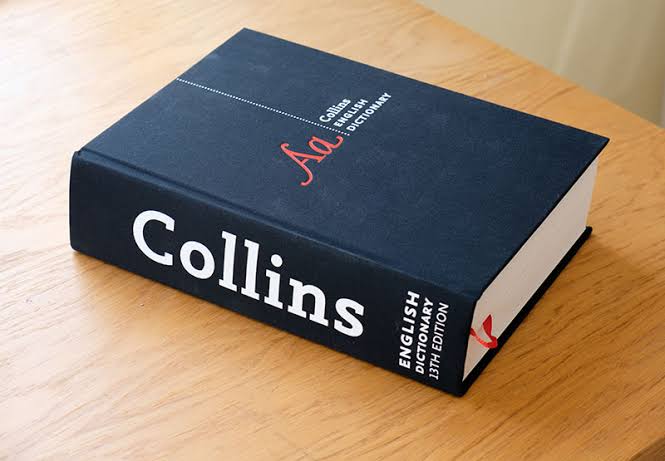
‘Mogging’ emerges Collins Dictionary’s Word of Year 2026
Other words shortlisted for the 2026 award include “carspreading,” “firewave” and “Manchesterism.”

States
847 motorists arrested for number plate violations in Cross River, says FRSC
Mr Mohammed stressed that enforcement would continue beyond the special operation.

States
Osun to establish University of Ilesa Teaching Hospital
The bill was earlier passed in September and forwarded to the governor for his assent but was returned for amendment due to the clause omission.
Politics
Lagos NDC senatorial candidate cautions political parties against violence
Mr Johnson called on political parties and their supporters to educate their members on peaceful political engagement.

NationWide
Social media influencer Blessing CEO begs Nigerians to forgive her misdeeds following son’s death
Blessing CEO stated, “To those who no longer love me because of my actions, I am sorry.”
Heading 4
AfCRA fixes March 2027 for publication of first African sovereign credit ratings
Mr Falala described borrowing costs as a major burden for African economies.


