

Malnutrition hits famine levels in Sudan’s North Darfur, says group
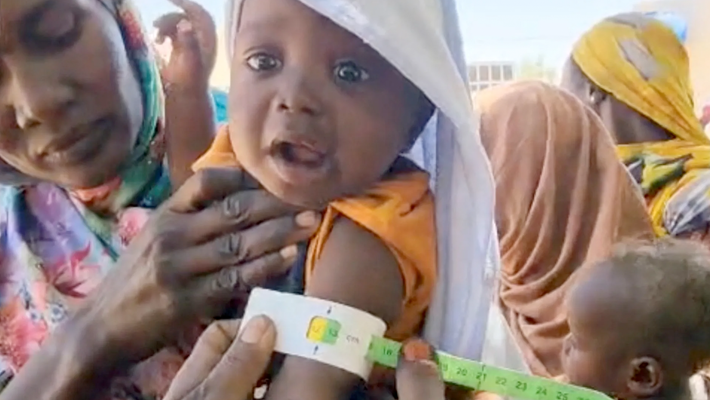
Acute malnutrition has reached famine levels in two more areas of North Darfur, Sudan, a global hunger monitor said on Thursday, amid a civil war that has displaced millions and triggered waves of ethnically charged violence.
The UN-backed Integrated Food Security Phase Classification (IPC) found that famine thresholds for acute malnutrition have been surpassed in Um Baru, where the rate of acutely malnourished children aged under five was nearly double the famine threshold, and Kernoi.
The IPC alert is not a formal famine classification, but it highlights alarming levels of hunger based on the latest data.
The two localities near the border with Chad received some of the tens of thousands who fled the district of al-Fashir, previously determined to be in famine, late last year when it fell to the Rapid Support Forces.
Kernoi and Um Baru then saw clashes as the RSF sought to consolidate control.
The civil war, which began nearly three years ago between the RSF and the Sudanese army, has caused widespread hunger.
In November, the global hunger monitor confirmed for the first time famine conditions in al-Fashir, as well as Kadugli, where on Tuesday the Sudanese army said it had broken a years-long siege on the city.
The IPC stated that cases of acute malnutrition were rising in the country, with nearly 4.2 million estimated cases compared to 3.7 million in 2025.
Limited access to lifesaving health services across North Darfur has compounded the problem, the IPC stated.
In Kernoi, only 25 per cent of children suffering from severe acute malnutrition were enrolled in treatment programmes, while in Greater Kordofan, conflict has severely disrupted food production and supply lines, according to the IPC.
One of the major aid groups operating in Sudan, CARE International, told Reuters that global donor funding cuts were also limiting their ability to respond to the crisis.
“Starvation has really become entrenched in some of the places where we’re working,” CARE’s Humanitarian Advocacy Advisor, Elizabeth Courtney, told Reuters.
Ms Courtney said funding was urgently needed to scale up supplies ahead of the rainy season and lean season, when food stocks from the previous harvest were low or depleted.
(Reuters/NAN)

We have recently deactivated our website's comment provider in favour of other channels of distribution and commentary. We encourage you to join the conversation on our stories via our Facebook, Twitter and other social media pages.

More from Peoples Gazette

Agriculture
FG tasks ECOWAS on leveraging financing strategies for agroecology
The federal government has urged stakeholders in the agriculture and finance sectors in the West Africa region to leverage financing strategies to enhance agroecology practices

Politics
Katsina youths pledge to deliver over 2 million votes to Atiku
“Katsina State is Atiku’s political base because it is his second home.”

Politics
South-East: Umahi gives reasons Igbos should support Tinubu’s re-election
Works minister Dave Umahi has urged Igbos in the South-East to support President Bola Tinubu’s bid for a second term.

States
Gov. Idris mourns Gwandu monarch Rasheed
The governor described the late monarch as a humble, peaceful and God-fearing traditional leader.

Heading 1
UN to support Nigeria, others to turn mineral wealth into prosperity
Nigeria, Guinea, Indonesia, Madagascar, Zambia and Zimbabwe will be the first countries to receive support.

Africa
UAE welcomes U.S. call for immediate humanitarian truce in Sudan
Mr Nahyan commended the leadership of Mr Trump in preventing Sudan from descending into further extremism.

Heading 4
2027: Adequate funding key to credible elections, says INEC
Mr Amupitan said sustained funding was necessary to provide security and logistics.

Heading 3
FG to review abandoned housing projects nationwide: Minister
Mr Darma expressed concern over the continued abandonment of government housing projects.


