

Mark Okoye, SEDC and the trial of South-East leadership
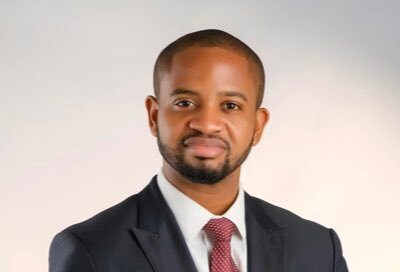
Educational authorities in the South East of Nigeria should show the televised appearance of Mark Okoye, the CEO/GM of the South East Development Commission (SEDC), before the Senate Committee on the South East to every primary and secondary school student in the region. Those in tertiary institutions should be required to write papers analysing what went right and what went wrong.
What unfolded before the cameras was more than a routine oversight hearing. It was a teaching moment, not just for the actors involved but for the people of the South-East in whose name they all sat.
The vigorous debate it has generated on social media should not be allowed to disappear into the graveyard of the information superhighway.
What should have been a routine Senate oversight hearing quickly descended into a spectacle. The expectation was that Mark Okoye would present a report on the commission’s activities, senators would ask questions, make observations, and ensure that the commission’s activities aligned with the needs and aspirations of the people of the South-East.
This is how parliamentary oversight works across the world; from Accra to Kigali, from Nairobi to Freetown. When done properly, it aligns public expectations with executive performance and ensures that those entrusted with public resources remain accountable to the people.
More than N16.6 billion was at stake. What was really on trial was whether South-East managers of public institutions can deliver results; whether those charged with holding them accountable are capable of doing so; and whether the people of the South-East care enough to follow, question, and engage with the democratic process.
For the first time in a long while, those interests collided in one public arena.
At the hearing, Mark Okoye did not explain, to the satisfaction of many observers, how the commission spent N3.6 billion in six months. While he claimed that the commission had only N12 billion left in its account, members of the committee informed him that records from the Central Bank of Nigeria showed a balance of N13 billion. There was also a heated exchange over N153 million reportedly spent on a one-room liaison office in Abuja. Okoye struggled to explain the expenditure clearly. He later argued that the figure covered more than rent and included operational costs, though the explanation failed to settle concerns.
The perfect storm featured a flawed character in the person of Senator Orji Uzor Kalu, leading what often appeared to be an inquisition of a once-touted wonder kid, Mark Okoye. Under the glare of cameras and before hungry, angry constituents, Okoye appeared unprepared for the moment.
His presentation lacked the transparency and honesty expected of a public official summoned to account for the stewardship of public funds.
Several interpretations have emerged regarding why the encounter unfolded the way it did. Your interpretation depends largely on your view of the actors, your understanding of the SEDC’s mission, and your grasp of the role of checks and balances in a democracy.
One group remains outraged that Senator Orji Uzor Kalu, a man whose own record raises uncomfortable questions about accountability, was leading the probe. As governor of Abia State, he presided over a system in which the legislature rarely held the executive to account. Had such oversight existed, it might have spared him the conviction that sent him to prison in 2019 for diverting billions of naira in state funds.
Kalu regained his freedom through a Supreme Court ruling based on jurisdictional technicalities. He did not get out of jail from any court’s determination or declaration of innocence. To add what we call ‘insult to the injury,’ he later secured a court injunction preventing a retrial. Imagine the audacity! For many observers, watching him preside over an accountability hearing was irony stretched too far.
Others looked at Mark Okoye’s public humiliation and saw yet another intellectual attempting to impress ordinary people with pie charts, PowerPoint slides, and graphs while standing before an audience yearning for roads, jobs, security, electricity, and opportunities.
Mark Okoye’s original sin in this SEDC adventure may have been his failure to read the room.
The South-East is not a Harvard lecture hall. It is not an IMF workshop. It is not an NGO conference where colourful graphics and polished presentations are accepted as proof of progress. The South-East is a room filled with people waiting for tangible improvements in their daily lives. They want long-term vision, yes. But they also want short-term evidence that somebody is moving in the right direction. In that room, graphs do not substitute for results.
The speed with which people descended on both Mark Okoye and Orji Uzor Kalu reveals something deeper: the South-East has run out of patience.
The excuses that began in 1999 have expired. The emergence of Governor Alex Otti in Abia State has made it increasingly difficult to explain away decades of poor governance. Many people now look back at the Kalu-Theodore Orji-Okezie Ikpeazu years and see twenty-four wasted years.
It is becoming harder to fool all the people all the time.
That is the dilemma facing many leaders in the South-East today. The judgment of the people is instant and often merciless. The urgency of the region’s challenges leaves little room for nuance or ceremony. The failures of successive political classes have eroded the reverence once reserved for men and women in positions of authority.
As people across the South-East watched the public trial of Mark Okoye, one question rose above every argument, every statistic, every accusation, and every defence:
Is Mark Okoye the leader we have been waiting for, or should we look for another?
That question is no longer directed at Mark Okoye alone.
It now hangs over governors, senators, ministers, commissioners, agency heads, traditional rulers, and every member of the political class.
The era when leaders could toy with the destiny of the South-East and expect endless patience is drawing to a close.
The hearing may have begun as an oversight session on the SEDC’s affairs. It ended as a warning to an entire generation of South-East leaders.
Rudolf Ogoo Okonkwo teaches Post-colonial African History, Diasporic African Literature, and African Folktales at the School of Visual Arts in New York City. He is the author of “This American Life Sef.” His latest book is “A Kiss That Never Was.”

We have recently deactivated our website's comment provider in favour of other channels of distribution and commentary. We encourage you to join the conversation on our stories via our Facebook, Twitter and other social media pages.

More from Peoples Gazette

States
Independence: NBA urges Nigerians to expect better future
The NBA said that ordinary Nigerians should be deriving benefit from the subsidy removal rather than hardship.

Agriculture
FG tasks ECOWAS on leveraging financing strategies for agroecology
The federal government has urged stakeholders in the agriculture and finance sectors in the West Africa region to leverage financing strategies to enhance agroecology practices

Politics
Katsina youths pledge to deliver over 2 million votes to Atiku
“Katsina State is Atiku’s political base because it is his second home.”
Health
Pate warns politicians against politicising Ebola case
Mr Pate said health is a unifying issue that transcends political, ethnic and religious affiliations.
Economy
Tinubu’s economic reforms paving way for prosperity: Minister
The minister explained that the reforms were deliberate and courageous, aimed at addressing longstanding structural weaknesses.

Health
Kaduna expands last-mile health supply project to 1,000 facilities
Ms Isyaku said four zonal warehouses in Ikara, Sabon Gari, Zaria and Kafanchan, established under the project, were operational.

Anti-Corruption
EFCC freezes bank account over alleged N1.06 billion theft
EFCC said the account was allegedly linked to the transfer of N1,065,500,000 from Renmoney Microfinance Bank.
Economy
NICA to convene stakeholders on expanding Nigeria’s credit economy
Mr Onalo said limited access to credit constrained businesses’ capacity to expand.
Heading 4
Female Ebola patient in Nigeria is Uganda-born, travelled to Uganda since September 16: Africa CDC
Uganda’s health ministry on Tuesday denied exporting Ebola to Nigeria, insisting the patient only passed through the country.


