

N10 billion ransom to Boko Haram shows how Tinubu govt arms Nigeria’s enemies

In November, gunmen stormed St. Mary’s Catholic boarding school in Papiri, Niger State, and snatched nearly 300 children and staff into the forests. It was a scene Nigeria has witnessed too many times. Terrified parents. A stunned nation. Official promises of swift rescue. And then the familiar silence. Now, the Agence France-Presse (AFP) has alleged that the Tinubu administration paid billions to Boko Haram to secure the release of up to 230 of those children and staff. Two commanders were reportedly freed as part of the arrangement. The money, according to the report, was flown by helicopter to Gwoza in Borno State and delivered to a militant leader. Officials deny the claim.
But the story rings painfully plausible in a country where denials have become ritual, and ransom has become routine. If true, this is not merely a transaction. It is a surrender disguised as compassion for the snatched children, staff and anguished parents. We cannot pretend otherwise; no parent would refuse to pay to save a child. No community would hesitate to trade treasure for life. The instinct to rescue is human. It is urgent. It is moral. But the state is not a grieving parent. The state is a sovereign authority entrusted with the monopoly of force. It exists to prevent abduction in the first place and to punish those who commit it. When the state pays ransom to terrorists, it does something far more consequential than saving hostages. It arms its own enemies.
The Terrorism (Prevention) Amendment Act, 2022, prohibits ransom payments to kidnappers. That Act was enacted in 2013 and subsequently amended in 2022 precisely because the country had become a vast marketplace for human bodies. As kidnapping becomes routine, a grim commerce has taken root, an organised marketplace where human lives are bartered, and profit is drawn from fear. School pupils, commuters, priests, farmers, and doctors have become victims. No one is exempt. Every successful ransom deepens the business model.
Terror groups and bandit networks do not require ideology alone. They require cash. Cash buys weapons. Cash pays terrorists. Cash recruits more young men from impoverished communities who see kidnapping as a viable career path. Cash secures loyalty. When millions of dollars are delivered by helicopter into the terrorist stronghold, that is not a one-time concession. It is a capital investment. Ransom payments increase the efficient capacity of a terrorist organisation. They enable planning. They improve logistics. They strengthen intelligence networks. They embolden commanders. They send a clear signal to every armed gang across the country. Abduct more children. The state will pay.
This is the revolving door that never shuts. A school is attacked. Ransom is paid. Terrorists are strengthened. Another school is attacked. The ransom is hiked. The cycle continues. What begins as an emergency response hardens into an opportuned pattern, and what is described as an exceptional measure quietly becomes state policy by practice. Each successful payout resets the market price of human life. Armed groups study the state’s behaviour. They refine their timing, expand their networks, and grow more audacious in snatching victims.
Kidnapping ceases to be the desperate act of criminals and becomes an organised enterprise with predictable returns. Each payment widens the circle of vulnerability. Each concession confirms that the quickest path to wealth in Nigeria is to seize a bus or storm a school. Young men in neglected communities see the arithmetic and draw their conclusions. Investors in violence see proof of quick returns. Communities lose faith in deterrence. The result is not temporary relief but systemic decay. Once a country becomes known for paying ransoms, the cost multiplies, measured not just in money but also in credibility and the slow fading of its authority.
Supporters of ransom deals argue that the alternative is unacceptable. They ask whether the government should allow children to die. It is a powerful question. But it is also a false choice. The real question is why Nigeria finds itself repeatedly at the ransom table in the first place. The answer is uncomfortable. The Nigerian state struggles to defend itself. It cannot secure its borders. It cannot protect its highways. It cannot protect its rural communities. It cannot guarantee the safety of boarding schools. Its intelligence is often reactive rather than preventive. Its military is overstretched. Its police are under-resourced. Faced with this incapacity, the state resorts to the easiest, immediate solution. Pay. Secure release. Declare victory. Move on.
But what appears easy in the short term compounds disaster in the long term.
When ransom becomes policy, it corrodes deterrence. Terrorism thrives where risk is low and reward is high. If the worst consequence of abducting 200 children is eventual payment and perhaps even the release of imprisoned commanders, then the mathematical outcome is obvious. Kidnapping becomes rational. It becomes strategic. It becomes inevitable. There is also the matter of credibility. Nigeria has long insisted publicly that it does not negotiate with terrorists. It has enacted legislation to criminalise ransom payments.
Yet if back channels are active and cash is delivered in the night, the message to citizens is stark. The law binds ordinary people. It does not bind the state. It is this hypocrisy of the state that breeds cynicism. Communities begin to negotiate directly with armed groups. Families crowdsource ransoms. Local officials and middlemen who hold themselves out as negotiators cut deals. Remember Tukur Mamu, who the SSS alleged was offered N50 million ransom share by terrorists. The monopoly of legitimate force fractures. State’s authority erodes.
There is also an international dimension. Boko Haram first shocked the world with the 2014 abduction of 276 girls from Chibok in Borno State. Global outrage followed. Hashtags trended. Foreign governments offered support. More than a decade later, Nigeria still grapples with mass abductions. If it is now paying millions of dollars per operation, it is not solving the crisis. It is underwriting it. Terror financing is not an abstract concept debated in conference halls. It is practical and immediate. Money that flows to an insurgent enclave will return as bullets, explosives, propaganda and recruitment drives. It will fund cross-border operations. It will destabilise neighbouring regions. It will extend the lifespan of terrorist cells that should by now have been dismantled.
What then is the alternative?
First, prevention must replace reaction. Schools in vulnerable regions cannot remain soft targets. Secure perimeters, rapid-response units, and community intelligence networks are not luxuries. They are necessities. Second, the national security architecture must be overhauled with ruthless honesty. Our national borders have become easy ingress and egress for terrorists. A national security emergency should be declared on the borders, and a new national border force should be quickly established to check the menace posed by terrorists. This is not a novel idea. It forms one of the star resolutions of the 2014 National Confab. If equipment is outdated, replace it. If corruption diverts resources, prosecute it without fear or favour. Third, the state must communicate truthfully. If it negotiates, it must explain why and outline how it intends to prevent recurrence. Blanket denials insult Nigerians’ intelligence and erode trust. Finally, the law must mean what it says. If ransom payments are illegal, the prohibition cannot be selectively ignored when politically convenient.
None of this minimises the agony of parents whose children are taken at gunpoint. Their anguish is real, immediate, and overwhelming. The relief that follows reunion is not a political achievement but a human blessing, and no society should treat it lightly. When families are reunited, there is joy, gratitude, and tears that cannot be reduced to statistics. These emotions deserve respect. Yet, compassion for victims cannot become an excuse for the state collapse into doing the unthinkable. The Nigerian-state must combine empathy with discipline, sympathy with structure, and rescue with reform.
On this account alone, leadership demands more than empathy. It demands foresight, planning, and the courage to confront difficult truths. A government that repeatedly pays ransom is not buying peace. It is leasing it at an escalating cost, with interest compounded with each new abduction. Temporary relief today can translate into greater insecurity tomorrow as adversaries grow stronger, bolder, and better-funded. True protection lies not in perpetual payment but in prevention, deterrence, and the steady rebuilding of the institutions that make kidnapping unprofitable and dangerous for those who attempt it.
Nigeria stands on the edge of a precipice that falls into the depths, a descent where the future risks being buried beneath fear, where each school term begins with dread, where helicopters carrying cash become routine, and where violent groups sharpen their methods with resources traced back to the state. The other alternative is to either stand back from the precipice or move toward recovery. It is demanding, but it requires rebuilding security institutions, a renewed commitment to prevention, and the resolve to choose lasting stability over temporary relief. No country can ransom its way out of terror. It cannot bribe violence into submission. Each payment writes an invitation to the next abduction. Each secret deal deepens public insecurity. If the AFP report is true, then the Nigerian-state is not just responding to kidnapping, it is sustaining the ecosystem that makes kidnapping profitable.
That is not a strategy. It is capitulation. And capitulation, once normalised, is very hard to reverse.
Abdul Mahmud, a human rights attorney in Abuja, writes weekly for The Gazette

We have recently deactivated our website's comment provider in favour of other channels of distribution and commentary. We encourage you to join the conversation on our stories via our Facebook, Twitter and other social media pages.

More from Peoples Gazette

States
Independence: NBA urges Nigerians to expect better future
The NBA said that ordinary Nigerians should be deriving benefit from the subsidy removal rather than hardship.

Agriculture
FG tasks ECOWAS on leveraging financing strategies for agroecology
The federal government has urged stakeholders in the agriculture and finance sectors in the West Africa region to leverage financing strategies to enhance agroecology practices

Politics
Katsina youths pledge to deliver over 2 million votes to Atiku
“Katsina State is Atiku’s political base because it is his second home.”
Heading 5
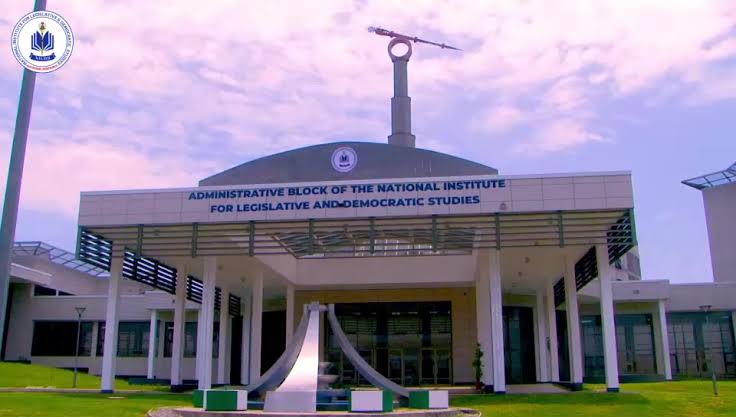
NILDS seeks stronger role for women in governance
According to the DG, democracy in Nigeria has come to stay and requires collective commitment.

Lagos
Lagos recruits 45 personnel to boost enforcement on Lekki-Epe corridor
Mr Osiyemi noted that the corridor had staffing challenges that slowed down operations.
Heading 2
Education minister inaugurates Nigeria’s first robotic surgery academy
Mr Alausa said the initiative would expand advanced medical training.
Health
Pate warns politicians against politicising Ebola case
Mr Pate said health is a unifying issue that transcends political, ethnic and religious affiliations.
Economy
Tinubu’s economic reforms paving way for prosperity: Minister
The minister explained that the reforms were deliberate and courageous, aimed at addressing longstanding structural weaknesses.

Health
Kaduna expands last-mile health supply project to 1,000 facilities
Ms Isyaku said four zonal warehouses in Ikara, Sabon Gari, Zaria and Kafanchan, established under the project, were operational.


