

Naira not at equilibrium, still vulnerable to external shocks, financial expert says
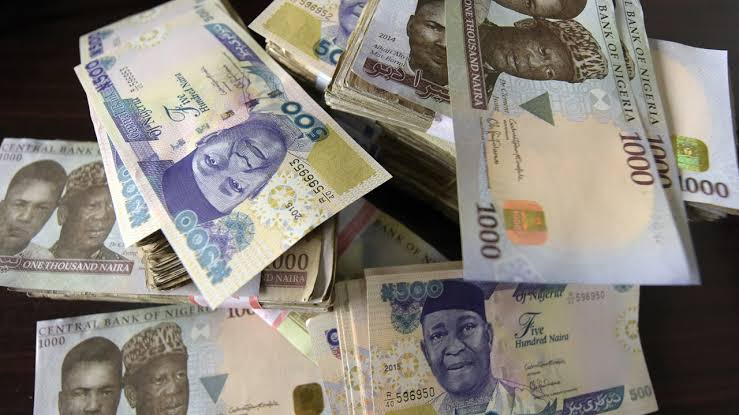
A financial and strategic management expert, Ololade Adesola, says while recent improvements in economic fundamentals have stabilised the naira, Nigeria is yet to achieve a true exchange rate equilibrium.
She said in Ibadan on Friday that this was due to continued exposure to external shocks.
Ms Adesola, the managing consultant of L.A. Consult Limited, was assessing the status of the naira, inflation and recent monetary policy measures by the Central Bank of Nigeria (CBN).
She said that tighter monetary conditions, improved market transparency, reduced arbitrage opportunities, and growing investor confidence had contributed to the naira’s relative stability in recent months.
“Definitely, there have been improved fundamentals, which have allowed us to have stability in the exchange market.
“But I do not believe that we have reached an equilibrium yet because we are still exposed to external shocks, particularly oil prices and capital inflows,” she said.
According to her, Nigeria remains highly vulnerable to disruptions in global markets because the bulk of its foreign exchange earnings still comes from crude oil exports.
She noted that achieving greater resilience would require significant diversification of the economy through increased non-oil exports, manufacturing, service exports and long-term foreign direct investment.
On monetary policy, Ms Adesola said that moderation in inflation had created room for cautious adjustments to interest rates.
She, however, warned against aggressive rate cuts that could weaken the attractiveness of naira-denominated assets.
She expressed optimism that inflation would continue to ease after the harvest season, attributing the recent uptick in prices largely to seasonal food supply pressures.
“We expect the CBN to continue to make careful and moderate adjustments in rates, not something drastic or significant, so that it does not weaken the attractiveness of the naira,” she said.
The consultant also described the introduction of the Nigerian overnight financing rate (NOFR) as an important step toward deepening the country’s financial markets.
She said that the benchmark would improve the pricing of financial instruments, strengthen liquidity management and provide a clearer reference point for short-term funding and interest-rate products.
According to her, the full impact of the new benchmark will become clearer over time as the market adjusts to its implementation.
Ms Adesola advised investors to focus on real returns rather than nominal returns, stressing that inflation-adjusted performance should guide investment decisions.
She urged portfolio managers and investors to embrace diversification by exploring equities, corporate bonds, infrastructure assets and professionally managed investment funds.
“Fixed-income assets may become less attractive because of inflationary pressures, so investors should diversify their portfolios and explore alternative assets,” she said.
On measures required to sustain long-term confidence in the naira, Ms Adesola identified five critical areas requiring government attention.
These, she said, include improving efficiency in the oil and energy sector, expanding non-oil exports, strengthening infrastructure, reducing dependence on borrowing and ensuring policy consistency.
She specifically called for increased local crude supply to domestic refineries, expansion of agricultural and manufacturing exports, and greater monetisation of Nigeria’s digital economy.
The expert also stressed the need for improved power supply and transportation infrastructure, describing them as key drivers of economic competitiveness and investment attraction.
She expressed concern over the country’s rising debt profile, saying government borrowing had become unsustainable and should be replaced by stronger revenue mobilisation efforts.
According to her, investor confidence can only be sustained when policies are transparent, predictable and consistently implemented.
“Policy consistency and credibility are essential so that investors can trust that decisions they make today will not be undermined by sudden policy changes tomorrow,” she said.
(NAN)

We have recently deactivated our website's comment provider in favour of other channels of distribution and commentary. We encourage you to join the conversation on our stories via our Facebook, Twitter and other social media pages.

More from Peoples Gazette

Agriculture
FG tasks ECOWAS on leveraging financing strategies for agroecology
The federal government has urged stakeholders in the agriculture and finance sectors in the West Africa region to leverage financing strategies to enhance agroecology practices

Politics
Katsina youths pledge to deliver over 2 million votes to Atiku
“Katsina State is Atiku’s political base because it is his second home.”

Heading 3
Atiku tells Tinubu to publicise signed health deal with U.S. after Ghana rejected proposal over privacy, sovereignty concerns
“At this point, Nigerians do not know whether the provisions Ghana rejected are in the agreement Tinubu signed,” Mr Abubakar said.
Heading 4
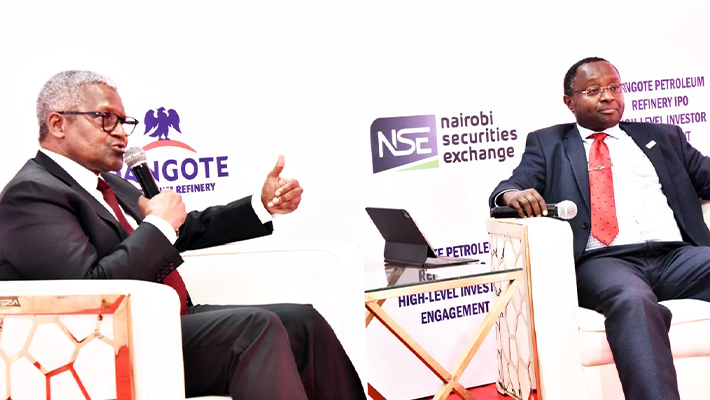
Dangote Refinery surpassed nameplate capacity, strengthened Nigeria’s energy security and export position: NMDPRA
NMDPRA says Dangote Petroleum Refinery has achieved a significant operational milestone, recording an average capacity utilisation of 105.21 per cent in August.

Heading 2
Senator Alli campaign group accuses Gov Makinde of neglecting Oyo residents, failing to tackle hunger
The campaign organisation said Mr Makinde failed to address “hunger in Oyo State despite increased funds from the federation account”.

NationWide
Senate passes bill extending 2025 capital budget implementation to December 31
The bill was sponsored by the Senate Leader, Opeyemi Bamidele (Ekiti Central).

Abuja
Wike approves N31.49 billion for solar streetlights in FCT
FCT Minister Nyesom Wike approved N31.49 billion in contracts to provide and install solar and modular hybrid solar streetlights across locations in the FCT.

Hot news Home top
Premier League says Manchester City guilty of all 115 financial charges, club vows appeal
The club has until October 2, 2026, to file an appeal.


