

NCRIC moves to harmonise child rights laws for enhanced protection

The National Child Rights Implementation Committee (NCRIC) has expressed readiness to push for the harmonisation of the provisions of the Child Rights Convention (CRC) of 1989 and the Child Rights Act (CRA).
Dr MacJohn Nwobiala, the co-chair of the committee, stated that the idea was to further protect and promote the rights of the Nigerian child, which he said had always been abused.
The co-chair spoke with journalists in Abuja after reviewing the activities of the 8th quarterly meeting of NCRIC, which focused on the aim of writing periodic reports on the rights of children.
Nigeria is one of the 196 countries that has so far ratified the Child Rights Convention as of October 2015.
It is expected to submit periodic reports to the United Nations (UN) Committee on Children’s Rights.
Meanwhile, Mr Nwobiala said Nigeria had always defaulted on writing periodic reports on the protection and promotion of the rights of children in the country.
He said the eighth quarterly meeting of the committee was the second of its kind, focusing on the aim of compiling the fifth, sixth, seventh and eighth periodic reports about the protection and promotion of the rights of children in the country.
“Today’s meeting is the 8th quarterly meeting of the National Child Rights Implementation Committee (NCRIC); it is an important meeting; it is the second meeting where we are focusing on the production, or, you may say, writing, of Nigeria’s 5th, 6th, 7th and 8th periodic reports.
“For several years, Nigeria has been on default, and we see the production of this combined report as something that is very important, not just for the children of Nigerians but also for the image of the country.
Nigeria had signed and ratified the United Nations Convention on the Rights of the Child and the African Union Convention and Child Charter on the Rights of the African Child.
“We feel that this defaulting does not go well with the country’s reputation; it is not proper, and it is not fair for us to continue to default, so today’s meeting focused on the production of the reports.
“Today, we took a general overview of the report, and then we went into specifics. We looked at the methodology for producing the reports because the reports have to take into consideration the input from all stakeholders.
“These stakeholders include the children themselves, State Child Rights Committees, ministries of education, health, and justice, and other key federal offices like the National Bureau of Statistics (NBS), the National Population Commission (NPC) and NGOs.
“We looked at the methodology used in gathering this report; we also looked at the time frame and work plan in terms of timeliness and distribution of responsibilities.
“We also looked at the structure of the report; we identified core agencies both at national, state and sub-community levels—those agencies like UNICEF that will provide input into the report on how to link up with them,” Mr Nwabiola said.
The co-chair, however, expressed his dissatisfaction with the non-presence of relevant stakeholders at the day’s meeting, saying members needed to turn a new leaf and make the committee more visible.
He said there was a need to review the operational modality of the committee now that people at the authority were looking up to the committee to turn things around about the promotion of the rights of Nigeria’s children.
He said that the committee already had a draft work plan for the year 2024 while urging members to brace up to their responsibilities.
Mr Nwabiola called on the government, private sector, NGOs, parents and teachers to unite and work as a team to protect the rights of children, saying children are from God and their rights must be protected.
He decried the rising cases of child abuse because of the economic situation of the country, adding that child marriage and out-of-school children were still on the high side.
(NAN)

We have recently deactivated our website's comment provider in favour of other channels of distribution and commentary. We encourage you to join the conversation on our stories via our Facebook, Twitter and other social media pages.

More from Peoples Gazette

States
Independence: NBA urges Nigerians to expect better future
The NBA said that ordinary Nigerians should be deriving benefit from the subsidy removal rather than hardship.

Agriculture
FG tasks ECOWAS on leveraging financing strategies for agroecology
The federal government has urged stakeholders in the agriculture and finance sectors in the West Africa region to leverage financing strategies to enhance agroecology practices

Politics
Katsina youths pledge to deliver over 2 million votes to Atiku
“Katsina State is Atiku’s political base because it is his second home.”

NationWide
FG approves N185 billion to settle legacy debts owed to gas producers
Mr Ekpo said settling the debts would improve gas supply to power plants.
States
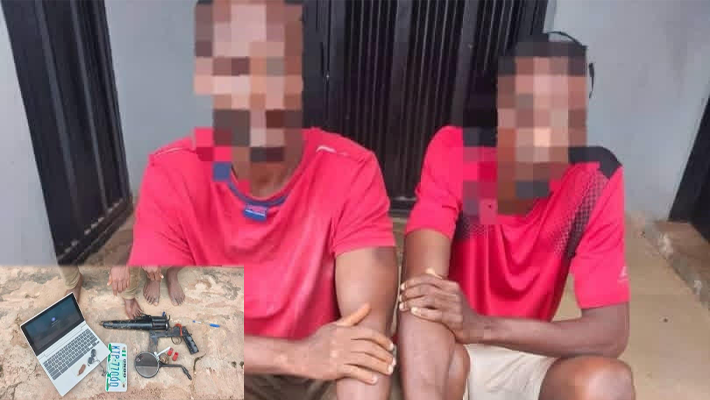
Police nab two suspected armed robbers, recover revolver in Akure
Mr Jimoh said preliminary investigations revealed that the suspects allegedly belong to an armed robbery syndicate.
Heading 3
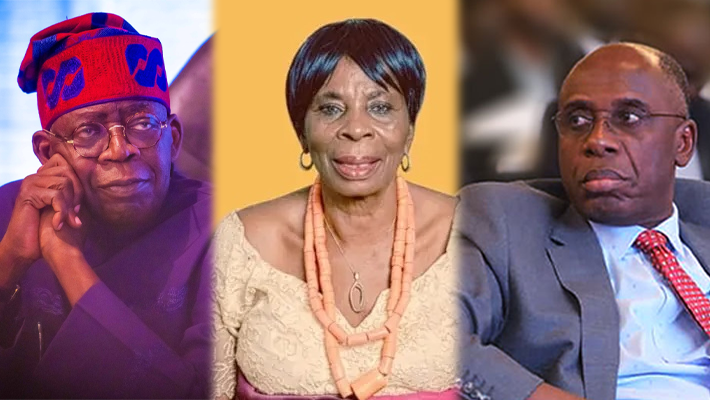
Tinubu’s policies killed my mother, Rotimi Amaechi alleges
In June, Mr Amaechi lost his mother, Mary Amaechi.

Heading 5
22 suspected cultists arraigned, remanded in Delta
The suspects are allegedly members of the Supreme Vikings Confraternity.
World
UN allocates $160 million to save lives in 12 underfunded humanitarian crises
The allocation includes $10 million to address the urgent needs of people with disabilities across the 12 crises.
Africa
Amnesty International demands AU emergency session amid rising conflict in Ethiopia
Amnesty lamented the disruption of communication services across Tigray and parts of the Afar and Amhara regions.


