

NDLEA declares couple wanted for running cocaine cartel from India; nabs four suspects
The National Drug Law Enforcement Agency (NDLEA) has declared a couple, Kazeem Owoalade, aka Abdul Balogun, and Rashidat Owoalade, alias Rashidat Bolarinwa, who allegedly runs a cocaine cartel from India wanted.
The NDLEA spokesman, Femi Babafemi, said in a statement on Sunday that the agency declared the couple wanted following the arrest of four syndicate members in Lagos.
Mr Babafemi said a Sports Utility Vehicle was recovered, and two houses already traced to them were sealed for forfeiture to the federal government.
He said two members of the syndicate, Taofeek Imran and Ishola Isiaka, were arrested on April 3, 2024.
The NDLEA spokesman said the arrest followed their bid to export 3.40kg cocaine on a Qatar Airlines flight going to Oman through the Murtala Muhammed International Airport (MMIA) Ikeja, Lagos.
“While Imran was the courier conveying the drug consignment to Oman, Ishola recruited him as the head of the cartel.
“Investigation has now revealed Alhaji Kazeem Owoalade, whose Indian residence permit bears Abdul Balogun, based in India,“ he said.
Mr Babafemi said efforts to dismantle his network in Nigeria paid off after five weeks of surveillance and follow-up operations.
He said this was when another member of the syndicate, Hamed Saheed, who worked directly with the baron, was arrested on Tuesday in the Abule Egba area of Lagos.
“It was indeed Saheed who lodged Imran in a hotel a day before his aborted trip to Oman and equally dropped him and Ishola at the Lagos airport the day they were arrested,” Mr Babafemi said.
He stated that NDLEA officials recovered phenacetin, a cutting agent for cocaine weighing 900 grammes, while searching Mr Saheed’s house.
“He confessed that the recovered substance was what was left of the consignment Imran was taking to Oman the day he was arrested.
“His arrest led to a follow-up operation at the home of the Owoalade couple at 20 Eyiaro Street, Ogudu Orioke, Lagos.
“This was where another suspect was arrested and a new model Toyota RAV4 SUV marked FKJ-773 JJ belonging to Rashidat and an additional 400 grams of cocaine were recovered.
“This is also in addition to already prepared suitcases to be used for illicit drug concealment, digital weighing scales and other paraphernalia,“ he said.
(NAN)

We have recently deactivated our website's comment provider in favour of other channels of distribution and commentary. We encourage you to join the conversation on our stories via our Facebook, Twitter and other social media pages.

More from Peoples Gazette

Agriculture
FG tasks ECOWAS on leveraging financing strategies for agroecology
The federal government has urged stakeholders in the agriculture and finance sectors in the West Africa region to leverage financing strategies to enhance agroecology practices

Politics
Katsina youths pledge to deliver over 2 million votes to Atiku
“Katsina State is Atiku’s political base because it is his second home.”

States
Niger govt embarks on 321 rural development projects
He said many of the projects were community-driven.
Lagos
Residents, traders bemoan health risks as refuse overruns Oyingbo road
Ms Adebayo said that the situation had discouraged customers from patronising them.
Africa
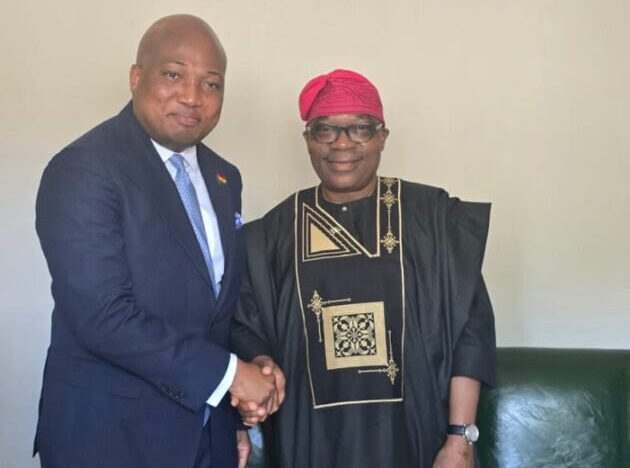
Nigeria, Ghana join forces against afrophobic protests
The ministers agreed to deepen bilateral ties to ensure the issue of Afrophobia is placed on the agenda of the next African Union summit.
Heading 3
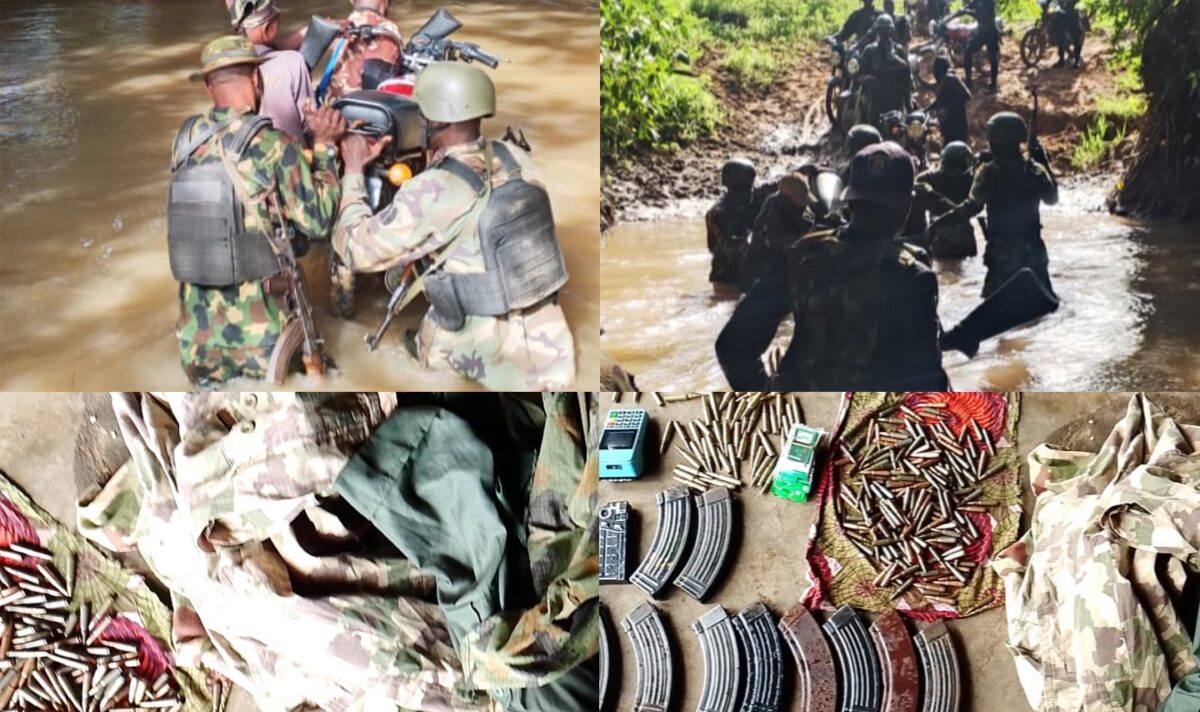
Troops kill two terrorists, rescue three victims in two-day raid of Benue hideout
Mr Zubairu stated, “The operation commenced at about 0300 hours on 16 July and concluded on 17 July 2026.”

NationWide
Institute, AFFCN sensitise grassroots to tax, electoral, reforms
Mr Adebayo stated that the unique strength of the initiative was the strategic involvement of former councillors drawn from the six South-South states.
NationWide
Nigeria’s energy crisis biggest obstacle to industrialisation: Sanusi
Mr Sanusi said addressing the country’s estimated 100 billion-dollar power infrastructure funding gap would require deep structural reforms.


