

Nigeria, Canada collaborate to tackle mpox
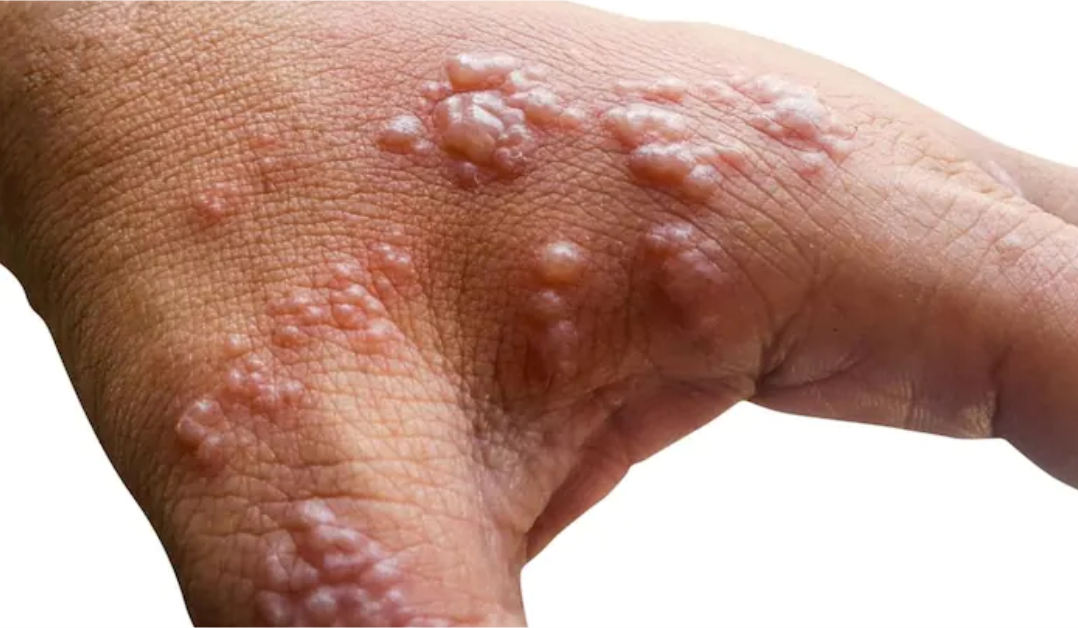
The Nigerian Institute of Medical Research (NIMR) and other stakeholders in the country have launched the Canada-Africa Mpox Partnership (CAMP).
The event was aimed at curbing the spread of mpox and study the dynamics of its transmission from humans to humans.
The other institutions in the project are the University of Ilorin, Slum and Rural Health Initiative Network (SRHIN), Institute Of Human Virology In Nigeria and Maryland Global Initiative Corporation (MGIC).
The News Agency of Nigeria (NAN) reports that the project is in partnership with the Canadian Institute of Health Research (CIHR) and the International Development Research Centre (IDRC).
During the event on Wednesday, Babatunde Salako, the NIMR director-general, said the Nigeria consortium would work with their Canadian partners to help inform the clinical and public health response to the local and global mpox epidemic.
Mr Salako said 68 researchers with multi-disciplinary expertise from Canada, Nigeria, the U.S. and the United Kingdom would work on the project involving community engagements from inception.
The director-general, however, reiterated the need for a medical research council to fund research works peculiar to Nigeria.
“Many nations have agencies that fund health research directly, but we don’t have that here in Nigeria, and that is why health research appears to have been funded poorly. The body funding the CAMP project is the Canadian Institute of Health Research; if we have such a body, we will be able to fund research on health issues that affect us directly,” the NIMR boss stated.
Rosemary Audu, the principal investigator of CAMP Nigeria, said the project would focus on three topics across diverse epidemiological, geo-social and health system contexts involving Mpox transmission, treatment and vaccines.
Ms Audu, also the Director of Research at NIMR, said the two central components of the CAMP project were multi-directional capacity building and community engagement.
“In the first sub-project, CAMP researchers will work to understand transmission from multiple angles and the second sub-project will involve conducting a random contrail trial to access the safety and effectiveness of the smallpox drug tecovirimat as treatment for the disease,” she explained.
(NAN)

We have recently deactivated our website's comment provider in favour of other channels of distribution and commentary. We encourage you to join the conversation on our stories via our Facebook, Twitter and other social media pages.

More from Peoples Gazette

States
Independence: NBA urges Nigerians to expect better future
The NBA said that ordinary Nigerians should be deriving benefit from the subsidy removal rather than hardship.

Agriculture
FG tasks ECOWAS on leveraging financing strategies for agroecology
The federal government has urged stakeholders in the agriculture and finance sectors in the West Africa region to leverage financing strategies to enhance agroecology practices

Politics
Katsina youths pledge to deliver over 2 million votes to Atiku
“Katsina State is Atiku’s political base because it is his second home.”

States
FG, IFAD distribute tricycles, farm equipment to over 500 farmers in Anambra
The equipment distributed included 49 tricycles, 84 power tillers, 80 solar-powered water pumps, 200 knapsack sprayers and fertiliser applicators.

Economy
Afreximbank records $813.5 million net income in nine months
Afreximbank noted that the growth was underpinned by an expansion of its lending portfolio.

Hot news Home top
Chris Brown sentenced for London nightclub attack
Brown,37, had repeatedly struck Abe Diaw with a tequila bottle in the VIP section of Tape, a nightclub in London on February 19, 2023.

World
London’s Oxford Street becomes traffic-free
City officials said the revitalisation plan will create new opportunities for the famous street, which brings about $33 billion annually to London’s economy.

Health
Borno NMA sets up committee to check quackery
The NMA chair said that suspected cases of quackery would be reported to the appropriate authorities for investigation and necessary action.

Sport
Burna Boy headlines NFL’s first regular-season game in France
The performance marked the return of Burna Boy to the Stade de France after he headlined a sold-out 80,000-capacity concert at the venue last year.


