

Nigeria condemns threats against citizens in South Africa
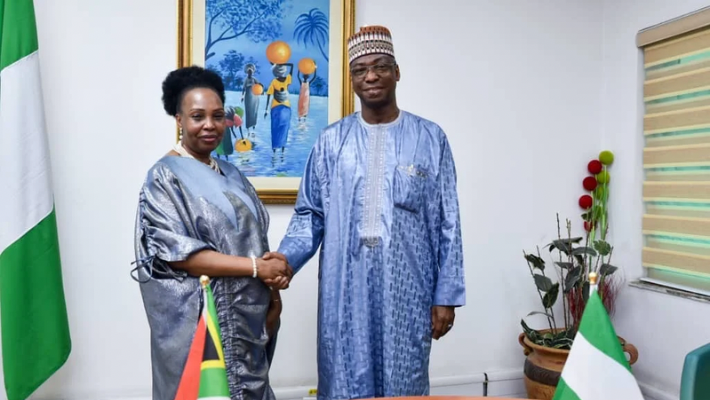
The Ministry of Foreign Affairs has condemned reported threats against Nigerians and other foreign nationals in South Africa. The ministry said some groups had allegedly urged foreigners, particularly black migrants, to leave South Africa.
The ministry’s spokesperson, Kimiebi Ebienfa, disclosed this on Monday in Abuja. Mr Ebienfa spoke after a meeting between the permanent secretary, Dunoma Ahmed, and South Africa’s acting high commissioner, Lesoli Machele.
Mr Ebienfa said the meeting addressed attacks on Nigerians and other matters affecting bilateral relations. He said Nigeria strongly condemned violence against its citizens living in South Africa.
According to him, recent attacks included the deaths of Matthew Ekpenyong and Kelvin Amaramiro. He said both deaths allegedly followed assaults involving security personnel.
“This incident, alongside other reported cases, has heightened anxiety within the Nigerian community. It requires urgent, credible and transparent remedial action from relevant authorities,” Mr Ebienfa said. “We request prompt sharing of preliminary findings and regular updates with the Government of Nigeria.”
Mr Ebienfa added that Nigeria also requested access to autopsy reports and other case documents. He said authorities should also support affected families in accessing legal processes. He acknowledged statements by South African leaders condemning extrajudicial killings.
Mr Ahmed welcomed the official rejection of attacks and looting targeting foreign nationals. He said such commitments must now translate into practical action on the ground.
Mr Ahmed stressed the need for accountability where misconduct by security personnel is established. He said disciplinary and prosecutorial action must follow confirmed wrongdoing.
The permanent secretary also urged South Africa to guarantee protection for Nigerians residing lawfully in the country. He said this included protection against profiling and unlawful detention.
Mr Ahmed also called for strict compliance with professional standards by security agencies. He identified Jacinta Zuma and Operation Dudula among groups linked to anti-foreigner attacks. He called for proactive steps to prevent incitement, intimidation and violence.
Mr Ahmed welcomed the memorandum on the early warning mechanism, signed by both countries. He urged immediate activation whenever threats against Nigerians emerge.
He added that Nigerians in South Africa must live safely, lawfully and with dignity.
(NAN)

We have recently deactivated our website's comment provider in favour of other channels of distribution and commentary. We encourage you to join the conversation on our stories via our Facebook, Twitter and other social media pages.

More from Peoples Gazette

States
Independence: NBA urges Nigerians to expect better future
The NBA said that ordinary Nigerians should be deriving benefit from the subsidy removal rather than hardship.

Agriculture
FG tasks ECOWAS on leveraging financing strategies for agroecology
The federal government has urged stakeholders in the agriculture and finance sectors in the West Africa region to leverage financing strategies to enhance agroecology practices

Politics
Katsina youths pledge to deliver over 2 million votes to Atiku
“Katsina State is Atiku’s political base because it is his second home.”
World
Pakistan, Saudi Arabia, Turkey hold talks on Iran war
Pakistan, Saudi Arabia and Turkey are part of a new military alliance called the Mecca Pact.

Politics
ADC owing staff salaries, cannot be trusted to govern Nigeria: APC
The APC, which described the situation as unconscionable, wicked and reprehensible, accused the ADC of insincerity.
Showbiz
Family wants Toluwanisings’ burial put on hold, demands probe into singer’s death
Toluwanisings died on October 14. The cause of his death remains unknown.
States
Fire razes building in Kwara
Fire has destroyed a building comprising three-bedroom flats in Kangile village, Ilorin South Local Government Area of Kwara State.

Economy
Businesses cannot make 20-year investments without policy certainty: BUA Chairman
Mr Rabiu urged the government to ensure reforms translate into increased production, employment, and improved living standards.

Politics
Peter Obi has nothing to offer Nigeria beyond ‘dubious’ statistics: Shettima
Mr Shettima neither specified which of Mr Obi’s statistics he was disputing nor explained why he described them as “dubious”.


