

Climate Change: 32 million West Africans risk displacement, ECOWAS warns
The Economic Community of West African States (ECOWAS) says about 32 million community citizens currently risk displacement due to the climate crisis, which requires about 294 billion dollars to tackle.
Kalilou Sylla, ECOWAS Commissioner for Economic Affairs and Agriculture, disclosed this at a regional workshop to validate the framework for the establishment of a West African carbon market platform.
The commissioner noted that West Africa remained highly vulnerable to climate change, with temperatures projected to rise by between one-and-a-half and three degrees Celsius by 2050.
Mr Sylla, represented by ECOWAS Director, Environment and Natural Resources, Christophe Deguénon, warned that the devastating impact of climate change could force millions of West Africans into internal displacement.
He explained that the validation initiative was designed to address the region’s limited participation in international carbon markets, in spite of its significant potential to generate high-integrity environmental and social carbon credits.
“The ECOWAS Regional Strategy for Access to and Mobilisation of Climate Finance adopted in 2022 estimated the region’s climate financing needs at 294 billion dollars.
“According to World Bank estimates, nearly 32 million West African people could be forced into internal displacement as a result of climate impacts, making collective regional action imperative.
“Climate change constitutes one of the most pressing challenges facing our region today. Indeed, West Africa is among the areas most vulnerable to the effects of climate deregulation,” he said.
He said regulatory gaps, inadequate technical capacity, tracking systems, and certification mechanisms, however, continued to limit the region’s ability to benefit from international carbon markets.
The commissioner said ECOWAS began an ambitious regional process in 2024, in line with the ECOWAS Vision 2050 and the African Union’s Agenda 2063, to develop a harmonised framework for a regional carbon market platform.
According to him, the proposed platform is anchored on four principles: transparency, environmental integrity, inclusive governance, and valuation of member states’ climate efforts.
He noted that ECOWAS member states had adopted Nationally Determined Contributions (NDCs) to help keep global temperature increases within the 1.5-degree Celsius target but stressed that achieving the targets would require significant financial resources.
He added that the financing gap had widened following the submission of NDCs 3.0, as member states raised their climate ambitions and the urgency for large-scale climate finance increased.
“The regional strategy also identified the need to establish a regional framework for the operationalisation of Article 6 to help bridge the financing gap.
“This framework aims to leverage the region’s massive potential through carbon markets,” he said.
Mr Sylla also said West Africa’s more than 350 million hectares of agricultural land, major forest blocks, mangroves, and potential for restoring degraded landscapes were significant assets capable of generating carbon credits.
“One clear pathway is Article 6 and carbon markets. West Africa has the assets. It has over 350 million hectares of agricultural land, vast forests and mangroves, and huge potential to restore degraded landscapes.
“We can generate high-integrity carbon credits. Yet we remain under-represented in international carbon markets due to gaps in regulation, technical capacity, monitoring, and certification.
“That is why since 2024, ECOWAS has launched a regional process, aligned with Vision 2050 and AU Agenda 2063, to build a harmonized framework for a West African carbon market platform,” he stated.
He said regulatory gaps, inadequate technical capacity, tracking systems, and certification mechanisms, however, continued to limit the region’s ability to benefit from international carbon markets.
He, therefore, urged participants to scrutinise and validate the draft framework to ensure that the proposed platform would be credible, transparent and attractive to investors.
Nigeria’s Minister of Environment, Balarabe Lawal, expressed concern that the region remained the most vulnerable to the impacts of climate change, in spite of contributing very little to global greenhouse gas emissions.
He noted that the event came at a defining moment for the sub-region, and the climate challenge presented opportunities for regional cooperation, innovation, and investment in climate action.
Represented by Iniagbon Abiola-Awe, a director in the ministry, Lawal noted that the shared challenges demanded collective solutions.
According to him, Nigeria strongly believes that a well-designed regional carbon market platform can strengthen the capacity of member states to attract climate investments and support nature-based solutions.
He said Nigeria was committed to working closely with ECOWAS, member states and development partners to ensure that the platform translated into practical action that would deliver tangible benefits for the people and their national economies.
“The initiative by the ECOWAS Commission to establish a regional carbon market platform is therefore both timely and strategic.
“Climate change continues to pose significant threats to our economies, ecosystems, food security, livelihoods and the well-being of our people.
“These shared challenges demand collective solutions. They also present opportunities for greater regional cooperation, innovation and investment in climate action,” the minister said.
(NAN)

We have recently deactivated our website's comment provider in favour of other channels of distribution and commentary. We encourage you to join the conversation on our stories via our Facebook, Twitter and other social media pages.

More from Peoples Gazette

States
Independence: NBA urges Nigerians to expect better future
The NBA said that ordinary Nigerians should be deriving benefit from the subsidy removal rather than hardship.

Agriculture
FG tasks ECOWAS on leveraging financing strategies for agroecology
The federal government has urged stakeholders in the agriculture and finance sectors in the West Africa region to leverage financing strategies to enhance agroecology practices

Politics
Katsina youths pledge to deliver over 2 million votes to Atiku
“Katsina State is Atiku’s political base because it is his second home.”
States
Otti advises Abia residents to reject election-season politicians’ promises
The bishop thanked God for giving Abia the opportunity to be governed by Mr Otti.
Heading 3
NiMet predicts three-day rain, sunshine nationwide from Monday
The agency also predicted cloudy skies with intervals of sunshine across the southern region.
States
Environmentalists seek probe into Bayelsa, Rivers tremors
A fruit seller, Benita Douglas, said the vibration broke another trader’s table.

States
Coalition urges investment in girls’ education to end child marriage
Mr Ibn-Attahir said keeping girls in school was essential to ending child marriage.
Hot news Home top
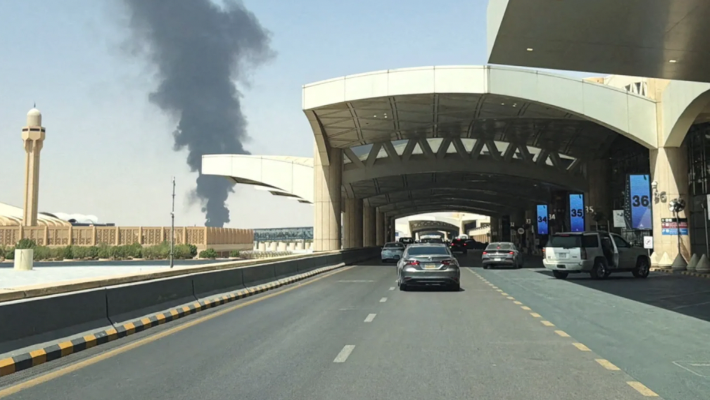
FG condemns Houthi attack on Saudi Arabia’s airport, urges restraint
The ministry stressed the need to respect Saudi Arabia’s sovereignty and territorial integrity.

States
PDP governorship candidate vows free shops for traders affected by Enugu market demolition
Mr Nnaji described trading as an integral part of the people’s economic and social life.


