Nigeria not yet respecting rights of all human beings: UN

The United Nations says Nigeria has not attained the status of a nation that respects the rights of all human beings as it encourages Africa’s most populous nation to adhere to its constitution guaranteeing human rights and obey the UN’s ‘Call to Action’.
The UN statement followed President Muhammadu Buhari’s kick-off a new collaboration with the organisation in Nigeria to prioritise interventions in the area of human rights in the country.
At a dialogue that opened in Abuja on Tuesday, the two parties commenced talks on the protection of rights and the implementation of conventions and laws bordering on human rights, to which Nigeria is a signatory.
The UN had warned Mr Buhari’s regime to stop the enforced disappearance of Nigerians.
Speaking at the opening, UN resident coordinator in Nigeria, Edward Kallon, affirmed, “This initiative today is a step towards realising, in Nigeria, the dreams captured in the Call to Action for human rights.”

Mr Kallon, represented by Peter Hawkins, UNICEF’s country representative, explained that Nigeria, like many other countries, faced a myriad of human rights challenges.
“As Nigeria strives towards a nation that acknowledges the rights of all human beings with strong and effective national protection systems, UN instruments and the mechanisms they have established as well as the 1999 Constitution of the Federal Republic of Nigeria, sets out the agenda for much of the work,” Mr Kallon further stated.
Amnesty International accused the regime of supervising many Nigerians‘ abductions critical of or opposed to its rule.
The UN official pointed out that “the Call to Action for human rights, proclaimed in February 2020 by the secretary-general, underpinned the centrality of human rights” to the UN’s work and global peace.
He explained that the consultation with the government would help streamline the efforts of the UN in advancing human rights.
Mr Kallon specifically pointed out that the two-day dialogue would, among others, take stock of the UN’s support to Mr Buhari’s regime and national partners while developing a common understanding of the current trends in human rights.
He added that the dialogue would also identify “extant priorities for UN support in human rights,” taking into account the emerging trends on human rights in the country, “including the shrinking civic space, persistent discrimination, and inequalities.”
(NAN)

We have recently deactivated our website's comment provider in favour of other channels of distribution and commentary. We encourage you to join the conversation on our stories via our Facebook, Twitter and other social media pages.

More from Peoples Gazette

Agriculture
FG tasks ECOWAS on leveraging financing strategies for agroecology
The federal government has urged stakeholders in the agriculture and finance sectors in the West Africa region to leverage financing strategies to enhance agroecology practices

Politics
Katsina youths pledge to deliver over 2 million votes to Atiku
“Katsina State is Atiku’s political base because it is his second home.”
States
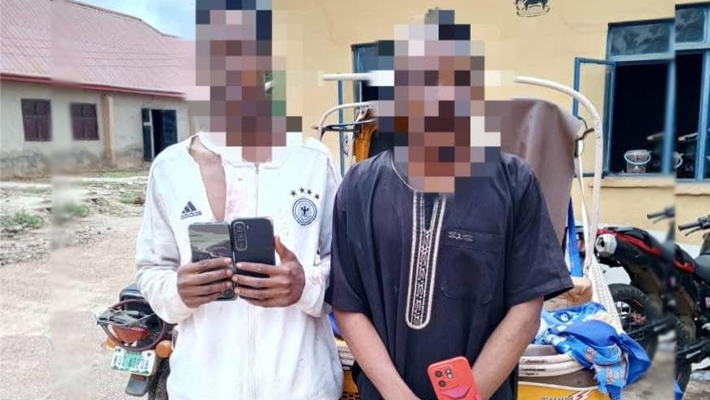
Niger: Police rescue two suspected phone thieves from mob
He identified the suspects as Hassan Abdullahi, 20, and Khalifa Bashir, 22.

Heading 5
Court of Appeal nullifies Electoral Act provisions on parties’ primary election, membership register
Zenith Party argued that the disputed Electoral Act provisions unlawfully interfered with the internal affairs of political parties.

Lagos
Governor Sanwo-Olu inaugurates climate investment fund
Mr Sanwo-Olu described the fund as a landmark intervention.
States
Judiciary partners revenue board to boost IGR in Taraba
Mr Agya commended the service for its reforms.

NationWide
NRC reaffirms police partnership to protect rail assets
Mr Opeifa described the nation’s railway infrastructure as critical national assets that must be safeguarded.