

Nigeria risks repeating oil sector mistakes as 90% of data is hosted abroad: Oyedele
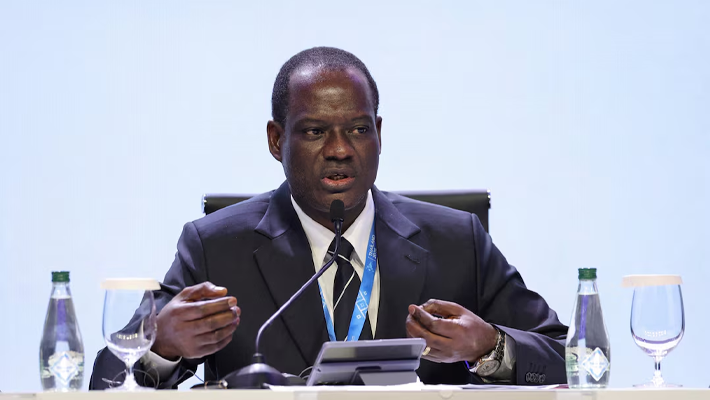
Taiwo Oyedele, the finance and economy minister, has warned that Nigeria risks repeating the economic mistakes of its oil sector, citing estimates that as much as 90 per cent of the country’s data is hosted abroad.
Mr Oyedele said Nigeria’s growing dependence on foreign infrastructure to store and process data could deprive the country of jobs, business opportunities, and economic benefits from its expanding digital sector.
He gave the warning on Wednesday while delivering the convocation lecture titled ‘Digital Sovereignty and Ethics: Guardrails for the Next Generation’ at the University of Uyo in Akwa Ibom.
According to a statement by the finance ministry, Mr Oyedele compared Nigeria’s reliance on foreign data infrastructure to its longstanding practice of exporting crude oil and importing refined petroleum products.
Mr Oyedele said the practice had deprived the country of opportunities to develop local expertise, create jobs and retain more value from its natural resources. He warned that a similar situation could emerge in the digital economy if Nigeria failed to invest in the infrastructure and expertise needed to store and process its data locally.
Citing figures from the Nigerian Communications Commission, Mr Oyedele said Nigeria had more than 157 million active internet subscriptions as of May 2026. He also referred to an estimate attributed to the Nigeria Data Protection Commission, indicating that as much as 90 per cent of the country’s data was hosted outside Nigeria.
The figures, he said, showed the scale of Nigeria’s digital economy and its dependence on foreign infrastructure.
Economic cost of foreign data dependence
Mr Oyedele listed foreign exchange outflows, lost business opportunities, and exposure to foreign legal jurisdictions as consequences of Nigeria’s reliance on overseas data infrastructure.
He explained that payments for offshore data storage and processing meant that part of the economic value generated by Nigeria’s growing digital sector was retained outside the country.
The minister also said the arrangement limited opportunities for Nigerian technology companies, professionals and investors to benefit from the country’s digital economy. He said dependence on foreign infrastructure also exposed Nigerian data to foreign laws and jurisdictions, raising concerns about the country’s ability to determine how its data is managed.
To address these challenges, Mr Oyedele called for greater investment in domestic digital infrastructure, stronger regulatory institutions and the development of local expertise. He explained that digital sovereignty did not mean isolating Nigeria from the global digital economy.
Rather, he said, it involved ensuring that Nigeria could determine, under its own laws, how data was collected, stored, accessed and used while benefiting economically from digital innovation.
AI could reshape employment
Speaking on artificial intelligence, Mr Oyedele said emerging technologies were changing the nature of work and the skills required in the labour market. He urged graduates to embrace AI and other digital tools while maintaining independent judgement, creativity, critical thinking, empathy and integrity.
The minister also warned about the growing risks of misinformation, impersonation and dishonesty associated with the misuse of artificial intelligence.
He advised young Nigerians to be mindful of their activities on digital platforms, noting that online posts, comments and reactions could influence how employers, institutions and society perceive them.
Mr Oyedele encouraged graduates to engage respectfully with others online and avoid confusing popularity or online attention with credibility and genuine achievement. He also urged them to challenge ideas rather than attack individuals and to recognise the importance of ethical conduct in building public trust.
Universities urged to focus on innovation
The minister also called on Nigerian universities to place greater emphasis on innovation, entrepreneurship and practical problem-solving rather than concentrating mainly on awarding certificates.
He said the contributions of higher institutions should also be assessed through the businesses their graduates established, the problems they solved and their impact on society.
Mr Oyedele identified agriculture, energy, healthcare, marine resources, environmental management and digital services as sectors offering opportunities for innovation and enterprise. He urged universities to equip students with the practical knowledge and skills needed to develop solutions in these areas.
The minister also outlined five responsibilities for graduating students, including lifelong learning, value creation, integrity, responsible digital citizenship, and active participation in nation-building.
He maintained that Nigeria’s digital future would depend not only on investment in technology and infrastructure but also on the decisions, skills and values of those shaping the economy.

We have recently deactivated our website's comment provider in favour of other channels of distribution and commentary. We encourage you to join the conversation on our stories via our Facebook, Twitter and other social media pages.

More from Peoples Gazette

States
Independence: NBA urges Nigerians to expect better future
The NBA said that ordinary Nigerians should be deriving benefit from the subsidy removal rather than hardship.

Agriculture
FG tasks ECOWAS on leveraging financing strategies for agroecology
The federal government has urged stakeholders in the agriculture and finance sectors in the West Africa region to leverage financing strategies to enhance agroecology practices

Politics
Katsina youths pledge to deliver over 2 million votes to Atiku
“Katsina State is Atiku’s political base because it is his second home.”

Anti-Corruption
Unremitted Pension: PenCom wants EFCC to prosecute corrupt employers, recover funds
PenCom has sought the Economic and Financial Crimes Commission’s intervention to tackle pension fraud, particularly employers’ failure to remit pension contributions.
Economy
Nigeria risks repeating oil sector mistakes as 90% of data is hosted abroad: Oyedele
Mr Oyedele warned that Nigeria risks repeating the economic mistakes of its oil sector, citing estimates that up to 90 per cent of the country’s data is hosted abroad.

States
Kidnapping: Several terrorists killed, 16 hostages rescued in Niger, says army
Troops of the Nigerian Army have rescued 16 hostages and recovered arms and ammunition in Mashegu and Tungan Kawo in Rijau council area of Niger.

Economy
CBN imposes N1 billion capital requirement on crypto operators, gives 180 days to obtain licence
The directive is contained in the bank’s Regulations for the Operations of Non-Security Virtual Assets in Nigeria, issued on Thursday.

Anti-Corruption
Alleged fraudster poses as EFCC chairman’s PA to defraud NPA boss of $700,000
The former NPA boss was allegedly defrauded of $700,000 after claims that the EFCC was investigating him.

Economy
Kano govt warns mining firms against abandoning sites without reclamation
The Kano government has warned mining companies operating in the state not to abandon mining sites without carrying out mandatory environmental reclamation measures.


