

Nigeria should rely more on domestic capital, says CBN governor
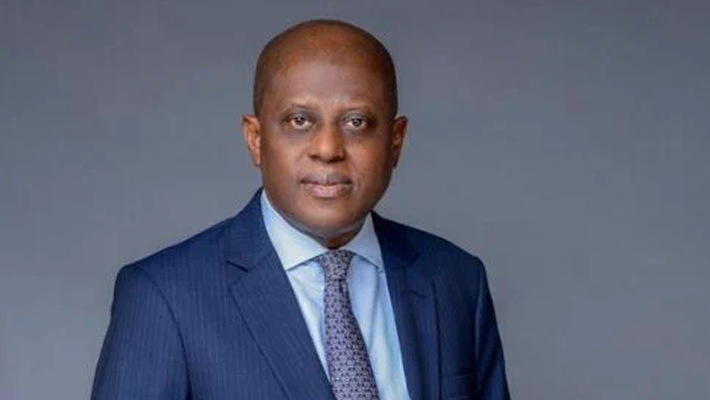
Nigeria can no longer depend mainly on foreign capital to finance its development because global investors have become more cautious, says Yemi Cardoso, the governor of the Central Bank of Nigeria.
Mr Cardoso, on Wednesday, explained that Nigeria and other African countries must rely on their own financial resources, including pension funds, insurance assets, domestic savings and money from citizens living abroad, to drive economic growth.
The central bank governor noted this at the seventh Africa Emerging Markets Forum in Abuja. According to him, the global investment environment has changed, and countries now have to compete harder to attract capital.
“The era of abundant liquidity, chasing returns regardless of risk, is over. Investors now have more choices and less tolerance for uncertainty,” he stated.
Mr Cardoso disclosed that investors now place greater value on countries with stable policies and strong institutions, saying, “Capital increasingly flows to the promise of credibility, transparency, policy consistency, and strong institutions.”
The CBN governor urged Africa not to depend solely on attracting foreign capital to finance its development. He encouraged governments to make better use of resources already available within their own economies.
“We must mobilise more of our own resources, including pension and insurance funds, domestic savings and diaspora capital, and channel them towards productive domestic investment,” Mr Cardoso stated.
According to the National Pension Commission (PenCom), pension assets rose to about N30.7 trillion as of 30 June 2026, making them one of Nigeria’s largest pools of long-term domestic capital. Nigeria also receives significant foreign exchange from Nigerians living abroad, while successive governments have sought to attract more diaspora investment through initiatives such as diaspora bonds and other investment programmes.
Mr Cardoso pointed out that countries that want to attract investment must earn investors’ confidence through consistent policies and credible institutions.
He pointed to reforms introduced by the CBN over the past three years, including the unification of the foreign exchange market, tighter monetary policy and efforts to improve transparency in the financial system. According to him, those decisions have helped strengthen confidence in the Nigerian economy.
“We have learned one lesson. Credibility is built intentionally, one right decision after another, and strengthened through consistent action,” said the CBN boss. “Credibility is not only a central bank concern. It is a national economic asset.”
The CBN governor said Africa should focus on investments that create jobs, transfer technology and strengthen local businesses instead of investments that extract resources. He also called for greater investment in electricity, digital infrastructure, affordable internet access and digital skills to prepare young Africans for an economy increasingly driven by artificial intelligence.

We have recently deactivated our website's comment provider in favour of other channels of distribution and commentary. We encourage you to join the conversation on our stories via our Facebook, Twitter and other social media pages.

More from Peoples Gazette

States
Independence: NBA urges Nigerians to expect better future
The NBA said that ordinary Nigerians should be deriving benefit from the subsidy removal rather than hardship.

Agriculture
FG tasks ECOWAS on leveraging financing strategies for agroecology
The federal government has urged stakeholders in the agriculture and finance sectors in the West Africa region to leverage financing strategies to enhance agroecology practices

Politics
Katsina youths pledge to deliver over 2 million votes to Atiku
“Katsina State is Atiku’s political base because it is his second home.”

World
UK Royal Mail to cut 2,500 jobs in 2027
The UK Royal Mail said the job cuts would come largely from voluntary resignations and redundancies.
World
AGESI commends ISO, UNDP, SVI for launch of ISO/UNDP 53001
AGESI described the launch as a defining moment for global sustainability practice and a breakthrough for institutions seeking credible pathways for SDG alignment.
Anti-Corruption
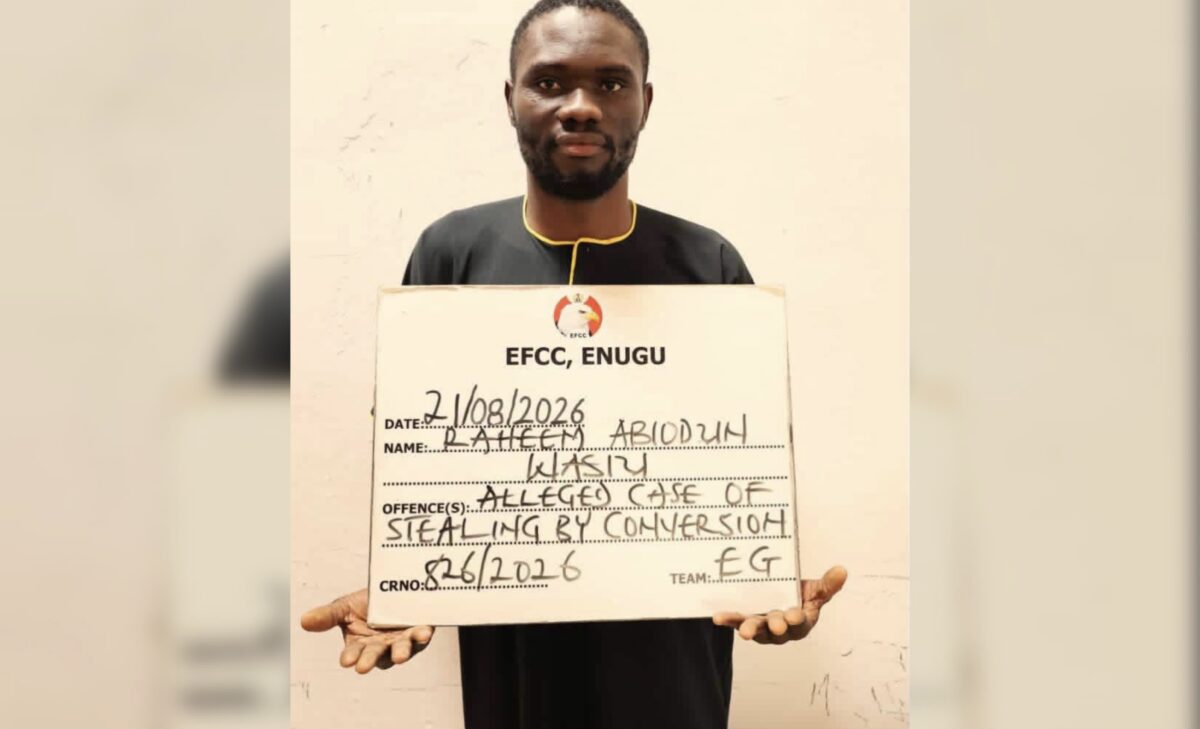
Man accused of defrauding South-East BDC operators by posing as rich contractor remanded
The commission said the alleged offence was committed on July 6, 2026, in the state.

States
Ogun community in court for allegedly assaulting contractor
The magistrate djourned the case until October 28 for further hearing.
Abuja
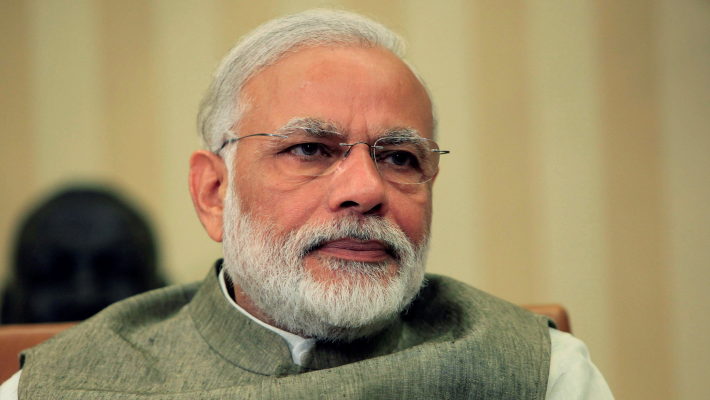
Afro-Asian community congratulates PM Modi on 25 years of political power
Sanjay Srivastava, president of the Afro-Asian community, congratulated Indian Prime Minister Narendra Modi on completing 25 years in power.

Abuja
World leaders converge on Abuja to advance Africa’s green transition
World leaders, investors and innovators are to gather in Abuja from October 14 to 15 for the Africa Climate Forum to advance discussions on Africa’s green transition.


