

Nigeria, WHO join forces to reduce newborn deaths

The federal government and the World Health Organisation (WHO) are advancing efforts to reduce newborn deaths through evidence-based management of possible serious bacterial infections (PSBI).
Emerging research suggests that many of such cases can be safely treated outside hospitals.
The Coordinating Minister of Health and Social Welfare, Muhammad Pate, said this on Wednesday in Abuja, at a one-day national dissemination meeting.
The meeting was called to present findings from a multi-country study on the management of PSBI in infants.
The study included Nigeria.
It examined whether outpatient treatment was a safe and effective alternative to inpatient care for low-risk cases where hospital referral is not feasible, building on evidence from the AFRINEST study and WHO guidelines.
The meeting brought together stakeholders to review results, discuss policy and programme implications, and explore how the findings can improve infant survival and health system response in Nigeria.
Mr Pate was represented by the Director, Family Health Department, FMOH, John Ovuroaye.
He said that Nigeria was committed to ensuring that every newborn has access to timely, life-saving care through the integration of PSBI management into national child health strategies.
The minister said the federal government had adopted global recommendations on PSBI and incorporated them into some frameworks.
He listed the frameworks to include the Integrated Management of Childhood Illness (IMCI) and the Reproductive, Maternal, Newborn, Child and Adolescent Health (RMNCAH) strategy.
He said the approach allowed selected cases of newborn infections to be managed at the primary healthcare level where referral to higher facilities is not feasible, particularly in underserved communities.
Yasir Bin Nisar of the Department of Maternal, Newborn, Child and Adolescent Health (MCA), WHO Nigeria, said the new clinical trial findings could reshape both global and national treatment policies.
Mr Nisar said that it would allow more cases to be managed outside hospitals.
He said evidence from recent studies showed that a significant proportion of young infants with PSBI could be safely treated on an outpatient basis or discharged early after short hospital care with oral antibiotics.
“Findings from recent trials demonstrate that outpatient care can be as effective as inpatient management in selected groups of infants, with significantly lower mortality risk,” he said.
According to him, PSBI refers to a group of life-threatening conditions in newborns and young infants.
“They include sepsis, pneumonia, meningitis and other severe infections, often identified through clinical danger signs such as fast breathing, poor feeding, convulsions, and abnormal body temperature.
“According to WHO data, an estimated 6.9 million PSBI cases occur globally each year, with the highest burden in South Asia and sub-Saharan Africa, including Nigeria,” he said.
He said that the diagnostic criteria for PSBI had a sensitivity of about 85 per cent and a specificity of 75 per cent, making early identification critical for survival.
He said that moderate-risk clinical signs such as poor feeding, low body temperature, and reduced movement showed varying case fatality rates depending on whether infants were managed as inpatients or outpatients.
“For example, infants with multiple danger signs recorded a case fatality rate of 4.9 per cent under outpatient care compared to 26.3 per cent among those managed in inpatient settings in some classifications.
“Similarly, critical illness cases recorded the highest mortality, with rates above 20 per cent in hospital-based management,” he said.
He referenced published evidence, including a 2021 PLOS ONE study.
The publication showed that many infants previously referred automatically for hospital admission could be safely managed at the primary health care level under structured protocols.
He said two major trials demonstrated that a large proportion of PSBI cases could either be managed entirely as outpatients or treated with a short initial hospital stay followed by oral antibiotics.
“Outpatient management reduces hospital burden, lowers costs for families, and decreases the risk of hospital-acquired infections, while maintaining treatment effectiveness in selected cases,” he said.
He noted that early switch therapy, where infants are discharged after two days of injectable antibiotics to continue oral treatment, also reduced hospital stay by up to five days per episode.
The WHO expert said that before 2015, nearly all PSBI cases required full inpatient referral, adding that new evidence has significantly changed the approach.
He said current recommendations now support a more differentiated model, with about 50 per cent of low-risk cases managed as outpatients.
“Twenty per cent are receiving short inpatient care with step-down oral therapy, and only about five per cent require full inpatient treatment for critical illness,” he said.
He called for urgent policy updates, revision of training materials, improved health worker capacity, and strengthened implementation research to support scale-up.
He said such reforms would ensure that evidence from clinical trials is translated into real-world improvements in newborn survival, particularly in low-resource settings like Nigeria.
The workshop brought together policymakers, health experts, researchers, and development partners to review evidence on newborn infection management and its implications for child survival strategies.
(NAN

We have recently deactivated our website's comment provider in favour of other channels of distribution and commentary. We encourage you to join the conversation on our stories via our Facebook, Twitter and other social media pages.

More from Peoples Gazette

States
Independence: NBA urges Nigerians to expect better future
The NBA said that ordinary Nigerians should be deriving benefit from the subsidy removal rather than hardship.

Agriculture
FG tasks ECOWAS on leveraging financing strategies for agroecology
The federal government has urged stakeholders in the agriculture and finance sectors in the West Africa region to leverage financing strategies to enhance agroecology practices

Politics
Katsina youths pledge to deliver over 2 million votes to Atiku
“Katsina State is Atiku’s political base because it is his second home.”

Africa
Anti-foreigner protests force South Africa to withdraw asylum seekers applications
The protests erupted over a Constitutional Court ruling easing access to asylum.

Heading 2
2028 Olympics: Super Falcons defeat Comoros 2-0 in first leg
The Nigerian team finally opened the scoring in the 48th minute with a tap-in by Michelle Alozie.

Heading 4
Flydubai co-pilot Hamam Al-Hammani inspired by 9/11 terror attack, radicalised in 2017: UAE
The 9/11 attacks claimed lives across 77 countries.
Hot news Home top
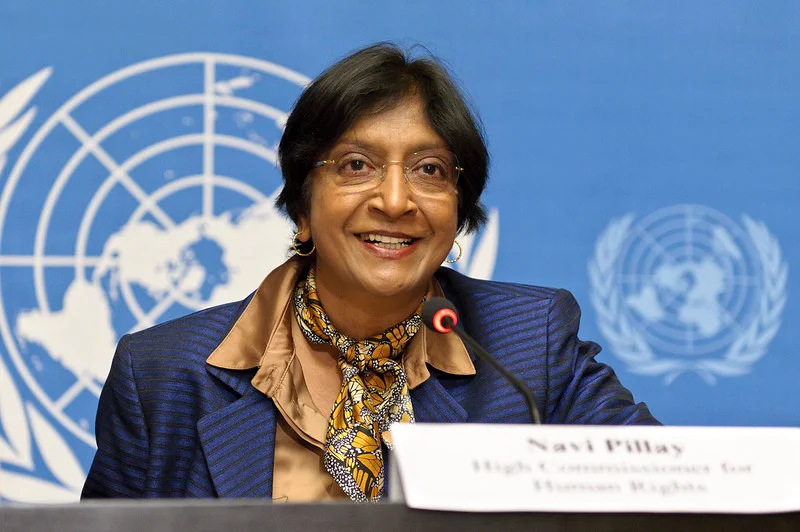
Israel blasts Nobel Peace Prize award to Navi Pillay over Gaza genocide probe
The Norwegian Nobel Committee on Friday announced Ms Pillay as the winner of the coveted prize.

Heading 3
Subsidy: Tinubu, puppet of France, acted like dull student who copied classmate’s answer alongside name, says Atiku
According to Mr Abubakar, Mr Tinubu’s administration has made life unbearable and called it reform.

NationWide
NiMet urges governments to protect human capital against climate shocks
Mr Anosike stressed the need to make climate intelligence local, timely and actionable.


