

Nigerians want crashed food prices sustained in Kaduna, Kano, Katsina
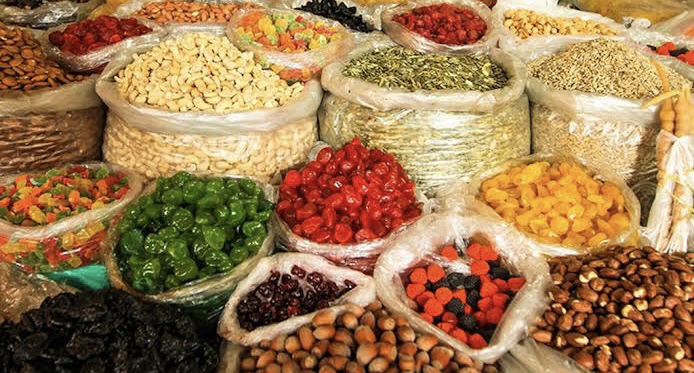
Nigerians are heaving a sigh of relief as food prices decline, but concerns linger. Many are calling on the government to sustain this trend, citing the need for affordable food staples.
They are therefore urging the authorities to address insecurity, improve infrastructure, and provide support to farmers to ensure long-term food security. Some are taking matters into their own hands, advocating for community-led initiatives and cooperatives to enhance food production and distribution.
They stress that collective action can help maintain the current price reduction and promote sustainable agriculture practices, ensuring food availability and affordability for all.
Meanwhile, the federal government has vowed to sustain the decline in food prices through various interventions, including input support, extension services, and mechanisation.
Agriculture minister Abubakar Kyari stated that the programme would focus on providing smallholder farmers with affordable, climate-smart storage solutions to reduce post-harvest losses, valued at over $10 billion annually.
Farmers and agricultural experts are also urging the government to take deliberate and sustained policy actions to maintain the recent decline in food prices. They restated the need for strategic intervention across production, logistics, and market access to guarantee sustainable price relief.
The All Farmers Association of Nigeria had also suggested lowering input costs, strengthening extension services, and improving rural infrastructure to sustain production and prevent post-harvest losses. President Bola Tinubu has since directed reductions in food prices across Nigeria, aiming to ensure safe passage of farm produce, reduce logistics costs, and empower cooperatives.
The government plans to introduce a Soil Health Scheme to boost crop productivity and support rural farming communities.
In Kaduna, a survey across major markets revealed slight reductions in the prices of some essential food items, though traders and experts warn that the relief may be temporary.
At the Kaduna Central market, a tomato seller, Hauwa Ibrahim, confirmed that the prices of tomatoes and peppers had dropped due to improved supply from rural farming communities. She said the arrival of fresh harvests had eased pressure on traders who previously bought at higher wholesale rates.
A rice dealer, Musa Abdullahi, reported a mild reduction in local rice prices, although the prices of imported rice remained unstable. He said that transport and loading charges were still limiting how much traders could lower the retail prices.
Zainab Bala, trader, noted that beans and garri were now cheaper than they had been in previous weeks due to the increased supply from the South. She, however, warned that any rise in transportation or fuel costs could quickly reverse the gains.
Buyers gave mixed reactions during the survey, with some expressing relief while others insisted that the prices remained high. A shopper, Fatima Usman, said maize and vegetables were now more affordable, helping families stretch limited budgets.
Another resident, Joseph Luka, argued that key staples, such as yams and rice, remained expensive despite public claims of price reductions. Rahila Danladi called for increased government oversight, stating that many households were still struggling despite the small reductions that had been recorded. She expressed concern that the current relief may not be sufficient for low-income families struggling with the rising costs of living.
At Kawo market, a grains trader, Abdulrahman Sule, lamented the constant rise in logistics costs that makes it difficult for the traders to maintain reduced prices. He said the traders were often blamed for hikes caused by factors beyond their control, such as fuel and haulage costs.
A market association representative, Aisha Sabo, urged the government to curb hoarding by middlemen who sometimes manipulate the supply for profit. She said stronger monitoring would help maintain fair prices across major markets in the state.
An economist, Kabir Ahmed of the Ahmadu Bello University Zaria, said the current drops were largely seasonal and may not continue without targeted government support. He reiterated the need for improved storage infrastructure to reduce losses that drive prices upward during periods of scarcity. Mr Ahmed further recommended investments in rural road networks to lower transport costs and ensure a stable supply.
Another economist, Hadiza Umar, stressed the importance of consistent agricultural policies, saying that unpredictable changes undermine market stability. She highlighted access to fertiliser, irrigation support, and market regulation as key areas that required government attention.
In Kano, food prices have continued to decline across major markets, raising hopes for improved household food security, as residents called on the government to adopt measures that would sustain the trend. A market survey conducted at various markets in the metropolis revealed significant reductions in the cost of major grains, particularly local rice, maize, millet, and beans.
A bag of locally processed rice, which previously sold for N70,000, now sells for between N62,000 and N63,000, while the price of maize declined from N58,000 to about N50,000. Similarly, millet now sells for N48,000, down from N55,000, and beans, depending on the variety, sell for between N65,000 and N72,000, compared to N80,000 two weeks ago. A bottle of vegetable oil, which now sells for N2,500, is available for N2,200, and a packet of pasta, which previously sold for N950, is now priced at N800. A grain merchant, Ibrahim Suleiman, attributed the drop to increased market supply following recent harvests.
Another trader, Hassan Ali, said that transportation improvements and reduced fuel costs had played a major role.
Residents commended the price reduction but urged authorities to implement long-term strategies that will stabilise prices beyond the harvest season.
Hafiza Garba, a civil servant, noted the need for continued support to farmers. A lecturer, Bala Musa, urged strict monitoring of middlemen and hoarders. A transport operator, Mustapha Yahaya, stated that security on rural roads needs to be strengthened.
Aminu Halilu, an Agriculturist, listed several measures needed to maintain the price decline. He urged the government to guarantee affordable farm inputs, subsidised fertilisers, improved seedlings, and agro-chemicals.
The prices of food items have continued to decrease in Katsina, following the federal government’s lifting of the waiver on the importation of sorghum as part of measures to curb inflation and alleviate the suffering of Nigerians.
A market survey conducted indicated that other items affected were millet, beans, and wheat. Some of the buyers interviewed expressed delight over the development. The survey revealed that a bag of maize costs between N31,000 and N33,000 across the state.
A 100kg bag of soybeans costs between N52,000 and N53,000, depending on the quality. Rice sells at N82,000, and beans at N54,000.
Abubakar Mamuda said that the measure would go a long way in alleviating the suffering of Nigerians. He said that compared to last year, the majority of the citizens could now afford at least two square meals.
Kabir Sabiu urged the government to sustain the measure, stating that excessive importation could negatively impact production. According to him, if the government continues to allow the importation of those types of food, it will have a negative impact on the local production.
He, therefore, urged the government to also crash prices of fertiliser to encourage production next year.
Abdullahi Garba, a grains dealer, said that the decrease was a result of buying locally grown food.
“Most of the buyers, even this week, bought imported maize instead of the locally produced one. So, anytime there is a high supply of a commodity, its price will fall, and likewise, if the supply is low, the price will decrease,” he said.
(NAN)

We have recently deactivated our website's comment provider in favour of other channels of distribution and commentary. We encourage you to join the conversation on our stories via our Facebook, Twitter and other social media pages.

More from Peoples Gazette

States
Independence: NBA urges Nigerians to expect better future
The NBA said that ordinary Nigerians should be deriving benefit from the subsidy removal rather than hardship.

Agriculture
FG tasks ECOWAS on leveraging financing strategies for agroecology
The federal government has urged stakeholders in the agriculture and finance sectors in the West Africa region to leverage financing strategies to enhance agroecology practices

Politics
Katsina youths pledge to deliver over 2 million votes to Atiku
“Katsina State is Atiku’s political base because it is his second home.”

Politics
Court orders INEC to upload Olawepo-Hashim’s name as Accord Party presidential candidate
The judge held that contrary to the political party’s claim, evidence showed that Mr Olawepo-Hashim emerged as its sole presidential candidate.

Rights
ICPC, AGF ask court to dismiss El-Rufai’s N1 billion lawsuit
ICPC has asked the Federal High Court, Abuja Division, to dismiss a N1 billion rights suit filed by former Governor Nasir El-Rufai

Jos
Miner’s Deaths: Shettima arrives in Minna for condolence visit
Thirty-seven miners died while in NSCDC’s custody. The survivors narrated their ordeal in the security agency’s detention cell to Peoples Gazette.
States
Helicopter crashes in Ondo; casualties unknown
A helicopter crashed on Monday in the Igbokoda community in Ondo State.

World
U.S. Coast Guard suspends search for passengers after medical aircraft disappears
The United States Coast Guard has announced the suspension of search and rescue operations for the passengers of a Gulfstream G100 aircraft that disappeared on Saturday.

Economy
Saudi Arabia, six OPEC nations maintain oil output targets amid U.S.-Iran war
Seven OPEC nations reaffirmed their commitment to maintain their oil production levels amid a U.S.-Iran war that has disrupted global oil supply and prices.


