

Nigeria’s debt has risen by N116.94 trillion under Tinubu while Nigerians drown in hardship: Atiku
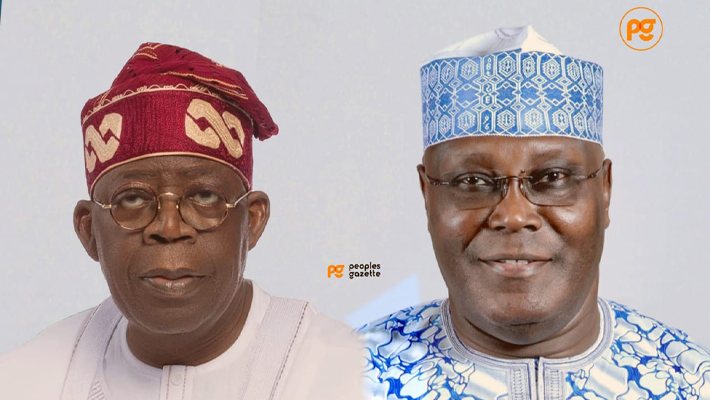
Former Vice President Atiku Abubakar has described President Bola Tinubu’s administration as one of the most ruinous governments Nigeria has endured, saying that it removed the fuel subsidy, celebrated rising public revenues, made everyday life punishingly expensive and still borrows with an extraordinary appetite.
After more than three years of demanded sacrifice, Nigerians are left with higher food, transport and energy bills, strained public services and a recorded public debt of ₦166.79 trillion as at 30 June 2026, according to the Debt Management Office.
“A government that says more money is coming in must explain why it keeps borrowing and why the people paying for its policies cannot see the promised gains,” Mr Abubakar said in a statement by Phrank Shaibu, director of strategic communications of the African Democratic Congress (ADC) Presidential Campaign Council.
Nigeria’s recorded public debt stood at ₦49.85 trillion in March 2023 and ₦166.79 trillion by June 2026.
“I expect President Tinubu to put the full account before Nigerians. He should identify the old debt newly recorded, the foreign debt whose naira value rose with the exchange rate, and every new loan contracted since he assumed office. He should show what has been repaid and what remains outstanding. Accounting explanations must not become a hiding place for fresh borrowing,” he added.
Mr Abubakar said the debt question could not be separated from what he described as the widening gulf between official claims of economic recovery and the lived reality of ordinary Nigerians.
He said, “The Tinubu economy is producing two Nigerias: one in which ordinary citizens are suffocating under rising food, fuel, transport, electricity, education and housing costs, and another in which those with wealth, access and privilege are far better positioned to protect and multiply their fortunes.
“That is the fundamental contradiction at the heart of these reforms. Government celebrates macroeconomic indicators while millions of citizens struggle to translate those statistics into food on the table.
“An economy cannot be declared successful simply because government revenue is rising, reserves are improving, or official statistics look better while the purchasing power of ordinary citizens is being destroyed. The true test of economic policy is whether Nigerians can afford food, transportation, housing, education, healthcare and electricity.”
The contradiction is reflected even in assessments by international institutions. In June 2026, the International Monetary Fund (IMF) said reforms had improved Nigeria’s macroeconomic outcomes, but also acknowledged that conditions remained difficult for many Nigerians, estimating poverty at 63 per cent under the national poverty line and saying 27 million Nigerians had faced food insecurity in the latter part of 2025. It warned that higher fuel, food and transport costs could worsen poverty and food insecurity.
Recent fuel-price pressures have further intensified the squeeze on household budgets, with petrol selling at around ₦1,400 per litre in Lagos and Abuja and as high as ₦1,500 in parts of northern Nigeria in September, while diesel exceeded ₦2,000 per litre.
“The philosophy of economic reform cannot be that the poor surrender more and more while those already insulated from hardship become increasingly comfortable. Nigerians were promised that today’s pain would produce tomorrow’s gain. After more than three years, they are entitled to ask: gain for whom?
“A mother cannot feed her children with a government revenue announcement. A worker cannot pay transport fare with a speech about reform. Nigerians do not eat GDP figures, FAAC allocations or PowerPoint presentations. The numbers must eventually arrive at the dinner table,” Mr Abubakar said.
He said the cost of carrying Nigeria’s debt had become an emergency of its own. BudgIT reported that by the third quarter of 2025, debt service had reached ₦12.52 trillion against ₦18.63 trillion in revenue — 67.2 per cent. In practical terms, roughly ₦67 out of every ₦100 of the revenue reflected in those figures went to debt service.
“Money committed to debt service is money unavailable for competing public needs. Nigerians were told to endure the pain because there would be gains. Where are those gains?” he said.
The 2026 fiscal framework provides for about ₦68.32 trillion in expenditure against projected revenue of ₦36.87 trillion, leaving a deficit of roughly ₦31.45 trillion.
At the Africa Forward Summit in Nairobi in May, President Tinubu himself said Nigeria expected to spend about $11.6 billion on debt service in 2026, describing the amount as nearly half of projected revenue and acknowledging that debt costs divert resources from productive sectors.
“If President Tinubu understands abroad what debt payments are taking away from Nigeria, then he must explain at home why the borrowing bill continues to grow.
“History warns us where this road can lead. Fiscal distress does not begin on the day a bailout is announced. It develops when borrowing becomes routine, debt service consumes an ever-larger share of available revenue and governments repeatedly borrow to finance gaps that previous borrowing failed to close.
“Nigerians should not have to wait for creditors to tell them what their household budgets already reveal,” Mr Abubakar said.
Mr Abubakar also demanded greater disclosure concerning the DMO’s external debt-service schedule for the second quarter of 2026.
The DMO recorded $39.25 million in ‘other charges’ between April and June 2026. This included $22.5 million against a First Abu Dhabi Bank Total Return Swap and about $8.97 million against Deutsche Bank AG. The table recorded no principal or interest payment against the First Abu Dhabi Bank Total Return Swap during the quarter, only the $22.5 million classified as “other charges.”
“What exactly was the $22.5 million charge for? Which agreement authorised it? What was the original facility? How much was drawn? What obligations remain outstanding? Nigerians are entitled to the terms and supporting documentation,” Mr Abubakar said.
He also demanded a reconciliation of Treasury Bill borrowing.
The DMO reported ₦19.48 trillion in outstanding Nigerian Treasury Bills at 30 June 2026.
He said, “Government should publish what subsequently matured, what was redeemed, what was rolled over and what constituted genuinely new borrowing. Auction allotments do not automatically equal an increase in outstanding debt because some issuances replace maturing bills.
“Nigerians need the current outstanding balance and a transparent reconciliation of the transactions behind it. A June snapshot cannot answer a September question.”
Mr Abubakar said President Tinubu and the All Progressives Congress (APC) also owed Nigerians an apology for what he described as the hardship imposed by the administration’s economic policies since 2023.
He said, “President Tinubu should apologise to the families who can no longer afford decent meals; to workers whose wages disappear on transportation before the month has properly begun; to parents struggling to pay school fees; to pensioners whose incomes have been destroyed by inflation; and to businesses fighting daily to keep their doors open.
“Nigerians were asked to sacrifice. Fuel subsidy was removed. The naira was allowed to depreciate sharply. Electricity and transportation costs rose. Government revenues increased, yet borrowing continued. After all of this, the Nigerian people are entitled to ask one simple question: what exactly did our sacrifice buy?
“An apology is not too much to ask from a government under whose watch millions of Nigerians have been pushed into deeper economic distress. Leadership must have the humility to admit when policies have inflicted enormous pain on the people they were supposed to serve.
“Good economics must ultimately improve human life. If government revenue rises while families become poorer; if debt rises while public services remain inadequate; if citizens surrender subsidies, pay higher prices and endure declining purchasing power while government continues borrowing, then Nigerians have every right to demand a full account of where their sacrifice has gone.
“President Tinubu and the APC owe Nigerians that account, and they owe them an apology.
“Apologise to Nigerians. Account for the money collected. Reconcile the borrowing. Explain the charges. Show the people what their sacrifice bought. Then make a solemn pledge to step away from governance rather than ask Nigerians for another mandate to endure this suffering.
“The real test of this economy is not whether the numbers look good in government presentations. It is whether ordinary Nigerians can afford to live.
“Reconcile the borrowing. Explain the charges. Show Nigerians what their sacrifice bought. Apologise for the hardship. And leave governance to those prepared to make life affordable again.”
Signed:
Phrank Shaibu
Director of Strategic Communications
ADC Presidential Campaign Council
Abuja
26 September 2026

We have recently deactivated our website's comment provider in favour of other channels of distribution and commentary. We encourage you to join the conversation on our stories via our Facebook, Twitter and other social media pages.

More from Peoples Gazette

States
Independence: NBA urges Nigerians to expect better future
The NBA said that ordinary Nigerians should be deriving benefit from the subsidy removal rather than hardship.

Agriculture
FG tasks ECOWAS on leveraging financing strategies for agroecology
The federal government has urged stakeholders in the agriculture and finance sectors in the West Africa region to leverage financing strategies to enhance agroecology practices

Politics
Katsina youths pledge to deliver over 2 million votes to Atiku
“Katsina State is Atiku’s political base because it is his second home.”
World
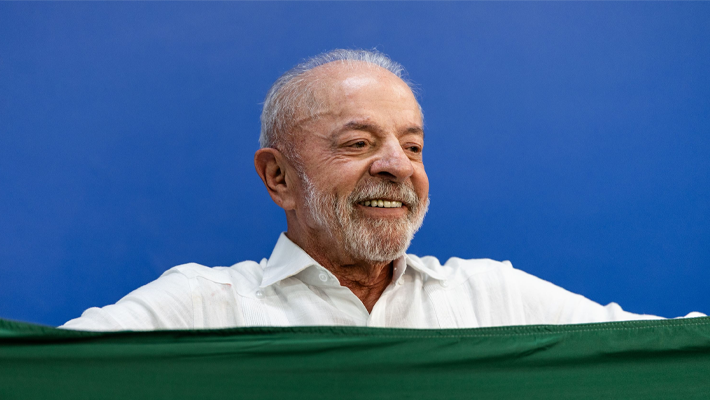
World leaders react to Lula’s presidential election victory
World leaders on Monday congratulated Brazil President Luiz Lula da Silva for his victory in Sunday’s presidential election runoff.
![Governor Sheriff Oborevwori [Photo: Facebook Sheriff]](https://gazettengr.com/wp-content/uploads/Governor-Sheriff-Oborevwori-Photo-Facebook-Sheriff-1.png)
States
Delta govt mourns mother of WTO director-general
Governor Sheriff Oborevwori has commiserated with the Okonjo family of Ogwashi-Uku, Aniocha South council area, over the death of their matriarch, Kamene Okonjo.
Health
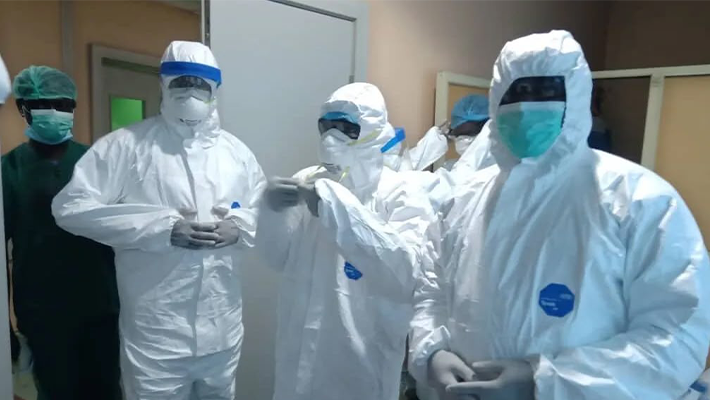
Nigeria no longer has Ebola, says WHO
WHO’s regional director for Africa says Nigeria is Ebola-free following the medical evacuation of the patient and her husband to Switzerland.

Rights
Phone-tapping: El-Rufai’s woes continue as court dismisses no-case submission
The Federal High Court, Abuja Division, on Monday dismissed a no-case submission filed by former Governor Nasir El-Rufai in his phone-tapping trial.

States
Enugu man arrested for robbing POS operator at gunpoint
The police command in Enugu has arrested and detained a 28-year-old suspect, Michael Ayisa, for robbing a point-of-sale operator of ₦200,000 at gunpoint in Udenu council area.

Economy
Credit card company American Express to fire 3,500 workers over AI use
Multinational financial services company American Express plans to lay off 3,500 employees worldwide as it expands the use of artificial intelligence to take on more roles.


