

Nigeria’s economy improving due to Tinubu’s reforms: World Bank

Taimur Samad, the World Bank’s acting country director for Nigeria, has stated that the Nigerian economy is improving due to the country’s commitment to sustained reforms.
Mr Samad made this statement based on the latest Nigeria Development Update (NDU) report, titled ‘Building Momentum for Inclusive Growth’, released on Monday in Abuja, highlighting several key indicators of progress.
He said these include a stable exchange rate, rising foreign reserves, and improved fiscal conditions.
He said the improvements in fiscal conditions were primarily driven by increased federation revenues, which had contributed to the positive economic outlook for the country.
Mr Samad mentioned that economic growth in the last quarter of 2024 had surged to 4.6 per cent on a year-on-year basis, bringing the full-year growth for 2024 to 3.4 per cent, the highest since 2014, excluding the 2021-2022 COVID-19 rebound.
“Additionally, the fiscal deficit shrank from 5.4 per cent of Gross Domestic Product in 2023 to 3.0 per cent of Gross Domestic Product (GDP) in 2024.
“This positive trend was driven by a sharp rise in federation revenues, which increased from N16.8 trillion in 2023, 7.2 per cent of GDP to an estimated N31.9 trillion in 2024, 11.5 per cent of GDP,” he explained.
Despite these gains, the World Bank official reiterated that many challenges remained, including persistent high inflation.
He stressed the importance of the Central Bank of Nigeria maintaining tight monetary policies to ensure continued economic stability.
If successful, he projected that inflation would fall to just more than 22 per cent on an annual average by 2025, marking a major achievement.
The report also highlighted that staying the course on macro-fiscal reforms would provide an opportunity to foster private sector growth and create jobs for Nigerians.
“However, it was clear that sustained momentum and further reforms are necessary to drive growth and expand economic opportunities,” stated Mr Samad.
Alex Sienaert, the World Bank’s lead economist for Nigeria, provided further insights, stressing the need to monitor revenue gains from the fuel subsidy removal carefully and cautioning against overly ambitious budget projections for 2025.
He also emphasised the importance of scaling up the targeted cash transfer programme to assist vulnerable populations.
Mr Sienaert outlined several steps for achieving macroeconomic stability, including reducing the cost of governance and accelerating the pace of economic growth.
He called for a private sector-led, public sector-facilitated growth strategy to address critical infrastructure gaps, particularly in electricity and transportation, while fostering a competitive and open business environment.
Additionally, he emphasised improving access to finance and policies to help new and existing firms grow, boost productivity, and unleash key sectors’ potential.
The NDU is a biannual World Bank report that assesses economic and social developments in Nigeria and offers an in-depth analysis of the country’s medium-term development challenges.
(NAN)

We have recently deactivated our website's comment provider in favour of other channels of distribution and commentary. We encourage you to join the conversation on our stories via our Facebook, Twitter and other social media pages.

More from Peoples Gazette

Agriculture
FG tasks ECOWAS on leveraging financing strategies for agroecology
The federal government has urged stakeholders in the agriculture and finance sectors in the West Africa region to leverage financing strategies to enhance agroecology practices

Politics
Katsina youths pledge to deliver over 2 million votes to Atiku
“Katsina State is Atiku’s political base because it is his second home.”

Abuja
TCN announces maintenance, disruption in parts of Abuja
The Transmission Company of Nigeria says there will be a three-hour annual preventive maintenance exercise at the Kubwa 132/33kV transmission substation in Abuja.
Heading 3
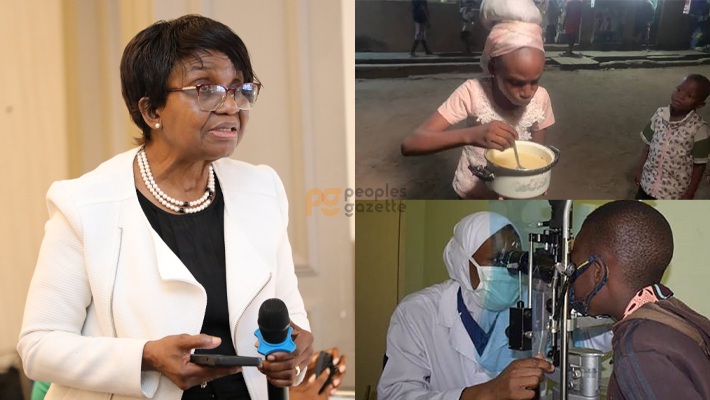
SPECIAL: Many Nigerians at risk as NAFDAC stays silent on cyanide testing in garri with 24 million battling vision loss
A NAFDAC spokeswoman told Peoples Gazette it did not know if cyanide is on the agency’s testing checklist and did not state how often market surveillance is conducted.

Economy
Benin secures €500 million in international financing with ADF support
Benin secured €500 million in international bank financing, supported by the African Development Fund, to facilitate priority investments in several sectors including education.

Economy
Navy recovers 80,000 litres of suspected stolen crude oil in Delta
The Nigerian Navy recovered approximately 80,000 litres of crude oil in anti-crude oil theft operations in Delta State.
States
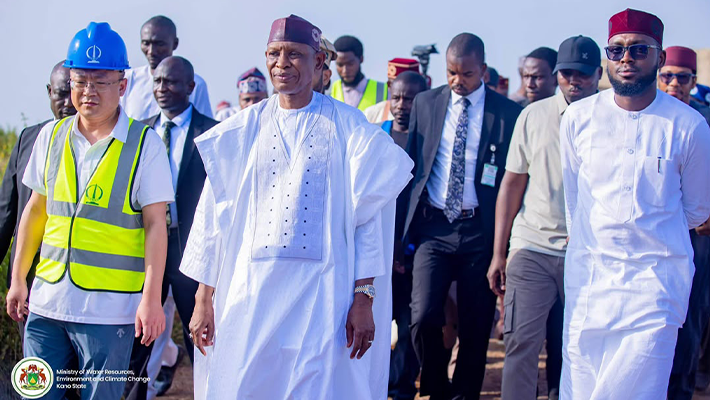
Kano govt restores 39.8 million-litre Goron Dutse reservoir after 30 years
Governor Abba Yusuf said restoring the facility was part of his government’s broader effort to revive the state’s critical infrastructure.

Sport
AFCON Qualifiers: Guinea-Bissau trash Nigeria 3-0
The victory lifted Guinea-Bissau to the top of Group L with six points while Nigeria’s qualification hopes suffered another setback.


