

Nigeria’s health sector funding still below global commitments, says Akpabio
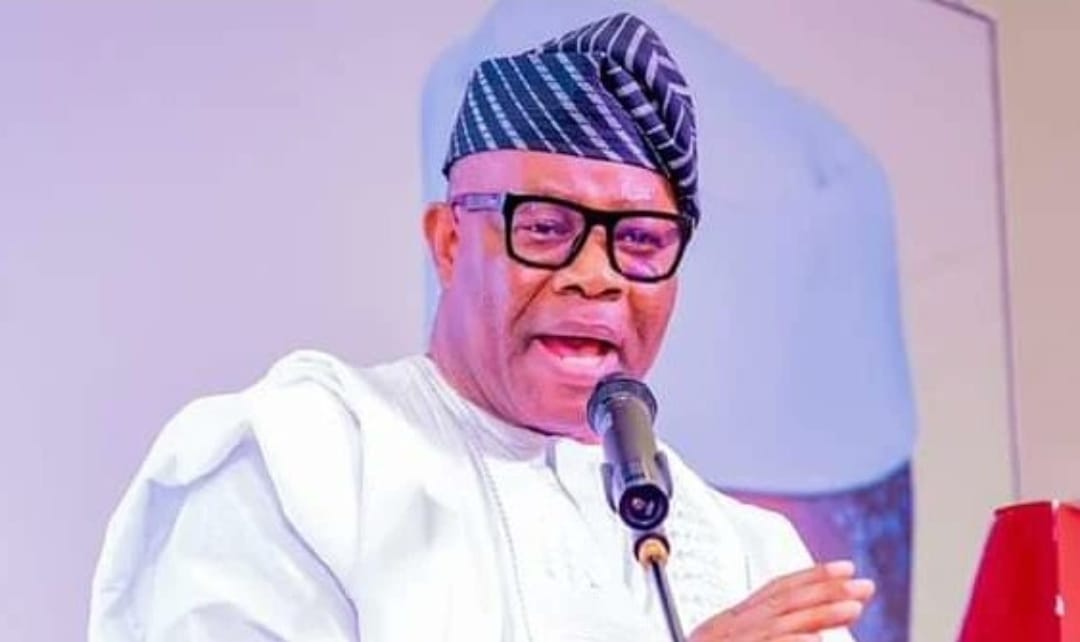
The president of the Senate, Godswill Akpabio, has said that the current funding levels for the health sector remain far below the commitments the National Assembly has made at continental and global levels.
He made the remarks at a public hearing organised by the Senate Committee on Health (secondary and tertiary) held in Abuja on Monday.
The hearing was on five bills, including the Sickle Cell Disorder Research and Therapy Centres (Establishment), sponsored by Sen. Sunday Katung (Kaduna South).
The National Health Act (amendment) Bill sponsored by Sen. Ipalibo Banigo (Rivers West), seeks to increase funding to the health sector.
Others include the Orthopaedic Hospital Establishment Bill, Kogi State, sponsored by Sen. Isa Jibrin (Kogi East).
“And two bills seeking to establish two National Eye Care Centres in Plateau and Benue States, respectively, sponsored by Sen. Diket Plang (Plateau Central) and Senator Titus Zam (Benue North-West).
Mr Akpabio was represented by the Senate Chief Whip, Mohammed Monguno.
He said: “The current funding levels for the health sector remain far below the commitments we have made at continental and global levels.
“This National Health Act (Amendment) Bill aims to strengthen the financial framework that supports primary healthcare, disease prevention, health workforce development, and emergency response.
“Increased funding is not an expense; it is an investment in national security, economic growth, and human capital.”
He said that each of the bills is a response to real and pressing health challenges facing the people.
“They are not abstract legislative proposals; they address conditions that affect millions of Nigerians – directly or indirectly every single day.
“Nigeria has the highest burden of sickle cell disease in the world. Every year, thousands of our children are born with sickle cell disorder, and many of them do not survive to adulthood due to inadequate diagnosis and poor access to therapy.
“The Sickle Cell Disorder Bill seeks to change that narrative by establishing dedicated research and therapy centres that will expand scientific knowledge, improve patient care, and reduce mortality.
“It is a crucial step toward giving hope to families affected by this condition,” he said.
He, however, assured citizens of the National Assembly’s commitment to strengthening Nigeria’s health architecture and ensuring that laws respond effectively to the realities of the people.
Chairman of the committee, Sen. Banigo and sponsor of the National Health Act (Amendment) Bill, said the bill buttresses the need to amend the existing Act.
“To increase the percentage of the Basic HealthCare Provision Fund (BHCPF) from the current one per cent to two per cent of the Consolidated Revenue Fund.
“This is necessitated due to the fact that the current allocation is abysmally low to meet current national health needs”.
In his presentation, Sen. Katung said the bill on Sickle Cell Disorder Research and Therapy Centres sought to establish seven of such centres, one in each of the six geopolitical zones and one in the Federal Capital Territory, Abuja.
“These Centres represent a commitment that Nigeria will finally provide our children with sickle cell disorder the same standard of care available in other parts of the world”.
He said that Nigeria carries the heaviest burden of Sickle Cell Disorder globally, noting that each year, approximately 150,000 babies are born with this condition in the country.
Mr Katung said that the centres, when established, would serve as hubs of excellence – places where patients receive specialist care and families receive counselling.
(NAN)

We have recently deactivated our website's comment provider in favour of other channels of distribution and commentary. We encourage you to join the conversation on our stories via our Facebook, Twitter and other social media pages.

More from Peoples Gazette

States
Independence: NBA urges Nigerians to expect better future
The NBA said that ordinary Nigerians should be deriving benefit from the subsidy removal rather than hardship.

Agriculture
FG tasks ECOWAS on leveraging financing strategies for agroecology
The federal government has urged stakeholders in the agriculture and finance sectors in the West Africa region to leverage financing strategies to enhance agroecology practices

Politics
Katsina youths pledge to deliver over 2 million votes to Atiku
“Katsina State is Atiku’s political base because it is his second home.”
Health
HERFON to unveil two-volume book on non-communicable diseases
HERFON says it will unveil a two-volume book on non-communicable diseases on October 15 in Abuja, alongside free health screening for participants.
World
Beijing’s 12345 hotline sets pace in citizen-centred urban governance
Beijing 12345 Hotline Citizen Service Centre is emerging as a model of technology-driven urban governance, placing residents’ needs at the centre of public service delivery.

Anti-Corruption
Uche Nnaji drops forged NYSC certificate, submits only WAEC result to INEC for governorship election
Mr Nnaji’s corruption trial will resume on October 26 as the ICPC seeks his conviction for forging his NYSC and UNN degree certificates.

Opinion
Abdul Mahmud: When the ruling party needs guns to win election
No president should need an AK-47 to win an election, and no ruling party should need the threat of one to persuade Nigerians to vote for its candidate.

World
Heavy social media use linked to lower life ratings among youths in 16 countries: Gallup
“What stands out is that moderate social media use for adults is associated with better outcomes on many wellbeing measures,” said Gallup chief.

States
Sokoto govt donates N38 million, grains to families of fallen heroes
The Sokoto government donated N38.25 million and bags of grains to the families of 24 fallen soldiers and 57 injured personnel in recognition of their sacrifices in service.


