

Nigeria’s health system performing at 45% capacity: Report

The African Health Observatory Platform on Health Systems and Policies states that Nigeria’s health system is performing at only 45 per cent, below the African regional average of 56 per cent.
This is according to the first edition of its report on Country Health System and Services Profiles, which are comprehensive reviews of the health systems and services in African countries.
Nigeria’s profile was published by the Health Policy Research Group at the University of Nigeria, Nsukka, which serves as the Nigerian National Centre for AHOP.
It was produced with support from the Federal Ministry of Health and Social Welfare and the World Health Organisation–African Region.
This is contained in a statement signed by Obinna Onwujekwe, director of Nigeria’s National Centre for AHOP and coordinator of the Health Policy Research Group at the University of Nigeria.
Mr Onwujekwe said the report, to be unveiled on October 8, showed that health outcomes had not matched the series of sector reforms and spending in the country, with government expenditure among the lowest in Africa.
According to the profile, health system performance outputs, including access to, demand for, and quality of health services, have improved over the last decade but remain insufficient to achieve universal health coverage by 2030.
It stated that, despite progress, Nigeria’s absolute coverage of essential services was relatively low, at 1.7 percent below the African regional average.
The report stated that private health providers currently deliver 70 per cent of all health services, despite accounting for only 35 per cent of health facilities.
It further stated that approximately 80 per cent of Nigeria’s health infrastructure was dysfunctional, impeding healthcare delivery and resulting in annual losses of $1 billion due to outbound health tourism.
The report stated that out-of-pocket expenditure accounts for 75 per cent of total health spending, with only one in ten Nigerians having access to health insurance or risk-pooling schemes.
Core health system outcomes, it stated, including coverage of health services, health security, patient satisfaction, and financial risk protection, were all below regional averages.
This, it noted, could be primarily due to sustained underinvestment, poor health infrastructure, and inadequate engagement of available human resources.
With 3.95 medical doctors for every 10,000 people, the report noted that the health workforce provision in Nigeria was above the regional average of 1.5 but below the recommended threshold of 4.45 doctors per 10,000 people.
It said weak health infrastructure and inadequate engagement of available human resources had created gaps in the provision of essential health services, noting that only 51 per cent of childbirths were attended by skilled birth attendants.
Underinvestment in Nigeria’s health system, the report noted, was a significant barrier to achieving universal health coverage.
“Nigeria spends less on health as a share of gross domestic product than nearly every other country in the world, with the burden of healthcare costs instead falling on individuals and households,” said the report.
It stated that bridging performance gaps would require effective implementation of the National Health Insurance Authority Act 2023 and the 2014 Basic Health Care Provision Fund.
(NAN)

We have recently deactivated our website's comment provider in favour of other channels of distribution and commentary. We encourage you to join the conversation on our stories via our Facebook, Twitter and other social media pages.

More from Peoples Gazette

States
Independence: NBA urges Nigerians to expect better future
The NBA said that ordinary Nigerians should be deriving benefit from the subsidy removal rather than hardship.

Agriculture
FG tasks ECOWAS on leveraging financing strategies for agroecology
The federal government has urged stakeholders in the agriculture and finance sectors in the West Africa region to leverage financing strategies to enhance agroecology practices

Politics
Katsina youths pledge to deliver over 2 million votes to Atiku
“Katsina State is Atiku’s political base because it is his second home.”

Rights
87-year-old man jailed 20 years for defiling nine-year-old girl in Ghana
An 87-year-old man, Yaw Gahornu, has been sentenced to 20 years’ imprisonment with hard labour for defiling a nine-year-old girl at Ofankor, a suburb of Accra, Ghana.
Abuja
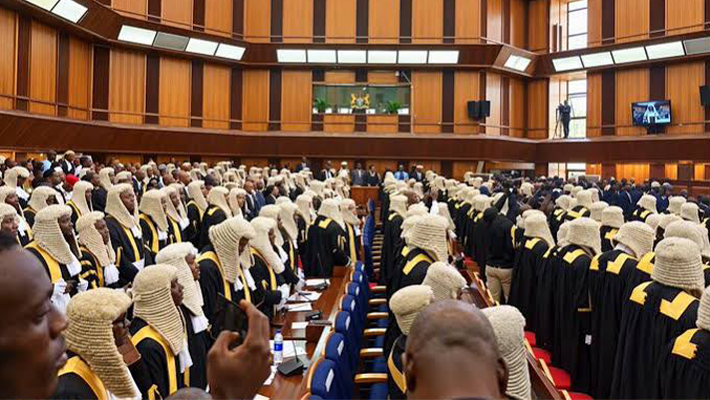
FULL LIST: Names of newly sworn-in SANs
Justice Kudirat Kekere-Ekun, Chief Justice of Nigeria, during the 2026/2027 legal year ceremony on Monday, swore in 68 legal practitioners as Senior Advocates of Nigeria.

Economy
Nigeria, AfDB agree to review ongoing projects to speed up delivery
The Nigerian government and the AfDB have agreed to review projects the bank funds across the country to identify challenges slowing progress and speed up delivery.
Abuja
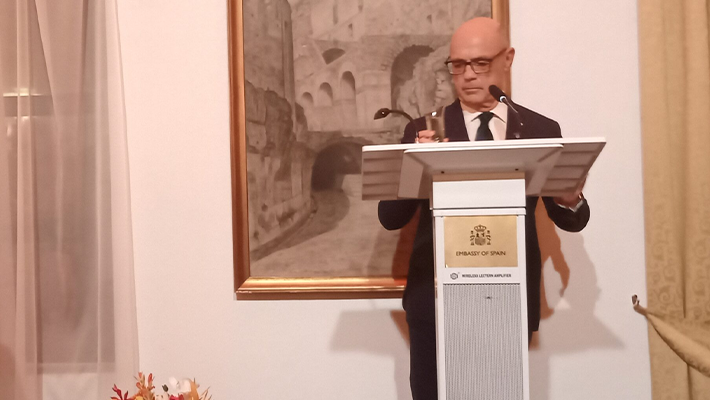
Spain-Nigeria bilateral relations will continue to improve, envoy says
Spain says bilateral relations with Nigeria continue to improve, with prospects for stronger cooperation in trade, investment and other areas of mutual interest.
Economy
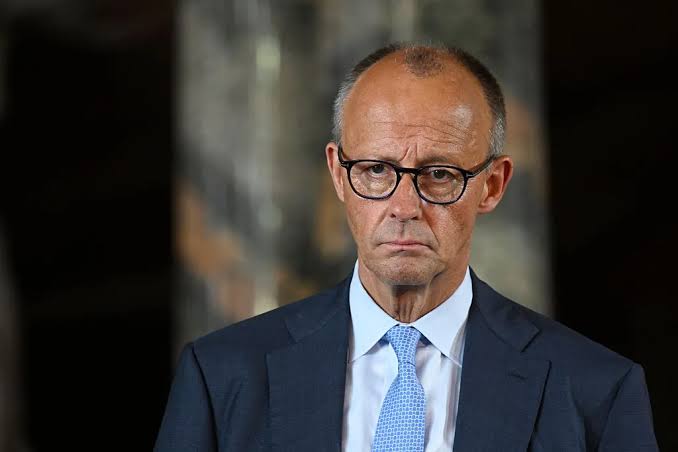
Diesel deal with Russia ‘out of the question’, says Germany
German Chancellor Friedrich Merz on Monday said that the recent agreement between the U.S. and Russia regarding diesel exports is “out of the question” for Germany and Europe.

Economy
AfDB, Family Bank sign $10 million deal to support trade in Kenya
AfDB and Family Bank have signed a $10 million Trade Finance Line of Creditto expand Kenyan businesses’ access to foreign-currency financing.


