

NSIB, others restate preservation of vital accident evidence

The Nigerian Safety Investigation Bureau (NSIB) has called on aviation stakeholders to uphold the highest standards of integrity regarding the preservation of accident evidence and substance use.
The bureau’s director-general, Alex Badeh, made the call during the NSIB Aviation Stakeholder Engagement Workshop held on Wednesday in Lagos.
He raised concerns over the doctoring of vital evidence.
The workshop, which had the theme “Preservation of Accident Investigation Evidence and Substance Use Among Aviation Personnel,” brought together key industry stakeholders.
According to Mr Badeh, the aviation industry is at a pivotal moment, where the preservation of lives depends on strict adherence to safety protocols.
“Our deliberations today centre on two fundamental pillars that are essential to safe and reliable air travel: the preservation of accident investigation evidence and substance use among aviation personnel.
‘First, let us speak about the preservation of critical evidence — particularly cockpit voice recorders and flight data recorders. These devices are the objective record of events in flight.
“We have all seen, in past incidents, how the untimely overwriting of these invaluable “black boxes” can limit our ability to uncover root causes, learn the right lessons, and prevent recurrence.
“As clearly stated in Nig-CARs Part 7.8.1.3(b) – Operation of Flight Recorders: ‘To preserve flight recorder records, flight recorders shall be deactivated upon completion of flight time following an accident or incident’,” he said.
“These rules are explicit: evidence must be secured immediately after any accident or incident. By consistently adhering to these protocols across the industry, you strengthen our collective capacity to conduct thorough and accurate investigations that ultimately protect lives and build public trust,” he added.
Speaking on the issue of substance use among aviation personnel, Mr Badeh, described it as a matter of serious concern, saying it demanded collective vigilance and zero tolerance.
“Impairment, whether from alcohol, psychoactive substances, or other factors, can profoundly affect judgement, reaction times, and overall flight safety.
“The NCAA regulations, particularly Nig-CARs Part 8.5.1.5, are unambiguous: no person may act or attempt to act as a crew member of a civil aircraft if they have consumed any alcoholic beverage within eight hours before acting as crew (the “bottle-to-throttle” rule). Also, under the influence of alcohol or are using any psychoactive substance that affects their faculties in any way contrary to safety.
“This applies to pilots and all other required flight crew members. While it is a shared responsibility, the pilot-in-command bears particular accountability for ensuring that no flight crew member is incapacitated by alcohol, drugs, fatigue, or other causes before commencing a flight,” Mr Badeh said.
According to the NSIB DG, the requirements fully align with ICAO standards, including Doc 9654 — the Manual on Prevention of Problematic Use of Substances in the Aviation Workplace.
He added that the requirements set strict abstinence rules, rigorous testing protocols, and clear consequences for violations.
He noted that recent events had reminded the bureau how important it was to internalise those policies, not merely as regulatory requirements, but as genuine safeguards for passengers, colleagues, and everyone who placed their trust in the aviation system.
Mr Badeh added that the workshop was a direct response to the challenges and evolving safety landscape built on previous safety recommendations and directives from the Federal Ministry of Aviation and Aerospace Development.
“By coming together — regulators, investigators, operators, unions, and partners — we all have the opportunity to share best practices openly, confront challenges candidly, and forge practical, actionable commitments that will strengthen compliance, enhance reporting mechanisms, and foster a stronger culture of proactive safety,” the captain said.
He restated NSIB’s commitment to partnerships through training, guidance, resources, sustained collaboration, and advocacy.
“Together, we will uphold the integrity of investigation evidence, eliminate impairment risks, and ensure safer, clearer skies for Nigeria,” he said.
The Director-General of the Nigerian Civil Aviation Authority (NCAA), Chris Najomo, stressed that compliance with safety regulations was mandatory and not optional.
Mr Najomo recounted the oversight function of the NCAA as well as the mandate to regulate, enforce, and sanction violators of stipulated laws that might threaten the safety of lives.
The captain was represented by the General Manager of Air Operator Certificate and Surveillance Worthiness at NCAA, Ifeanyi Iteke.
He emphasised the need for coordination between the NCAA and NSIB, noting that the flight data recorder remained essential within the coordinated safety system.
He explained that many investigative processes relied on the gathering and analysis of factual evidence.
According to him, such processes depend on availability and integrity of data, while preserving flight data recorder information is critical to ensuring accurate findings and effective safety interventions.
Mr Najomo emphasised the essence of enforcement and strict regulatory compliance.
“Under NigCARs provisions, flight recorders must not be switched off during flight operations, must be deactivated after an accident or serious incident and must not be reactivated before proper investigation procedures are completed.
“This will ensure the protection of flight data recorder evidence from compromise,” he said.
Mr Najomo also reinforced the “bottle-to-throttle” rule.
“Under Nig-CARs Part 8.5.1.5, no crew member may operate within eight hours of alcohol consumption. In addition, personnel must not act under the influence of psychoactive substances.
“Therefore, human performance remains a critical safety pillar alongside flight data recorder preservation,” he said.
The captain stressed that safety oversight was a shared responsibility between regulators and operators and compliance was non-negotiable across all operational levels.
He said, “The implication is clear: both evidence preservation and behavioural discipline are required to maintain safe aviation operations.”
Mr Najomo further highlighted the human factor as a key risk area, saying aviation personnel must be physically and mentally fit for duty at all times.
A former Managing Director of the National Transportation Safety Board, U.S., Dennis Jones, on his part, stated that accident investigation was transforming a seemingly chaotic situation into a message.
Mr Jones, recalling his experiences, underscored the importance of preserving every piece of evidence to extract meaningful safety lessons.
The workshop had in attendance the Nigerian Airspace Management Authority, the Federal Airports Authority, former director-generals, airlines and other prominent aviation agencies and stakeholders.
(NAN)

We have recently deactivated our website's comment provider in favour of other channels of distribution and commentary. We encourage you to join the conversation on our stories via our Facebook, Twitter and other social media pages.

More from Peoples Gazette

Agriculture
FG tasks ECOWAS on leveraging financing strategies for agroecology
The federal government has urged stakeholders in the agriculture and finance sectors in the West Africa region to leverage financing strategies to enhance agroecology practices

Politics
Katsina youths pledge to deliver over 2 million votes to Atiku
“Katsina State is Atiku’s political base because it is his second home.”
Africa
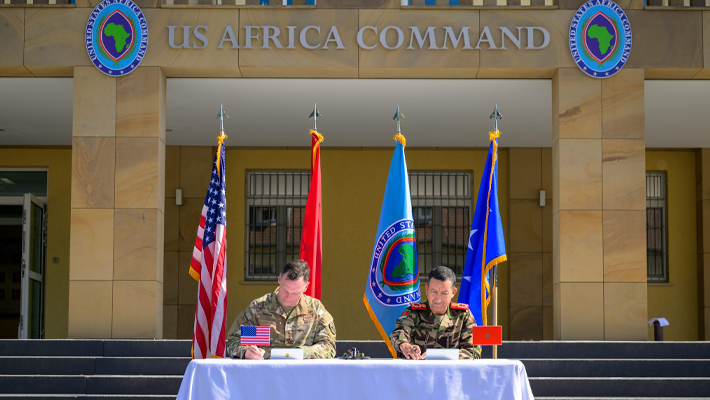
Anti-Terrorism: U.S AFRICOM, Morocco to establish tech-driven training, experimentation centre in Africa
Mr Anderson said the centre would increase readiness and advance capabilities of both nations.

Sport
Argentina stun England to set up World Cup final clash with Spain
Spain defeated France 2-0 at the Dallas Stadium on Tuesday to qualify for the final.

NationWide
FG enhances international recognition of Nigerian passports
Mr Akinlabi said the milestone was achieved on July 13.

Heading 3
FG, states, LGs shared N2.550 trillion June revenue: FAAC
Mr Mokwa said the revenue was shared at the July meeting of the committee.

Heading 2
14-year-old boy charged with terror offences targeting London mosques
The boy was arrested on 9 July on suspicion of criminal damage to a vehicle.

States
Delta content creator arrested after alleged rape victim dies by suicide
According to the victim, Mr Ogbonna initially demanded sex in exchange for financial help.


