

NUPRC seeks deeper industry collaboration to strengthen Nigeria’s energy future
![Nigerian Upstream Petroleum Regulatory Commission [NUPRC]](https://gazettengr.com/wp-content/uploads/NUPRC.png)
The Nigerian Upstream Petroleum Regulatory Commission (NUPRC) has urged stronger collaboration among government and industry stakeholders to build a resilient, globally competitive petroleum sector to drive Nigeria’s economic growth and energy security.
Oritsemeyiwa Eyesan, chief executive of NUPRC, made the call at the ongoing 49th Society of Petroleum Engineers Nigeria Annual (SPE), International Conference and Exhibition (NAICE 2026) on Monday in Lagos.
Ms Eyesan, in a keynote address, said sustained dialogue and partnerships remain critical to positioning Nigeria to thrive amid the rapidly evolving global energy landscape.
She described the conference as one of Africa’s foremost technical and strategic energy platforms.
She noted that since its inception in 1976, it has continued to bring together policymakers, regulators, industry leaders, researchers, innovators, and young professionals to shape the future of the oil and gas industry.
According to her, this year’s conference theme, “Thriving in the Evolving Global Energy Landscape: Collaborative Growth and Resilience”, reflects the realities confronting the industry.
“For us in Nigeria, this conference is much more than another annual event. It is an important platform where ideas are transformed into action,” she said.
Ms Eyesan noted that many of the reforms currently transforming Nigeria’s upstream petroleum sector were influenced by recommendations and technical contributions from industry engagements such as the SPE conference and similar professional forums.
She said the commission’s regular consultations with operators and other stakeholders have helped create a more transparent, predictable, and investor-friendly regulatory environment.
“The best policies and regulations are built through collaboration. By listening, learning, and working together, we are building a regulatory system that is practical, responsive, and forward-looking,” she stated.
The NUPRC chief stressed that resilient energy systems, sustained investment, and long-term industry growth could only be achieved through strong partnerships.
She added that technical conferences and workshops provide strategic platforms for developing solutions that strengthen regulatory frameworks and improve the investment climate.
She encouraged participants to engage in robust discussions, challenge existing assumptions, and propose practical solutions to the challenges facing the petroleum industry.
She assured them that the commission would continue to consider stakeholders’ recommendations in shaping future policies and regulations.
Expressing optimism about the country’s prospects, Ms Eyesan said Nigeria possesses significant competitive advantages, including abundant oil and gas reserves and a vibrant indigenous petroleum industry.
“We have a young and skilled workforce, an improving regulatory framework, and a strategic geographic location that connects it to regional and global markets,’’ she said.
She said these strengths position the country not only to adapt to changes in the global energy transition but also to play a leading role in shaping the future of the industry.
This, she said, could be through collaboration, innovation, and resilient energy systems.
Ms Eyesan congratulated the SPE Nigeria Council on the successful hosting of the conference and urged stakeholders to move beyond discussions by working together to build an energy industry that supports sustainable economic growth and national energy security.
“Together, let us move beyond discussing the future of energy to build it through collaboration, innovation, and resilience, so that Nigeria not only thrives in the evolving global energy landscape but also helps shape it,” she said.
In his remarks, the chief executive of the Nigerian Midstream and Downstream Petroleum Regulatory Authority (NMDPRA), Rabiu Umar, said Nigeria was on course to becoming Africa’s refining hub.
He pledged a regulatory regime that was firm, fair, and fast to drive investment, strengthen energy security, and expand the nation’s gas economy.
Mr Umar outlined the authority’s priorities for transforming the country’s midstream and downstream petroleum sector.
He said the authority’s leadership was anchored on three strategic priorities: energy security, gas expansion, and regulatory excellence.
He said these would be pursued through strict compliance with the law, fairness to all stakeholders, and improved speed in regulatory decision-making.
“Our regulatory approach will be firm, fair, and fast,” Mr Umar said.
He noted that predictable and efficient regulation was essential to attracting investment and supporting industry growth.
According to him, Nigeria’s downstream petroleum industry is undergoing a major transformation with the emergence of large-scale private refineries and modular refineries.
”This is positioning the country to move from exporting crude oil and importing refined products to becoming a self-sustaining refining hub and exporter of refined petroleum products,” he said.
He said the development would enable Nigeria to retain more value from its crude oil resources while creating opportunities in the petrochemical and gas sectors.
The NMDPRA boss disclosed that the authority was working closely with the NUPRC to enforce domestic crude supply obligations to ensure adequate feedstock for local refineries and support the country’s refining ambitions.
On energy security, Mr Umar described reliable access to affordable energy as critical to national development, stressing that the authority was prioritising the rehabilitation of pipeline infrastructure, strategic petroleum storage, and nationwide product distribution.
He said the NMDPRA was collaborating with the Nigerian National Petroleum Company Limited to strengthen pipeline integrity, improve digital monitoring systems, and ensure stable petroleum product supply across the country.
Mr Umar also identified natural gas as the cornerstone of Nigeria’s energy transition.
He said that accelerating gas utilisation through increased supply to power generation, industries, and transportation, while expanding the adoption of liquefied petroleum gas (LPG) and compressed natural gas.
He disclosed that the authority was preparing for another round of gas distribution licences after completing a nationwide gas market mapping exercise to identify viable distribution clusters and improve access to gas infrastructure.
On gas pricing, Mr Umar said the government remains committed to transitioning to a willing buyer-willing seller market framework in line with the Petroleum Industry Act (PIA) as infrastructure expands and market conditions improve.
(NAN)

We have recently deactivated our website's comment provider in favour of other channels of distribution and commentary. We encourage you to join the conversation on our stories via our Facebook, Twitter and other social media pages.

More from Peoples Gazette

Agriculture
FG tasks ECOWAS on leveraging financing strategies for agroecology
The federal government has urged stakeholders in the agriculture and finance sectors in the West Africa region to leverage financing strategies to enhance agroecology practices

Politics
Katsina youths pledge to deliver over 2 million votes to Atiku
“Katsina State is Atiku’s political base because it is his second home.”

Health
FG urges stakeholders to enforce breastfeeding code
Mr Pate said the campaign was aimed at promoting exclusive breastfeeding.
States
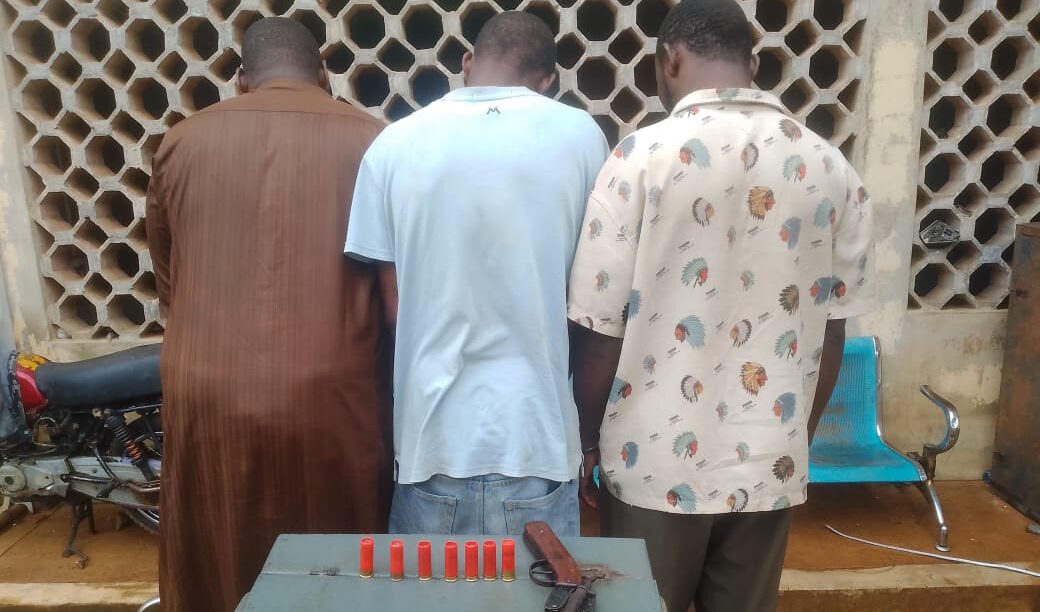
Three suspected robbers arrested in Oyo
He said the suspects were arrested following credible intelligence on their activities.

States
Two men arraigned over alleged illegal sale of alcohol in Ekiti
They each, however, pleaded not guilty to the charges.

Uncategorized
Osun 2026: Adeleke urges workers to turn support into votes
The governor assured that his administration remained fully committed to the welfare of workers.
Heading 1
NUPRC seeks deeper industry collaboration to strengthen Nigeria’s energy future
Mr Umar said Nigeria’s downstream petroleum industry is undergoing a major transformation.
Heading 4
FG to construct dam in Plateau to boost water supply, irrigation
According to Mr Utsev, the dam would provide a sustainable water supply to communities in Kanke and neighbouring areas.


