

Odigbo Deaths: The Nigerian adulterated products crisis
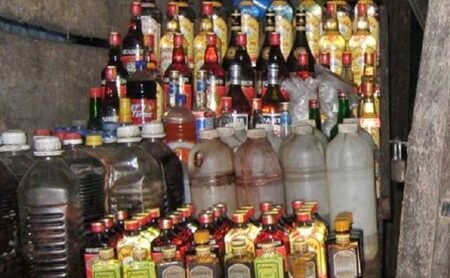
Thirty-two people are now reported dead in Odigbo Local Government Area of Ondo State, with about 50 others hospitalised following the suspected consumption of locally made alcoholic or herbal drinks. Earlier reports put the death toll at 24, and the figures may still change as investigators establish exactly what happened.
Survivors have described an evening that began ordinarily and ended in hospitals, while families have been left searching for explanations for deaths that should never have occurred. Nigeria, however, has not stopped to mourn. The tragedy appeared in the news, competed briefly for attention with the politics of the day and began its inevitable journey towards disappearance from public memory.
Something terrible has happened in Odigbo. Something even more troubling has happened to Nigerians, who are becoming accustomed to death. They encounter it so frequently that the dead have acquired the anonymity of statistics.
Someone leaves home for a bottle of drink and never returns. In another house, a child dies after receiving medicine from a mother who believed she was treating an illness. At a chemist, a patient who cannot afford the prescription from the hospital settles for a cheaper drug, only to discover that the medicine inside the packet bears little resemblance to what the label promises.
Somewhere between the chemist and the manufacturer, between the importer and the regulator, life has been converted into a commercial calculation.
The history of deaths is long enough to constitute a national indictment. In 1990, adulterated paracetamol poisoning killed 109 Nigerian children, according to a study of the tragedy.
In 1993, another contaminated paracetamol syrup disaster in Oyo and Benue States was reported to have killed about 100 children, with poisonous ethylene glycol identified as the cause. The horror did not end with the deaths. Reports indicated that batches containing the same poisonous substance remained available after the disaster, raising a question more frightening than the original poisoning: how does a product capable of killing children survive the knowledge that it has already killed?
Then came My Pikin. In 2008 and 2009, at least 84 Nigerian children died after taking a teething mixture contaminated with diethylene glycol, a toxic chemical that had entered the production chain through a chemical supplier. The children were between two months and seven years old.
They did not know the difference between genuine medicine and poison. Their parents did not know either. They bought what they believed was medicine because the bottle carried the promise of relief. The product killed the very children for whom it had been purchased.
The crisis involving alcoholic drinks has its own bloody history. In 2015, 23 people died in Ayadi and Ode-Irele in Ondo State during a methanol-poisoning outbreak linked to locally produced alcohol. In Rivers State that same year, 66 people were reported dead over several weeks after consuming methanol-contaminated ogogoro.
The geography and the victims changed, but the story remained painfully familiar: a substance sold for human consumption contained a poison capable of killing the consumer.
Odigbo should not, therefore, be regarded as an unfortunate freak occurrence. The latest deaths belong to a recurring Nigerian story in which products enter the market without adequate assurance that what appears on the label is what lies inside the container.
The crisis extends beyond medicine and alcohol. Fake wines, counterfeit spirits, adulterated food, imitation cosmetics, falsified household products and even counterfeit bottled water have become part of a market in which the ordinary consumer is increasingly expected to become his own laboratory technician. Recent reporting has described the proliferation of adulterated products as a serious threat to public health and consumer safety.
The regulatory failure has assumed national proportions. The National Agency for Food and Drug Administration and Control exists precisely because Nigerians should not have to conduct chemical analysis before swallowing medicine or opening a bottle. Its mandate includes regulating and controlling food, drugs, cosmetics, chemicals, medical devices and packaged water. Its enforcement machinery is supposed to ensure compliance with those standards.
The existence of a regulator, however, means little if dangerous products repeatedly find their way into markets, shops, pharmacies and homes.
Nigeria must, therefore, stop treating every poisoning incident as an emergency to be managed after people have died. Enforcement must move upstream into manufacturing, importation, distribution and retail, with traceability capable of identifying who produced a dangerous product, who supplied its ingredients, who transported it and who placed it on the shelf.
Prosecutors must pursue those responsible with the seriousness reserved for crimes against human life, while the courts must recognise that commercial deception becomes something far darker when the merchandise can kill.
Nigeria’s fake-products crisis is not only a failure of regulation. It is also a failure of regulatory reach. NAFDAC cannot, by itself, police a country of more than 200 million people spread across cities, towns, villages, markets and thousands of informal trading points. Expecting a single federal agency to carry that burden is to design enforcement for a country that exists on paper rather than the Nigeria that exists on the ground.
State governments must, therefore, assume a greater share of responsibility, establishing properly empowered regulatory agencies capable of inspecting markets, tracking dangerous products, shutting down offending outlets and prosecuting violations within their jurisdictions.
The fight against counterfeit and adulterated products cannot remain concentrated in Abuja. Regulation must travel closer to the people, because that is where the products are sold, consumed and, too often, where the consequences are suffered. However, a constitutional caution is necessary here in light of section 4(5) of the 1999 Constitution.
Nigeria does not necessarily need another federal regulator. What the country needs is a strong federal regulatory authority complemented by effective state enforcement institutions capable of monitoring what happens in the markets once products have passed through the federal regulatory gate.
The poorest Nigerians are frequently the most exposed. Poverty does not diminish their right to safety, but it often extinguishes the margin for safe choice. The deepest tragedy of Odigbo lies here: death has become so familiar that thirty dead Nigerians can pass through the national consciousness without producing the moral convulsion such a number should provoke. The grim reaper has acquired an ordinary Nigerian face, appearing at the roadside shop, in the market, at the pharmacy and inside the bottle.
A nation cannot regulate death after the funeral. Nigeria has buried too many children, workers, patients and parents whose deaths were preventable. The question before the government is no longer whether adulterated products exist. They do. The question is how many more Nigerians must die before the country decides that a product capable of killing a citizen has no business reaching the Nigerian market.
The answer should be none.
Abdul Mahmud, a human rights attorney in Abuja, writes weekly for The Gazette

We have recently deactivated our website's comment provider in favour of other channels of distribution and commentary. We encourage you to join the conversation on our stories via our Facebook, Twitter and other social media pages.

More from Peoples Gazette

States
Independence: NBA urges Nigerians to expect better future
The NBA said that ordinary Nigerians should be deriving benefit from the subsidy removal rather than hardship.

Agriculture
FG tasks ECOWAS on leveraging financing strategies for agroecology
The federal government has urged stakeholders in the agriculture and finance sectors in the West Africa region to leverage financing strategies to enhance agroecology practices

Politics
Katsina youths pledge to deliver over 2 million votes to Atiku
“Katsina State is Atiku’s political base because it is his second home.”

Kano
Kano police arrest two suspects over possession of firearm
Mr Kiyawa stated that the police team attached to the farm centre intercepted a tricycle on reasonable suspicion.

Heading 3
Tinubu wants another term but ashamed to face Nigerians to account for his first term: Atiku
“Now he wants another mandate. Before asking Nigerians for one, he must face them and account for the first term,” Mr Abubakar said.

Health
Diphtheria: 93% of affected children didn’t receive full vaccine doses, says NPHCDA
The NPHCDA CEO said some affected children had either not received any vaccine or received only one of the three recommended doses.
States
LAWMA begins clearing Iyana Oworo’s black spot waste
Mr Gbadegesin said LAWMA was investigating the source of the illegal dumping at the location.

Lagos
Customs hands over seized cannabis worth over N2.26 billion to NDLEA
The controller attributed the success to intelligence-led enforcement, modern technology, and collaboration among security agencies.

Economy
Achievers University VC advises Trinity University graduates on integrity, competence, innovation
Mr Ayorinde warned aspiring entrepreneurs against borrowing without carefully assessing repayment obligations.


