

Ojo Maduekwe: Remi Tinubu’s akara, roasted corn, and kuli-kuli advice no one wants to hear

If you think back on how the All Progressives Congress (APC) was able to wrestle federal power away from the Peoples Democratic Party (PDP) in the 2015 general election to become Nigeria’s ruling party, you’ll agree with the logic behind this opinion article’s headline.
Less than a year to Nigeria’s 2027 elections, what should be a vibrant, competitive democratic space instead resembles a vacuum. The country is not merely heading into another election cycle; it is doing so without a credible, organised opposition capable of mounting a serious challenge to the ruling government.
A year before the 2015 general election, the APC, then an opposition party, had begun mounting serious opposition to the PDP. The party had clarity of purpose, coherence in messaging, and, perhaps most importantly, a unifying figure in Muhammadu Buhari, and was already behaving like a government-in-waiting.
Haven already resolved its internal contests early, the APC was able to consolidate its alliances and present Nigerians with a clear alternative to the status quo. Its campaign was strategic and relentless. Whether one agrees with its rhetoric during the campaign and the eventual outcome of that election or not, the fact is that the APC, as an opposition party, fulfilled its democratic role and gave Nigerians a choice.
Contrast that with today’s reality. The PDP, historically Nigeria’s most formidable political machine, is a shadow of itself. Internal divisions have hollowed out its structure, leaving it unable to articulate a unified vision or even maintain basic organisational discipline.
Factions within the party appear more invested in settling personal scores than in presenting a viable national agenda. For the first time since its founding in 1998, there is a growing and deeply unsettling possibility that the PDP may not even field a presidential candidate in 2027.
The dysfunction is not limited to the PDP. The African Democratic Congress (ADC), which many had seen as a credible alternative, is itself caught in a web of contradictions. Its leading figures are speaking at cross-purposes, projecting confusion rather than cohesion. Instead of building a united front, its aspirants look like they’ll tear at each other for the party’s presidential ticket, undermining public confidence in its viability.
Even more telling is the quiet but consequential drift of some of these aspirants, who are rumoured to be considering abandoning the ADC for the Peoples Redemption Party (PRP) as the deadline for submission of party membership register to the Independent National Electoral Commission (INEC) looms. This political nomadism signifies a deeper crisis of identity and purpose within Nigeria’s opposition parties.
This is a cause for concern for anyone interested in the future of democracy in Nigeria. The implications are profound. Democracy, at its core, thrives on competition. It depends on the constant tension between those in power and those seeking to replace them. When that tension disappears, governance risks becoming complacent at best and unaccountable at worst.
An opposition is not merely a political inconvenience for the ruling party; it is an institutional necessity. It sharpens policy debates, scrutinises decisions, and forces those in power to remain responsive to the electorate. Without it, elections risk becoming procedural formalities rather than genuine contests of ideas.
What Nigeria is witnessing ahead of 2027 is not just the weakness of individual parties; it is the collapse of opposition as a concept. There is no clear ideological differentiation, no compelling national narrative, and no coordinated effort to rally citizens around an alternative vision for the country. Instead, what exists is fragmentation, ego-driven politics, and short-term calculations that prioritise personal ambition over collective purpose.
This stands in stark contrast to the APC’s pre-2015 playbook. The party did not emerge as a dominant force by accident. It was the product of deliberate compromise, coalition-building, and a shared recognition among its leaders that unity was non-negotiable if they were to unseat an incumbent government. They subordinated individual ambitions to a broader goal. That discipline is conspicuously absent in today’s opposition parties.
It is tempting to argue that the ruling APC has simply outmanoeuvred its rivals and consolidated power through the abuse of incumbency. While there is some truth to that, it does not fully explain the scale of the opposition’s disarray. The more uncomfortable reality is that the opposition has largely defeated itself. Internal crises, lack of leadership, and an inability to adapt to changing political dynamics have rendered it ineffective.
The danger here is that a weak opposition creates fertile ground for democratic erosion. When voters perceive that there is no credible alternative, apathy sets in. Voter turnout declines, political engagement weakens, and the legitimacy of the electoral process comes into question. Over time, this can lead to a system in which power is maintained not through popular mandate but through the absence of viable challengers.
Nigeria cannot afford that trajectory. The 2027 election should be an opportunity for the opposition to reinvent itself. This requires more than cosmetic changes. It demands a fundamental rethinking of strategy, leadership, and purpose. They must move beyond personality-driven politics and invest in building strong institutions. They must articulate clear policy positions that address the everyday realities of Nigerians, from economic hardship to security challenges. And crucially, they must learn to collaborate.
Coalition-building is essential. No single opposition party, in its current state, has the capacity to challenge the ruling APC alone. But a united front, built on shared principles and strategic alignment, could still reshape the political landscape. This is not unprecedented. It is precisely how the APC itself came into power. The question is whether today’s opposition leaders are willing to make the sacrifices required to achieve that unity.
For the electorate, the stakes are equally high. Democracy is not a spectator sport. Citizens must demand more from those who seek to represent them. They must hold opposition parties accountable not just for their criticisms of the government but also for their internal governance and readiness to lead. A credible opposition does not emerge in isolation; it is, in part, a reflection of the expectations and pressures placed upon it by the public.
As Nigeria approaches 2027, the absence of a strong opposition is becoming increasingly difficult to ignore. It is a warning sign, one that speaks to deeper structural issues within the country’s political system. The risk is not just that the ruling party will win; it is that the election itself will lack the competitive integrity that gives democracy its meaning.
History has shown that Nigerian politics is capable of reinvention. The events leading up to the 2015 elections are proof of that. But reinvention does not happen by chance. It requires vision, discipline, and a willingness to put collective interest above individual gain. Right now, those qualities are in short supply among members of the PDP and ADC, or whatever they’ll seek to adopt next ahead of the 2027 election.
Unless something changes, Nigeria may indeed head into the 2027 election not just with a weakened opposition but effectively without one. The possibility of this happening is worrisome. That would be a loss not just for the opposition parties, but for the country as a whole.
Ojo Maduekwe is a communications professional. Write him: mrmaduekwe@gmail.com

We have recently deactivated our website's comment provider in favour of other channels of distribution and commentary. We encourage you to join the conversation on our stories via our Facebook, Twitter and other social media pages.

More from Peoples Gazette

Agriculture
FG tasks ECOWAS on leveraging financing strategies for agroecology
The federal government has urged stakeholders in the agriculture and finance sectors in the West Africa region to leverage financing strategies to enhance agroecology practices

Politics
Katsina youths pledge to deliver over 2 million votes to Atiku
“Katsina State is Atiku’s political base because it is his second home.”
States
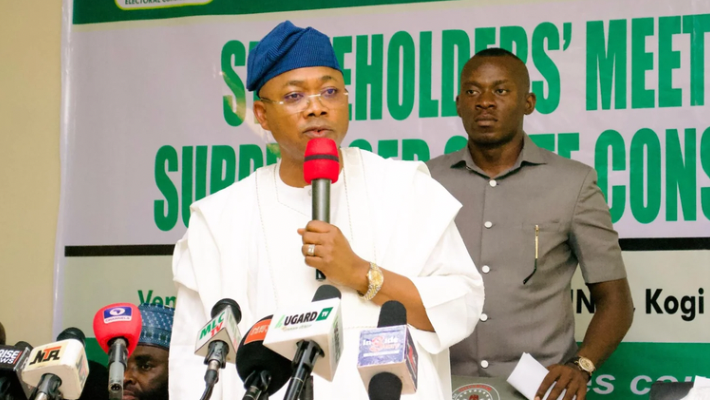
Tinubu advised me never to negotiate with criminals, Gov Ododo says
“I don’t play with criminals, and I don’t negotiate with them. I can tell you that, as far as Kogi State is concerned, we don’t have a department for ransom payment,” he said.

Heading 1
U.S. has spent $37.5 billion on Iran war: Hegseth
“The estimate we have as of today is $37.5 billion,” Mr Hegseth said.
Lagos
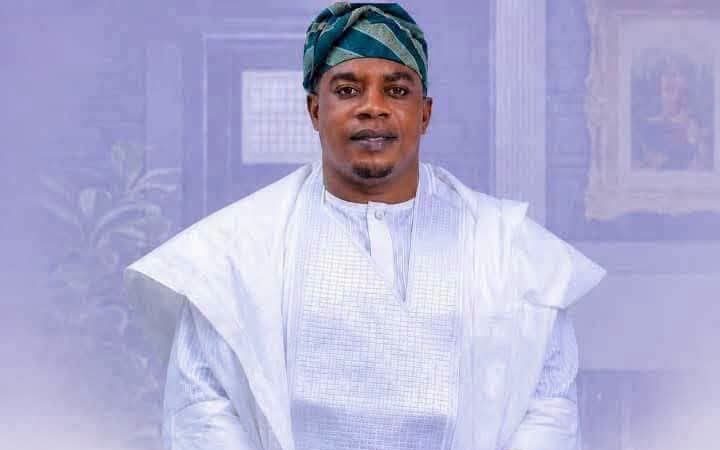
Slain Lagos NURTW organising secretary buried amid tears
Mr Ajiboye died days after he was attacked by gunmen.

Africa
144 refugees, migrants dead, missing off Mauritania coast: UNHCR
“The refugees and migrants were reported dead or missing after attempting the perilous sea journey from West Africa towards Europe,” the agency said.
World
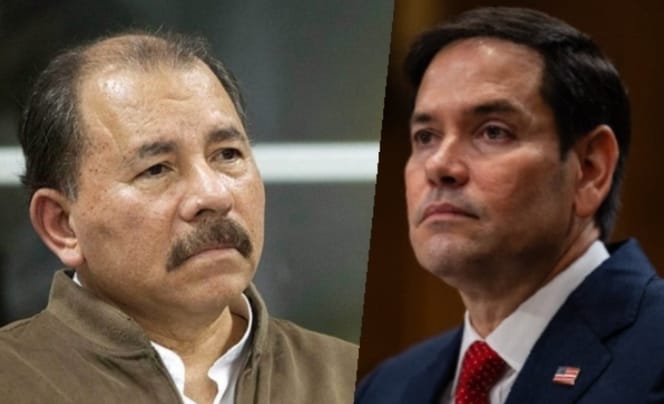
U.S. govt condemns Ortega’s ban on elections in Nicaragua
Mr Rubio urged the international community to rise against Mr Ortega’s dictatorship.
World
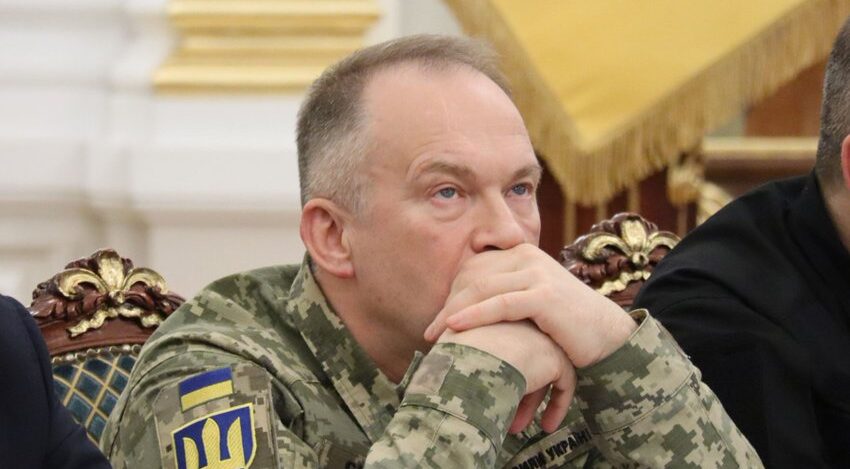
Zelensky sacks Ukraine’s top general after firing defence minister
Mr Syrskyi’s dismissal came days after Mr Zelensky fired Ukraine’s defence minister, Mykhailo Fedorov, a decision that sparked protests across the country.


